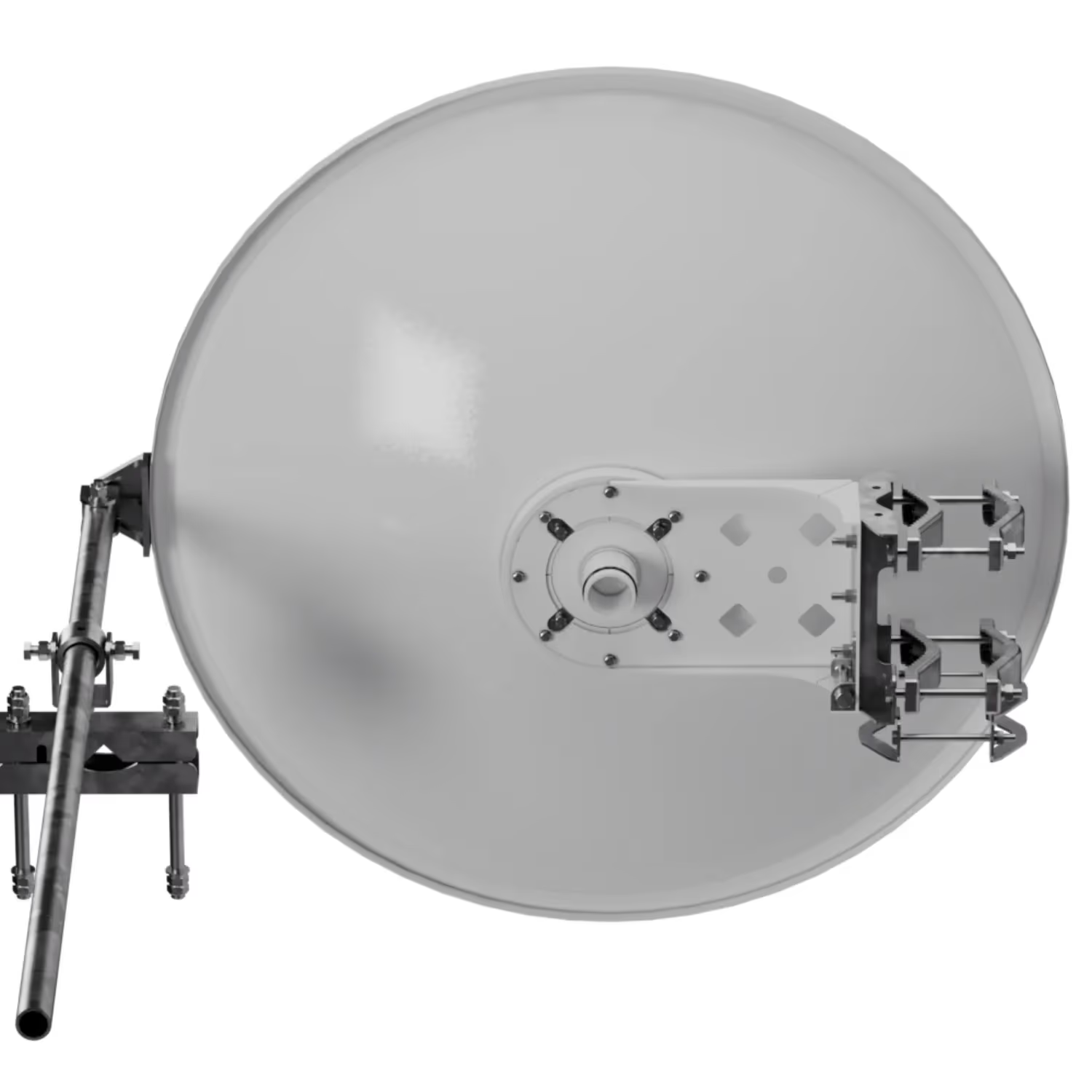
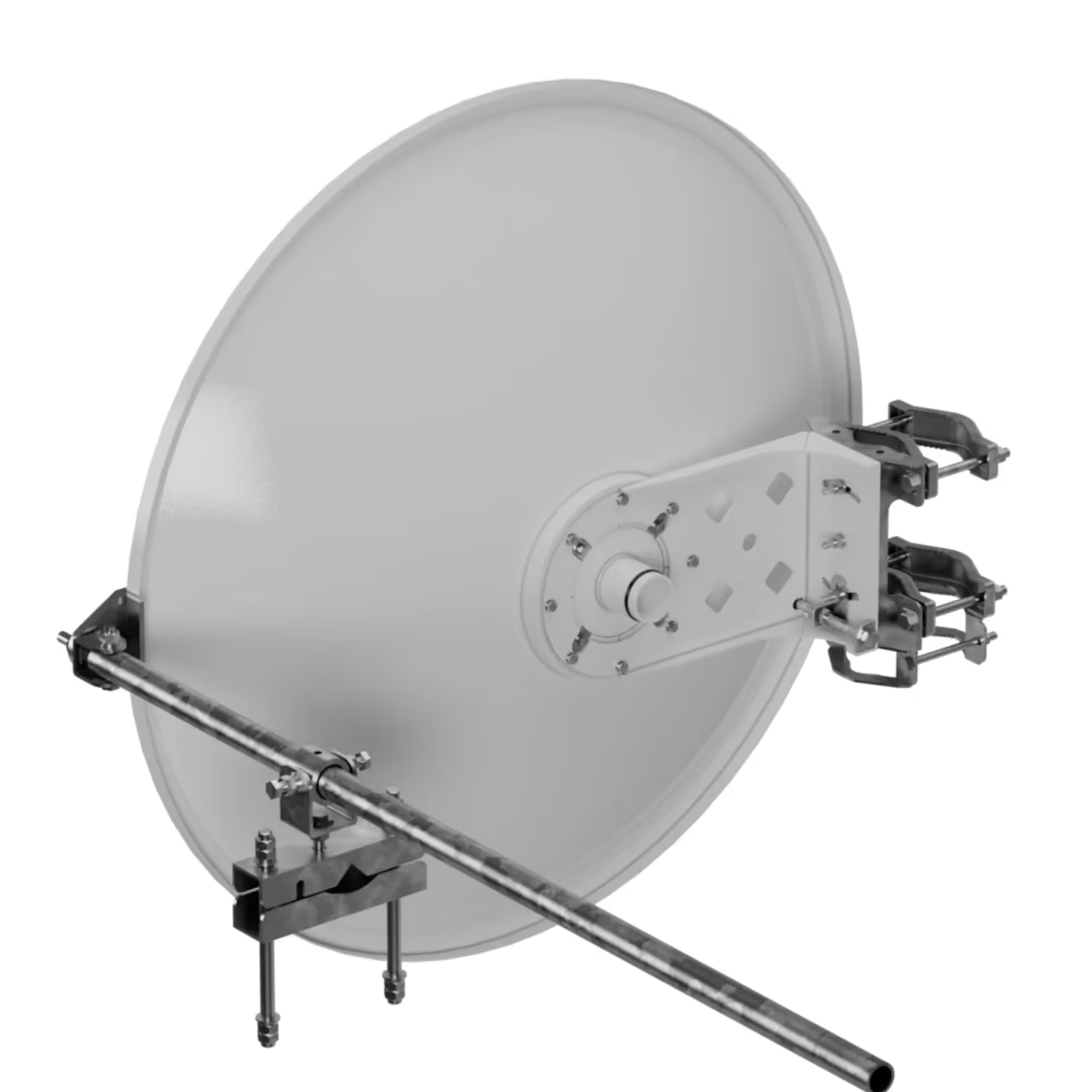
Overview
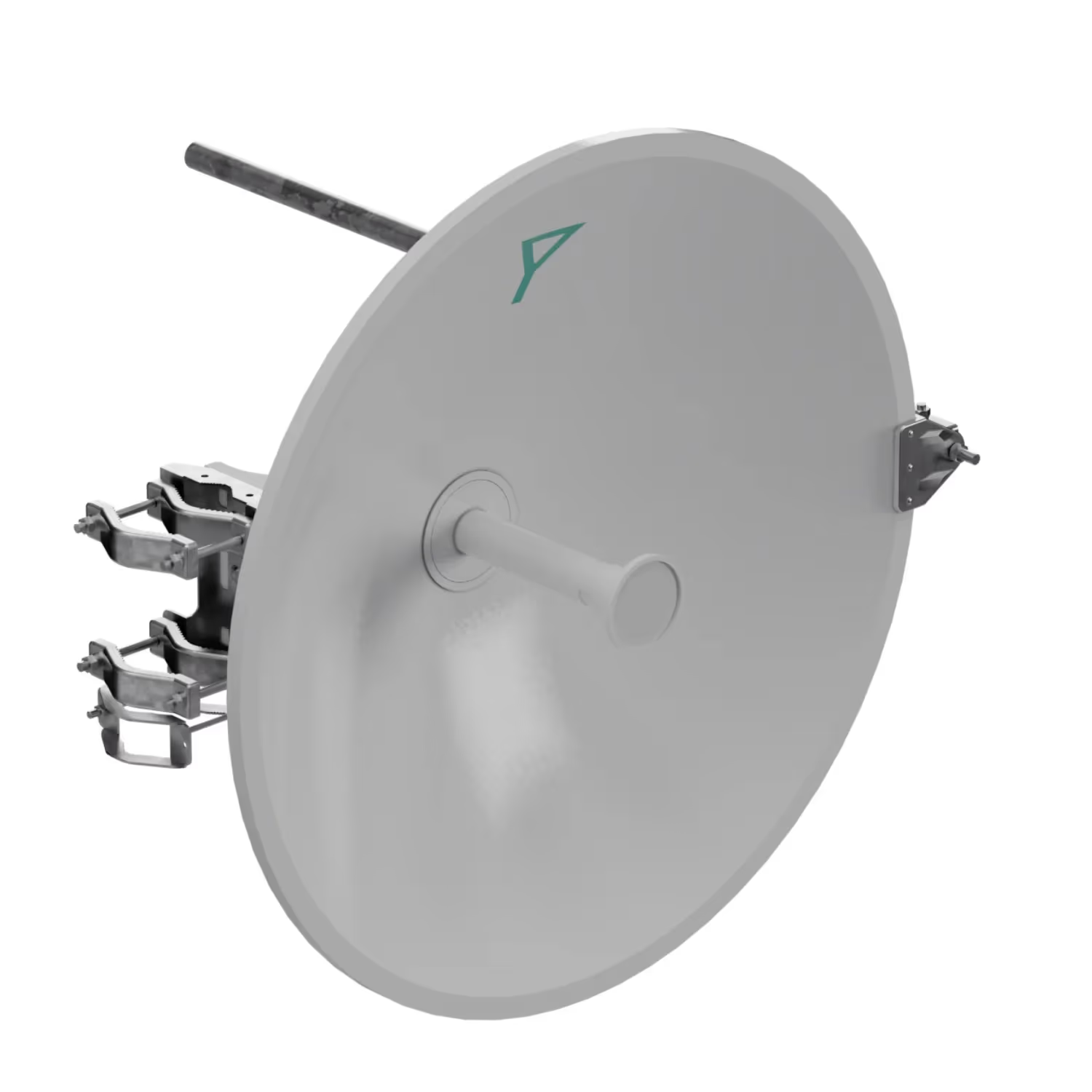
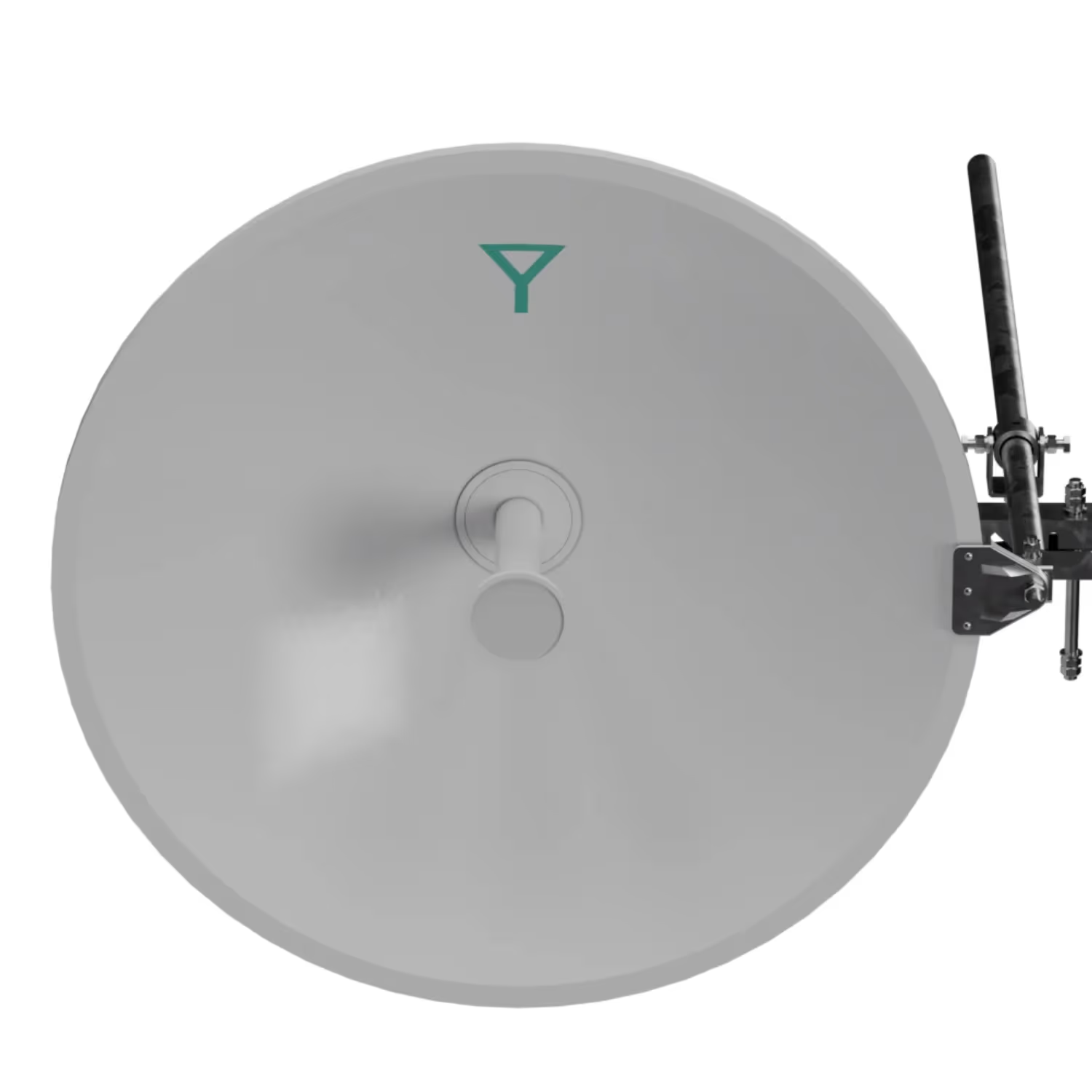
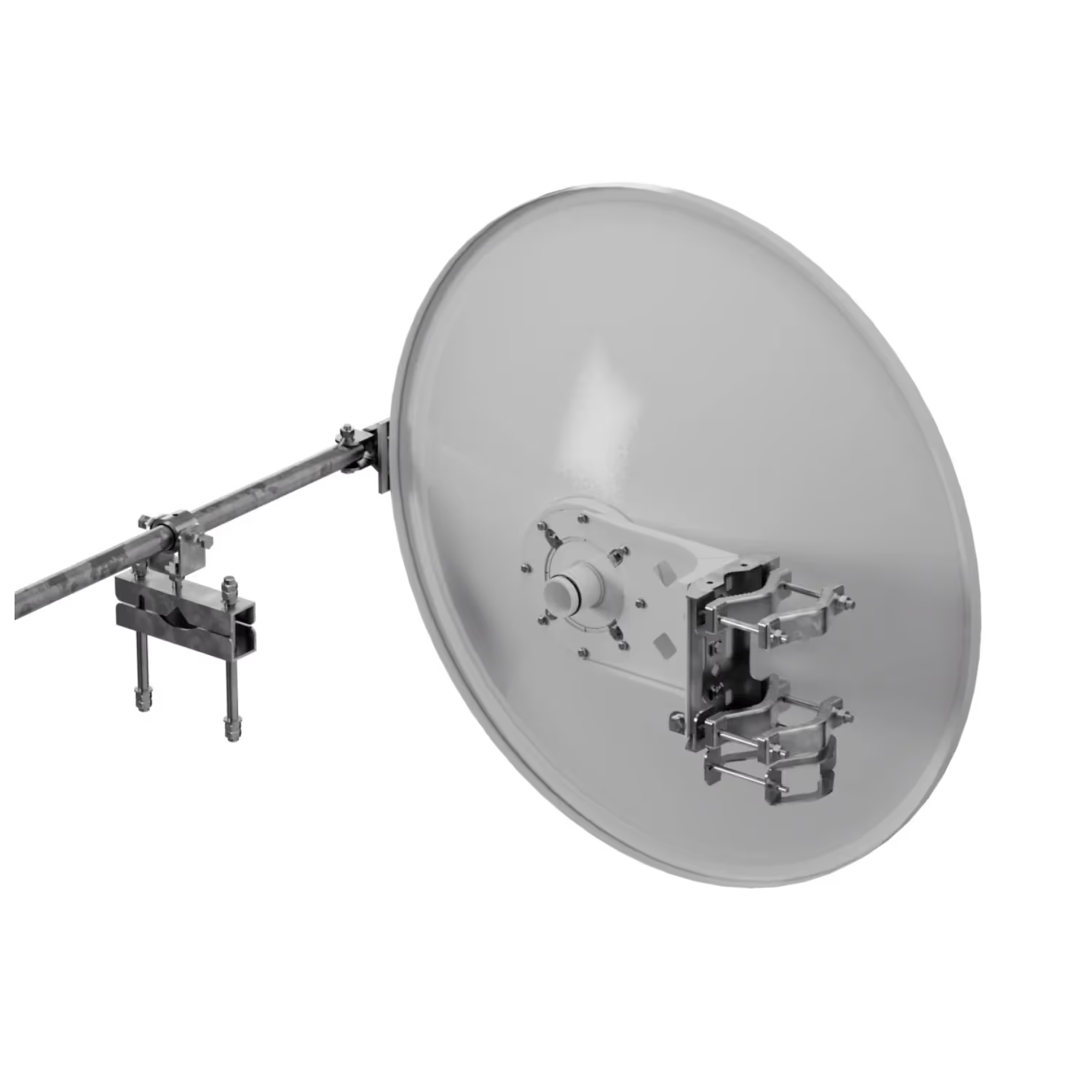
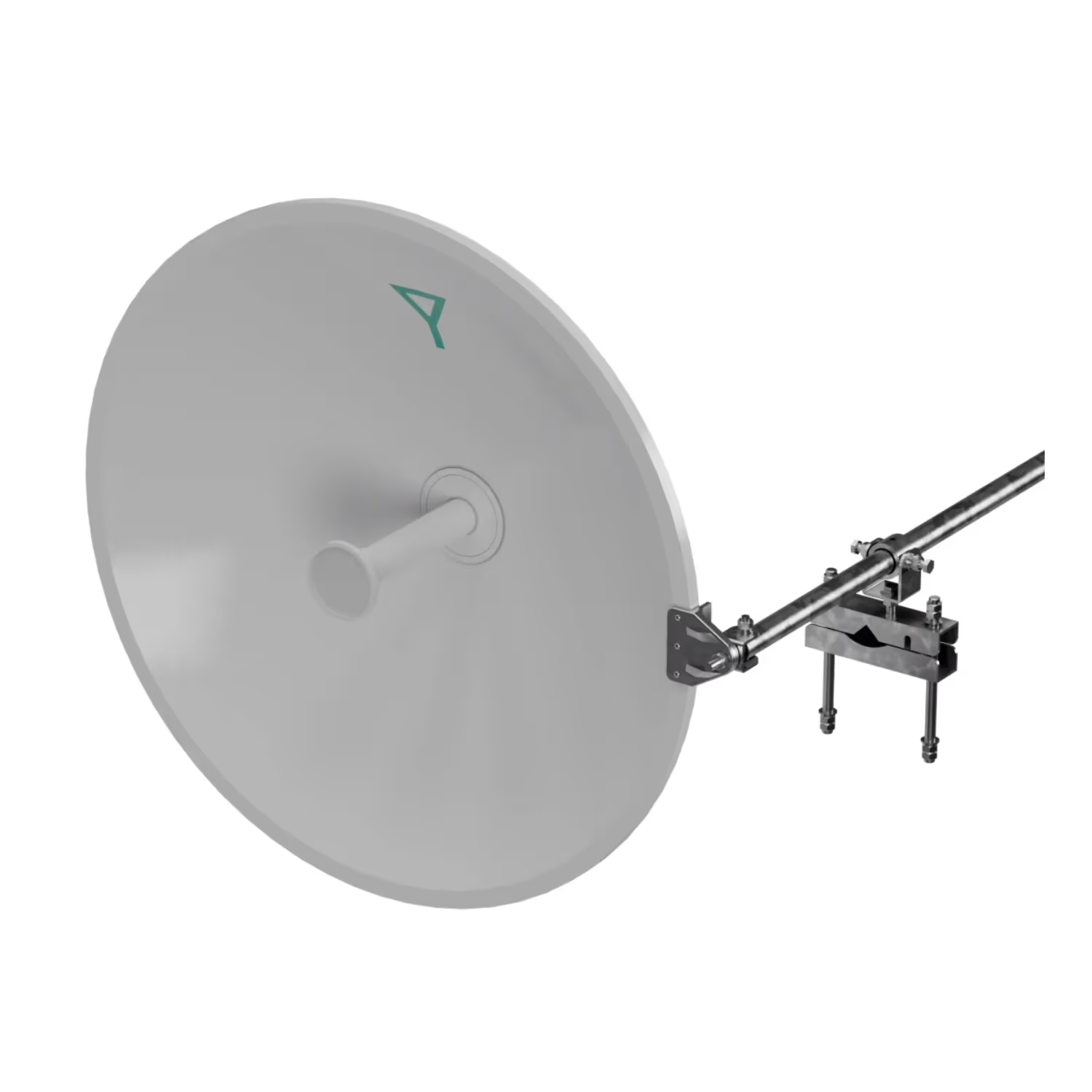
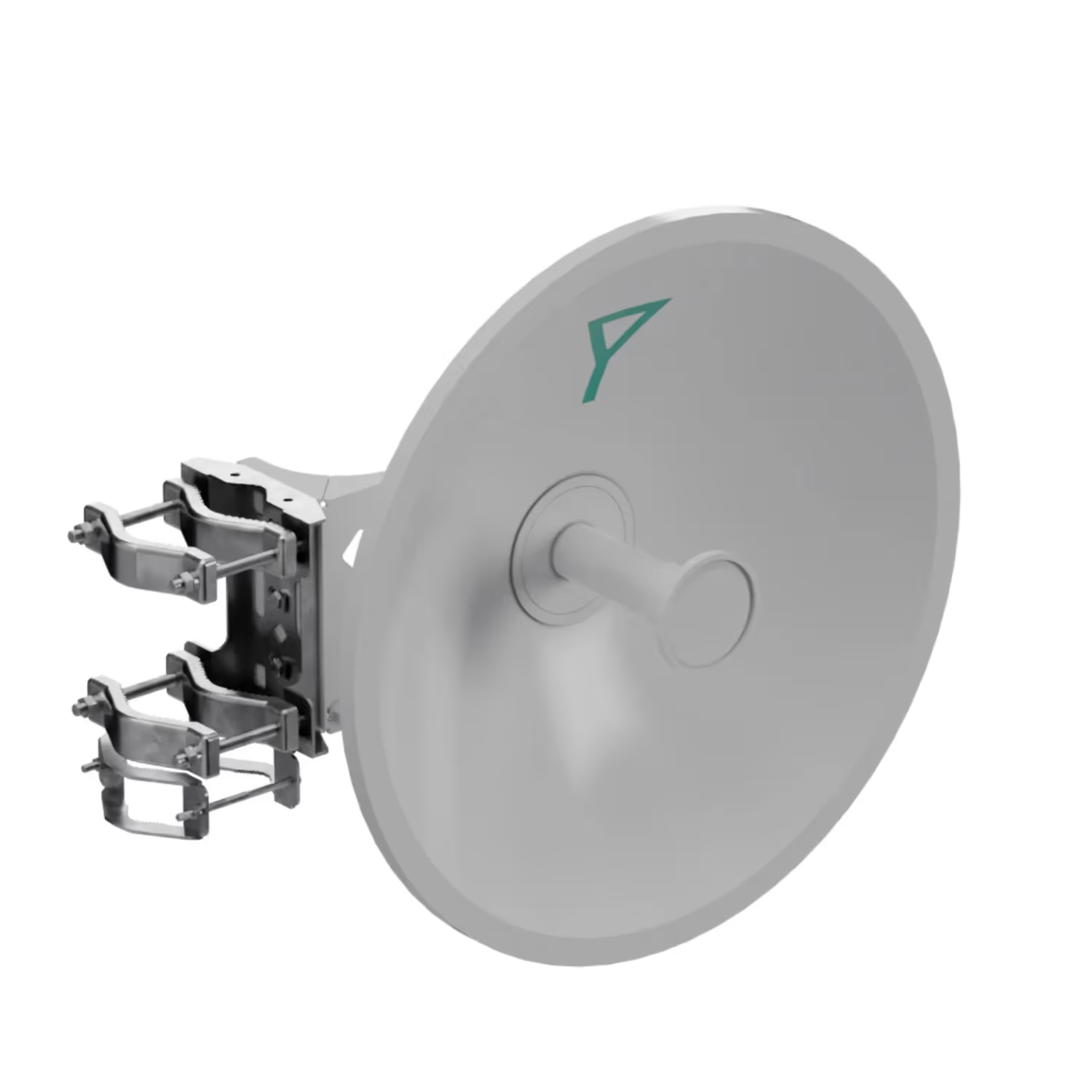
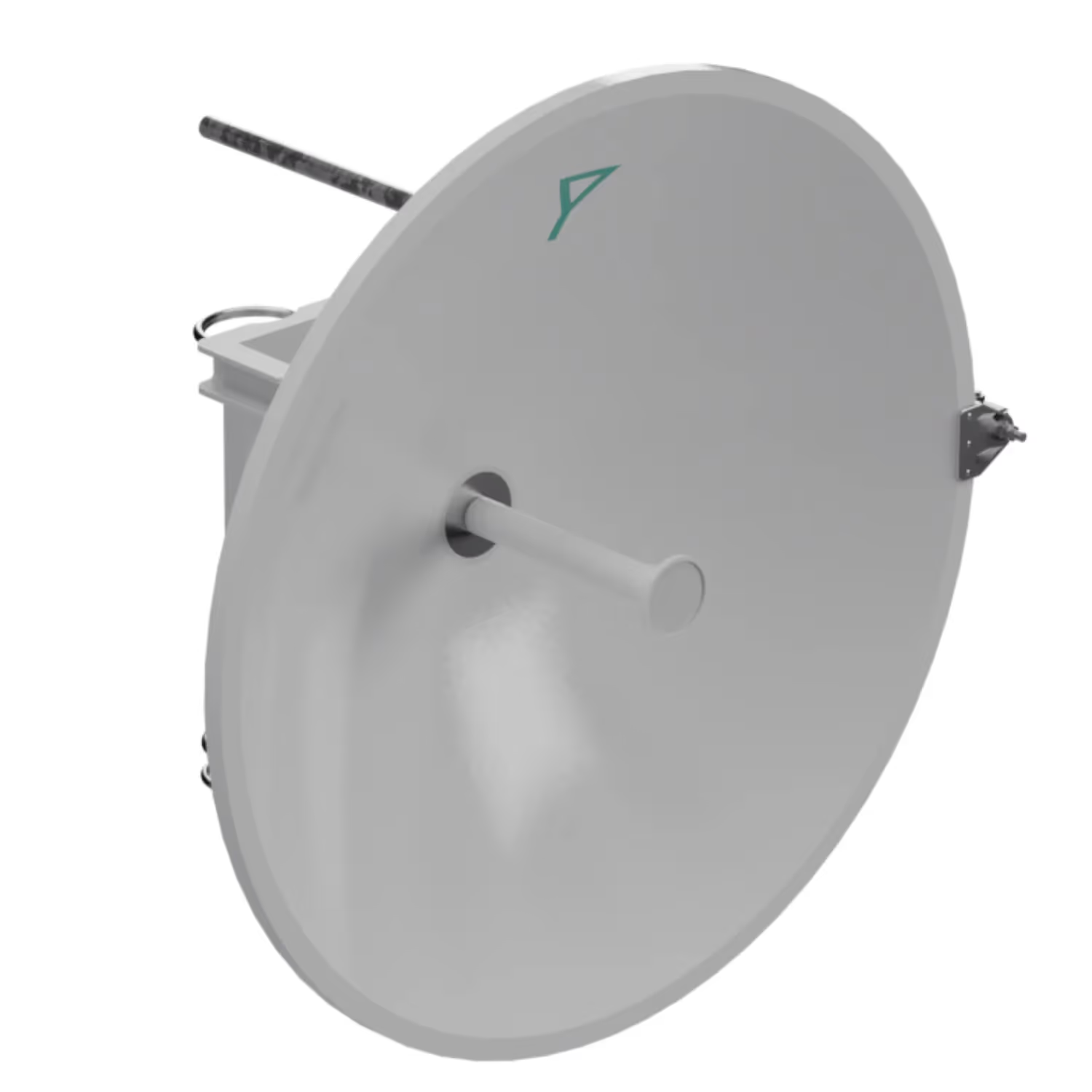
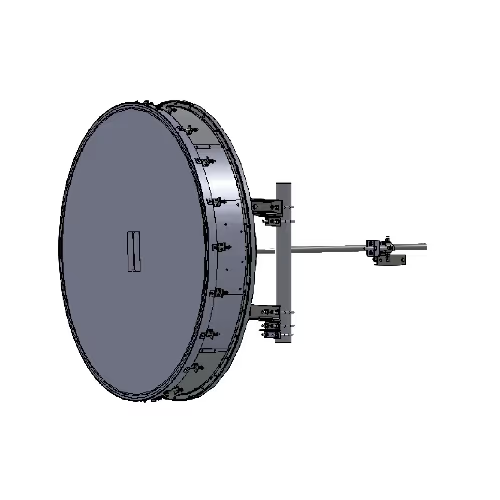
0.9 m (3-ft) 5 and 6 GHz dish 2-pack designed for cost-effective shipping and direct connection to Ubiquiti Wave MLO6, Wave MLO5, AF5XHD, Cambium ePMP Force 4600c and Force 400c, and Mimosa C5c and B5c radios without conversion loss for links up to 10–20 km. Price includes both antennas.
High-Gain 10–20 km PTP LinksThe 0.9 m RP-SMA dish 2-pack is a complete high-gain dish antenna solution built for long-range point-to-point (PTP) backhaul using RP-SMA connector radios from Ubiquiti, Cambium, and Mimosa and includes RP-SMA jumper cables. These antennas offer the appropriate gain for 10–20 km links and provide strong antenna performance with a narrow beamwidth to improve signal stability and throughput for rural broadband, enterprise connectivity, and other reliability-critical deployments.
Narrow Beamwidth and SNR Advantage
Engineered to provide ample gain for optimal signal quality in low-noise settings, it ensures robust link performance and consistent throughput across distances. Its narrow beamwidth minimizes noise interference, enhancing SNR and maintaining stable performance over longer links.
Durable, Low-Maintenance Operation
The dish’s sturdy design ensures stable alignment and consistent performance even in changing weather. When properly installed and routinely inspected, it provides reliable long-range point-to-point throughput for years, with minimal maintenance and a lower total cost of ownership.
Direct RP-SMA Connection for Ubiquiti, Cambium, and Mimosa RadiosRP-SMA connectors attach directly to compatible Ubiquiti, Cambium, and Mimosa radios to eliminate conversion loss. This direct attachment simplifies installation, reduces connection losses, and helps maintain stronger end-to-end link performance.
Simplified Installation
The RP-SMA interface connects directly to compatible Ubiquiti, Cambium, and Mimosa radios, making it a straightforward antenna option for RP-SMA connector deployments. Direct connection reduces unnecessary interconnects and potential points of failure, improving reliability and streamlining field deployment for WISPs and integrators.
Direct 5 and 6 GHz Radio Compatibility
Ubiquiti
• Wave MLO6
• Wave MLO5
• airFiber 5XHD / AF-5XHD
• airFiber X Series: AF-5X
• LTU Rocket
• airMAX Rocket Prism 5AC
• airMAX Rocket AC Lite
Cambium
• ePMP Force 4600C
• ePMP Force 400C
• ePMP Force 300 CSM
• ePMP Force 300 CSML
• ePMP 4500L
• ePMP 3000L
Mimosa
• C5c
Radio Compatibility with RP-SMA to N Connector Jumper Cable
Mimosa
• B5c (4.9–6.2 GHz)
Cambium Networks
• PTP 650 Connectorized (4.9–6.05 GHz)
• PTP 670 Connectorized (4.9–6.05 GHz)
• PTP 700 Connectorized (4.4–5.925 GHz)
• PTP 450b Connectorized / Radio Only (4.9–5.925 GHz)
• PTP / PMP 450v 2x2 Connectorized (5.15–7.125 GHz)
• PTP / PMP 450v 4x4 Connectorized (5.15–7.125 GHz)
LigoWave / Deliberant
• LigoPTP 5-N RapidFire (5 GHz)
• LigoPTP 6-N RapidFire (5.9–6.4 GHz)
• LigoPTP PRO 5-N (5 GHz)
• LigoDLB 5 / LigoDLB 5ac (5 GHz)
RADWIN
• RADWIN 2000 E Connectorized (4.9–7.1 GHz)
• RADWIN 2000 Alpha / Alpha PRO Connectorized (4.9–6.0 GHz)
• RADWIN 2000 D-Plus Connectorized (5 GHz)
• RADWIN 2000i (4.9–6.0 GHz)
Proxim
• Tsunami QuickBridge 10100L-EPA (4.9 / 5 GHz)
• Tsunami QB-8200 (5 GHz)
• Tsunami QB-8100 EPA (5 GHz)
EnGenius
• EOC655 (5 GHz)
• EOC655-C18 (5 GHz)
InfiNet Wireless
• Quanta 5 Connectorized (5 GHz)
• InfiLINK Evolution E5 / E6 Connectorized (4.9–6.425 GHz)
• InfiLINK 2x2 / R5000 Connectorized variants (4.9–6.4 GHz)
Ubiquiti
• Bullet M5 HP / Bullet M5 Titanium (5 GHz)
• Bullet AC / Bullet AC IP67 (5 GHz)
MikroTik
• Groove 52 / GrooveA 52 (5 GHz)
Alvarion
• BreezeNET B detached-antenna models (5 GHz)
• BreezeNET B130 / B300 connectorized (5 GHz)
Cisco
• Aironet 1400 Series Wireless Bridge (5.8 GHz)
Remote Relay SitesFeaturing a high front-to-back ratio, the 0.9m dish reduces unwanted signal reception from behind, which is beneficial for remote relay sites and other less-crowded locations with cleaner RF environments. It does not include a shroud and isn’t a deep-dish design, so 90° side lobes can be more pronounced. Proper placement and adequate separation from nearby antennas help minimize interference, making this dish ideal for installations that aren’t densely co-located on crowded towers.
Lightweight and Easy to Deploy
Each package contains two 0.9m dishes, making shipping more cost-effective. The low-profile design, without a shroud or radome, keeps the antennas lightweight for easier handling and installation, supporting efficient backhaul deployments.
Problems That the 09M-DISH-RPSMA-2PK SolvesInsufficient Signal Strength at Long Distances
Smaller antennas may struggle to maintain reliable connections over extended ranges. The higher gain of the 0.9m dish improves signal levels, enabling stable links at greater distances.
Poor Throughput and Lower Modulation Rates
Weak signals often force radios to use lower modulation schemes, reducing capacity and speed. The additional antenna gain helps radios maintain higher modulation rates and deliver better throughput.
Network Coverage Gaps
Some subscribers are located beyond the practical coverage range of standard CPE antennas. The high-gain dish allows service providers to reach more customers without deploying additional towers or relay sites.
High Levels of RF Interference
In crowded 5 GHz and 6 GHz environments, interference can degrade performance and reliability. The dish's narrow beamwidth helps reject unwanted signals and improve link quality.
Unstable Connections in Challenging Environments
Foliage, elevated noise floors, and difficult terrain can weaken wireless links. The increased gain provides additional link margin, helping maintain more reliable service under challenging conditions.
Inconsistent Service for Bandwidth-Intensive Applications
Applications such as video conferencing, cloud services, VoIP, and streaming require stable, high-capacity connections. Improved signal quality helps deliver a more consistent user experience.
Limited Scalability for Network Growth
As networks expand, providers need to serve increasingly distant customers without significantly increasing infrastructure costs. The higher-gain antenna extends practical service areas and supports more efficient network expansion.
Underperforming Next-Generation Wireless Deployments
Wi-Fi 6E and Wi-Fi 7 technologies benefit from strong signal quality to achieve their full performance potential. The high-gain dish helps support wider channels and higher-capacity wireless deployments.
Frequent Service Calls and Customer Complaints
Poor signal conditions can lead to reduced speeds, intermittent connections, and increased support requests. By improving link quality and reliability, the antenna helps reduce troubleshooting and maintenance requirements.
Limited Performance from Connectorized Subscriber Radios
Many connectorized subscriber radios require higher-gain antennas to achieve optimal performance in demanding deployments. The 09M-DISH-RPSMA-2PK provides a high-performance antenna solution that helps maximize the capabilities of compatible RP-SMA radios.
Typical Use CasesLong-Distance Subscriber Links
The 0.9m (3 ft) dish size provides higher gain than smaller CPE antennas, making it ideal for subscriber connections that require increased signal strength and improved link reliability over longer distances.
Rural Fixed Wireless Broadband
Perfect for serving customers in rural and remote areas where homes and businesses are located farther from the access point. The high-gain dish helps maintain stable connections and higher throughput at extended ranges.
High-Noise Environments
The narrow beamwidth helps reject interference from neighboring networks and unwanted RF signals, making it suitable for deployments in crowded 5 GHz and 6 GHz environments.
Challenging RF Conditions
Ideal for installations with foliage, moderate obstructions, or elevated noise floors where additional antenna gain is needed to maintain reliable modulation rates and service quality.
High-Speed Residential and Business Connections
Supports high-capacity fixed wireless services that require consistent throughput for applications such as:
• Video streaming
• Video conferencing
• Remote work and education
• Cloud applications
• Large file transfers
• VoIP services
Wi-Fi 6E and Wi-Fi 7 MLO Deployments
Suitable for next-generation fixed wireless networks utilizing wide channels and Multi-Link Operation (MLO), where higher signal quality directly contributes to improved network performance.
Network Expansion Projects
Enables WISPs to extend coverage into underserved areas without constructing additional tower sites, reducing infrastructure costs while expanding service availability.
Customer Premises Equipment (CPE) Deployments
Designed for connectorized subscriber radios that use RP-SMA connections, providing a high-performance antenna solution for point-to-multipoint (PtMP) client installations.
Backup and Redundant Connectivity
Can be deployed as part of secondary or redundant wireless links for businesses and critical locations that require dependable internet connectivity and improved uptime.
Who Is the 09M-DISH-RPSMA-2PK Designed For?The 09M-DISH-RPSMA-2PK is ideal for:
• Wireless Internet Service Providers (WISPs) deploying high-performance subscriber connections
• Fixed wireless broadband operators serving rural and suburban customers over longer distances
• Internet service providers expanding coverage into underserved and difficult-to-reach areas
• Network operators requiring higher-gain CPE antennas for challenging RF environments
• WISPs operating in congested spectrum where improved interference rejection is critical
• Service providers deploying Wi-Fi 6E and Wi-Fi 7 networks in the 6 GHz band
• Operators using connectorized subscriber radios with RP-SMA antenna ports
• Businesses and enterprise customers requiring reliable, high-capacity fixed wireless connectivity
• Schools, government facilities, farms, and industrial sites located beyond the practical range of smaller CPE antennas
• System integrators and wireless installers designing long-range point-to-multipoint (PtMP) subscriber networks
• Tower owners and managed service providers building scalable, high-capacity fixed wireless infrastructure
• Network operators seeking to maximize throughput, improve link stability, and reduce the need for additional tower sites or relay infrastructure
What Makes the 09M-DISH-RPSMA-2PK Different from Similar Products?Wideband 5 GHz and 6 GHz Coverage
Unlike many traditional CPE dish antennas that are limited to a narrow frequency range, the 09M-DISH-RPSMA-2PK supports wideband operation across both the 5 GHz and 6 GHz bands. This allows operators to deploy the same antenna across multiple wireless platforms and migrate to newer technologies without replacing antennas.
High-Gain 0.9m (3 ft) Design
The larger 0.9m reflector provides additional antenna gain compared to smaller CPE dishes, delivering stronger signals, greater link margin, and improved performance on longer-distance links.
Optimized for Long-Range Subscriber Deployments
The antenna is specifically designed for fixed wireless subscriber applications where maximizing signal quality and maintaining reliable connectivity over extended distances are critical requirements.
Improved Interference Rejection
Its narrow beamwidth focuses RF energy toward the intended access point while reducing reception of unwanted signals from surrounding networks. This can improve signal quality and link stability in congested environments.
Future-Ready Platform
The wide frequency coverage makes the antenna suitable for current 5 GHz deployments and next-generation 6 GHz networks, including Wi-Fi 6E and Wi-Fi 7 technologies.
Compatible with Connectorized RP-SMA Radios
The antenna is designed for radios that utilize RP-SMA antenna connections, allowing straightforward integration with compatible connectorized subscriber devices without requiring custom modifications.
Greater Network Flexibility
Because a single antenna can support multiple frequency bands and radio platforms, operators can standardize inventory, simplify upgrades, and reduce the need to stock different antennas for different deployments.
Designed for Professional WISP Networks
The antenna is engineered specifically for fixed wireless broadband applications, emphasizing link reliability, high performance, and long-term deployment flexibility rather than general-purpose wireless applications.
Cost-Effective Network Expansion
By providing higher gain and longer practical link distances, the antenna enables operators to extend service coverage and improve subscriber performance without necessarily adding additional tower infrastructure or relay sites.
Frequently Asked QuestionsWhat is the 09M-DISH-RPSMA-2PK?
The 09M-DISH-RPSMA-2PK is a high-gain 0.9m (3 ft) dish antenna kit designed for fixed wireless subscriber deployments. It is optimized for long-distance point-to-multipoint (PtMP) client connections and supports both 5 GHz and 6 GHz operation.
Why is this antenna sold in a 2-pack?
The antenna is sold in a convenient 2-pack, making it ideal for installers and WISPs deploying multiple subscriber links or maintaining spare inventory for future installations.
What frequency bands does it support?
The antenna supports wideband operation across the 5 GHz and 6 GHz frequency bands, allowing compatibility with both existing and next-generation wireless networks.
What applications is this antenna designed for?
Typical applications include:
• Long-distance subscriber connections
• Rural broadband deployments
• High-noise RF environments
• Enterprise and business connectivity
• Wi-Fi 6E and Wi-Fi 7 deployments
• Network expansion projects
What are the benefits of a 0.9m dish?
The larger dish provides higher gain, increased link margin, improved signal quality, and better interference rejection compared to smaller subscriber antennas.
Is this antenna suitable for long-distance links?
Yes. The higher gain of the 0.9m reflector makes it particularly well suited for longer-distance subscriber deployments where additional signal strength and reliability are required.
Does the antenna help reduce interference?
Yes. The dish's narrow beamwidth helps reject unwanted signals from surrounding networks, improving link quality and stability in congested RF environments.
Is the antenna compatible with Wi-Fi 6E and Wi-Fi 7 equipment?
Yes. The wideband design supports modern 6 GHz technologies, making it suitable for Wi-Fi 6E and Wi-Fi 7 fixed wireless deployments.
What type of radio connections does this antenna use?
The antenna is designed for connectorized radios that use RP-SMA antenna ports.
Can this antenna be used for point-to-multipoint (PtMP) networks?
Yes. It is specifically designed for PtMP subscriber deployments, where the dish is installed at the customer location and communicates with a sector access point.
Can the antenna help improve customer speeds?
Improved signal quality and increased link margin can help radios maintain higher modulation rates, which may result in better throughput and a more consistent user experience.
Can this antenna reduce the need for additional tower sites?
In many deployments, yes. The additional gain can extend practical service ranges, enabling providers to serve more distant subscribers without immediately deploying additional infrastructure.
Who typically uses this antenna?
The antenna is commonly used by:
• Wireless Internet Service Providers (WISPs)
• Fixed wireless broadband operators
• System integrators and installers
• Enterprise network operators
• Rural broadband providers
• Managed service providers (MSPs)
Related Products
No related products found.
Related Products (Category & Subcategory)












Related Products (Tags)
1.8 m Microwave Dish 6 GHz
6 GHz6-ft dish1.8 m dish
30° Symmetrical Horn
PTPbackhaulantenna
20° Asymmetrical Horn
antenna6 GHz5 GHz
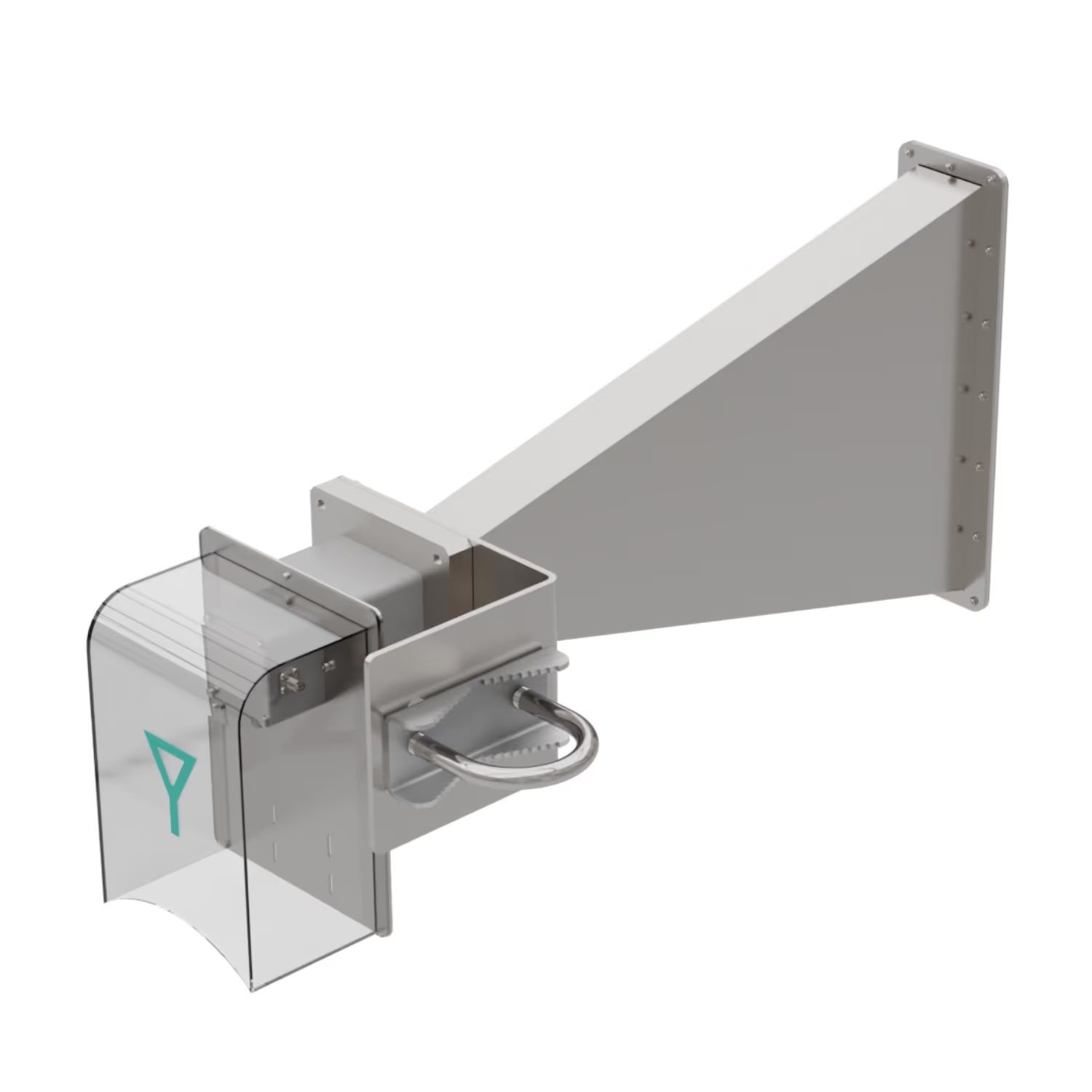
60° Asymmetrical Horn
antenna6 GHz5 GHz
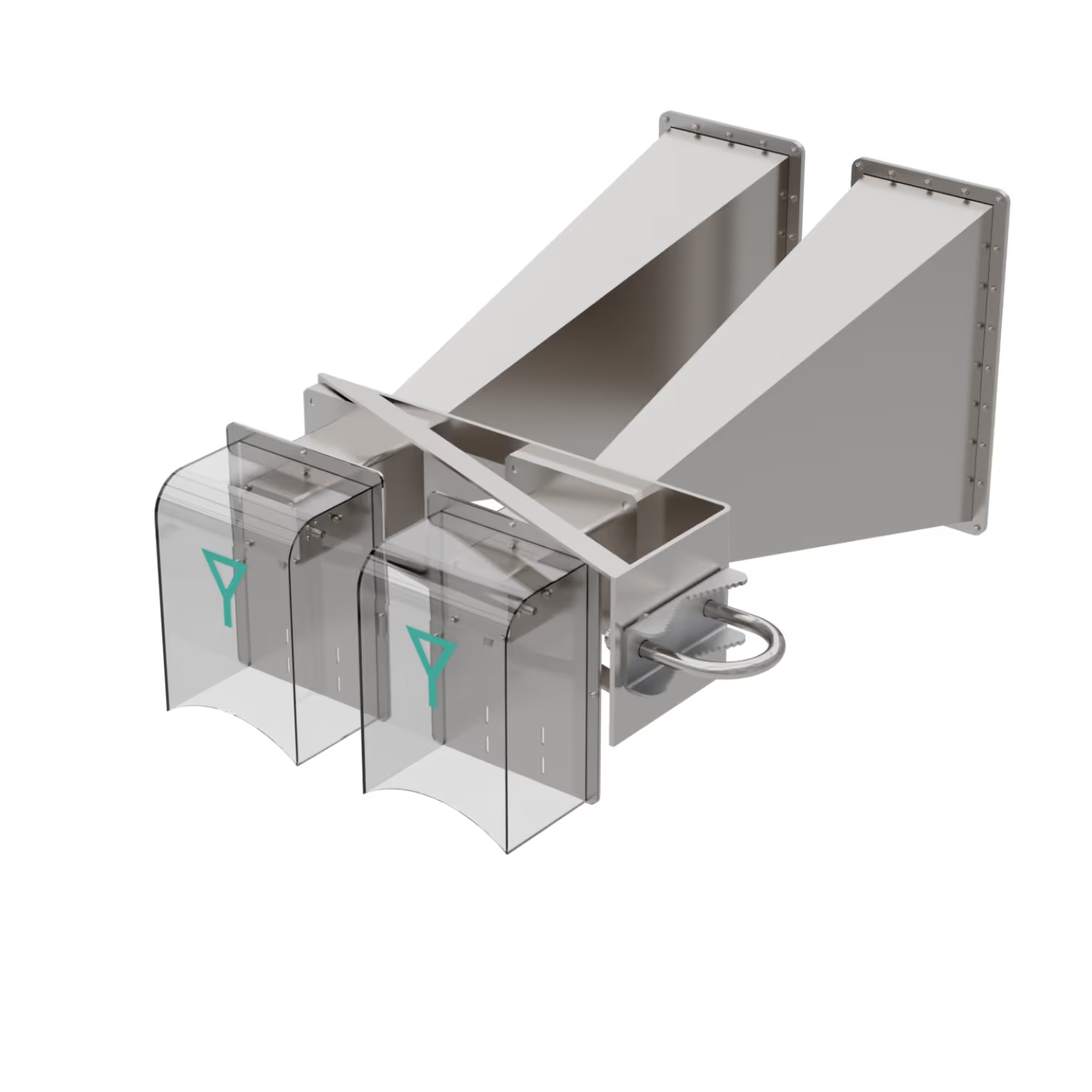
Double 20° Asymmetrical Horn 4x4
antenna6 GHz5 GHz
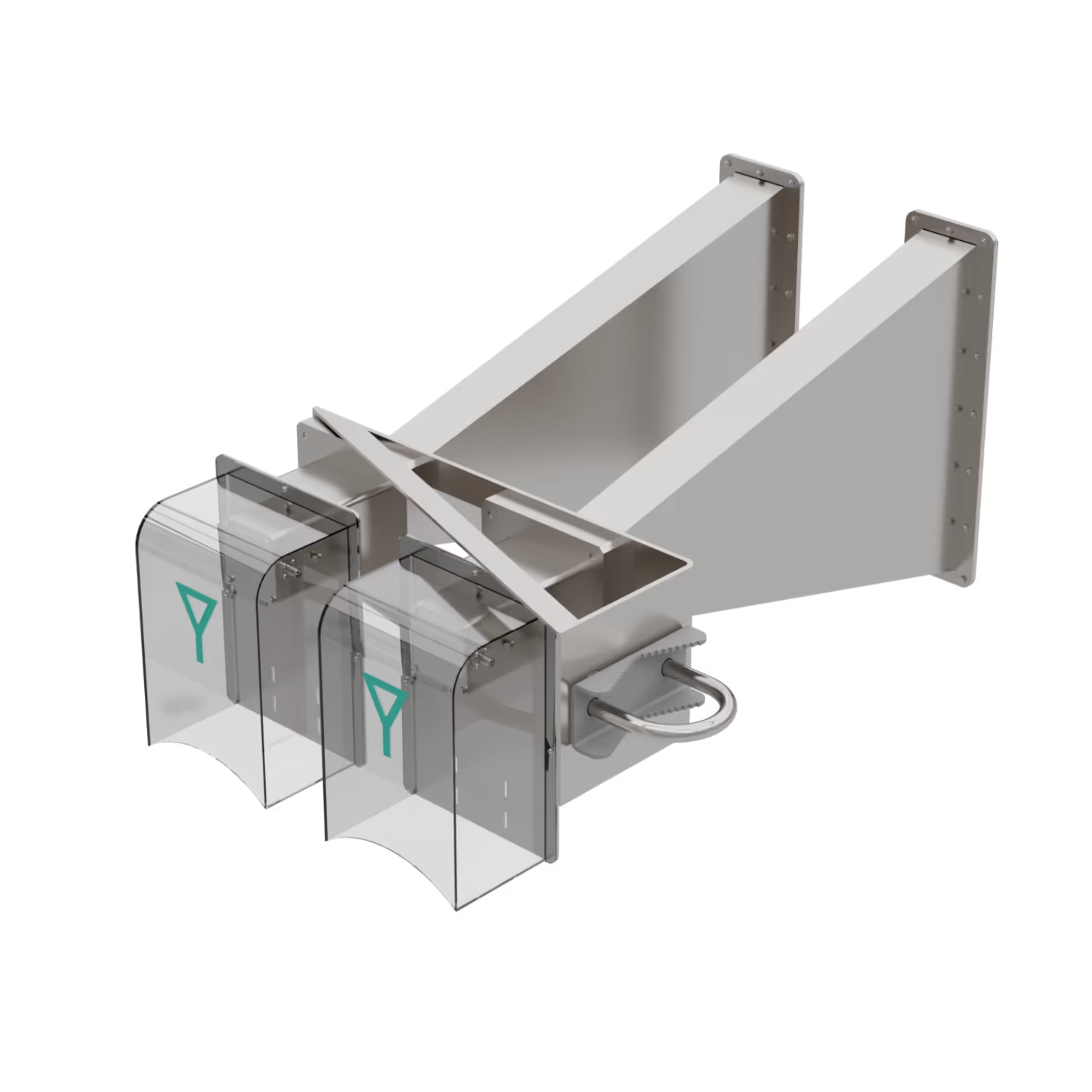
Double Asymmetrical 60° Horn 4x4
antenna6 GHz5 GHz
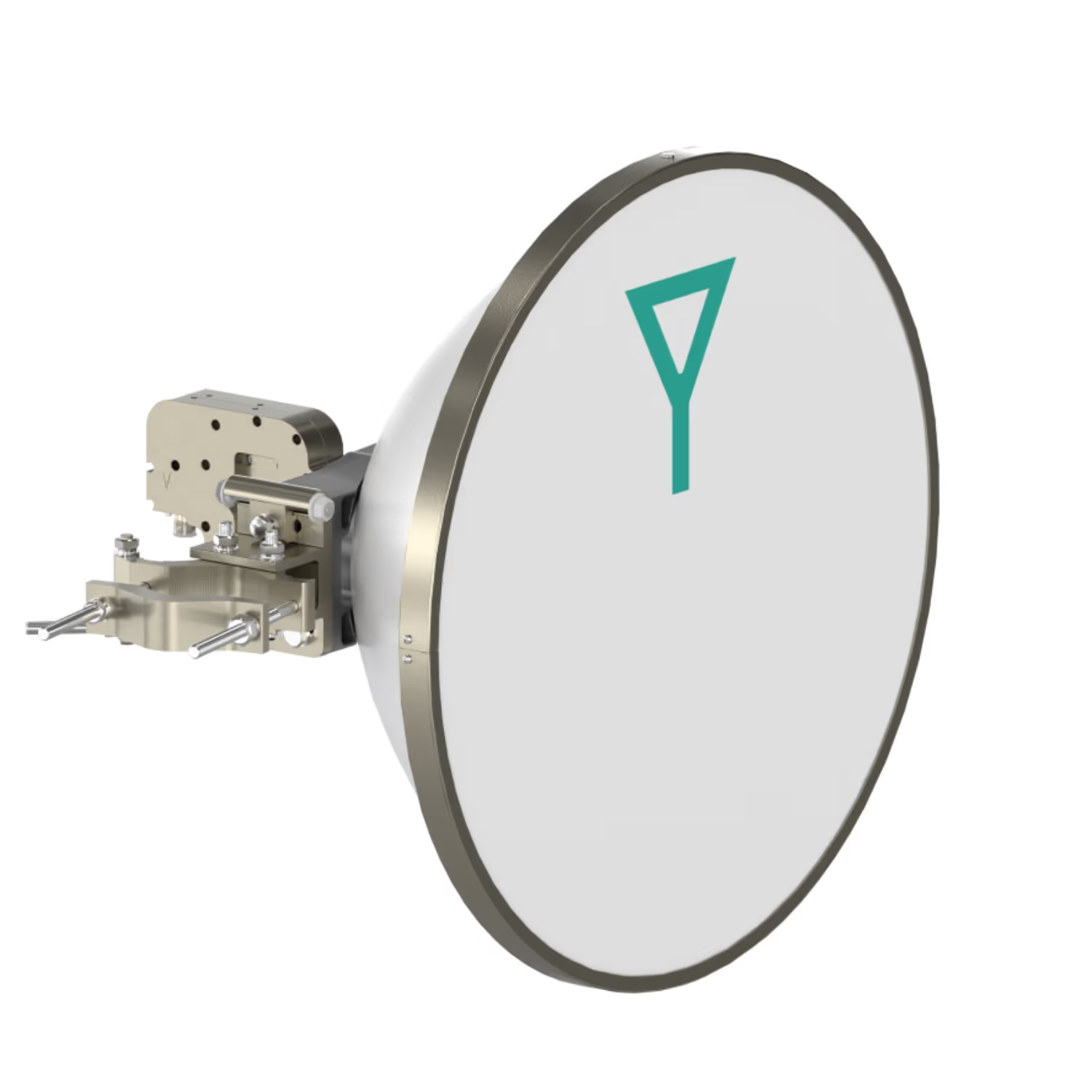
0.6m Dish High Performance
PTPbackhaulantenna
1.8m Dish High Performance
PTPbackhaulantenna
Reviews
Loading…
0.9m Dish RP-SMA 2-pack
Model Number: 09M-DISH-RPSMA-2PK
0.9 m (3-ft) 5 and 6 GHz dish 2-pack designed for cost-effective shipping and direct connection to Ubiquiti, Cambium, and Mimosa radios without conversion loss for links up to 20–40 km. Price includes both antennas.
Features
- Size: 0.9m (3-ft) (90 cm) (36 in)
- Max gain: 33.4 dBi
- Half Power (-3 dB) Beam Width: 3.1-2.7°
- Cross-pol Discrimination XPD: 30 dB
- Direct connection to Ubiquiti Wave MLO6, Wave MLO5, AF5XHD radios
- Direct connection to Cambium ePMP Force 4600c and Force 400c radios
- Direct connection to Mimosa C5c and B5c with RP-SMA to N connector jumper cable
- Ships in wooden crate pallet containing two dish antennas
Shipping Specifications
- •Dimensions (L×W×H): 960×960×310
- •Weight: 50.00kg
Warehouse availability
Shenzhen
In stock
5 available
Los Angeles
In stock
5 available
Winncom CDMX
In stock
3 available