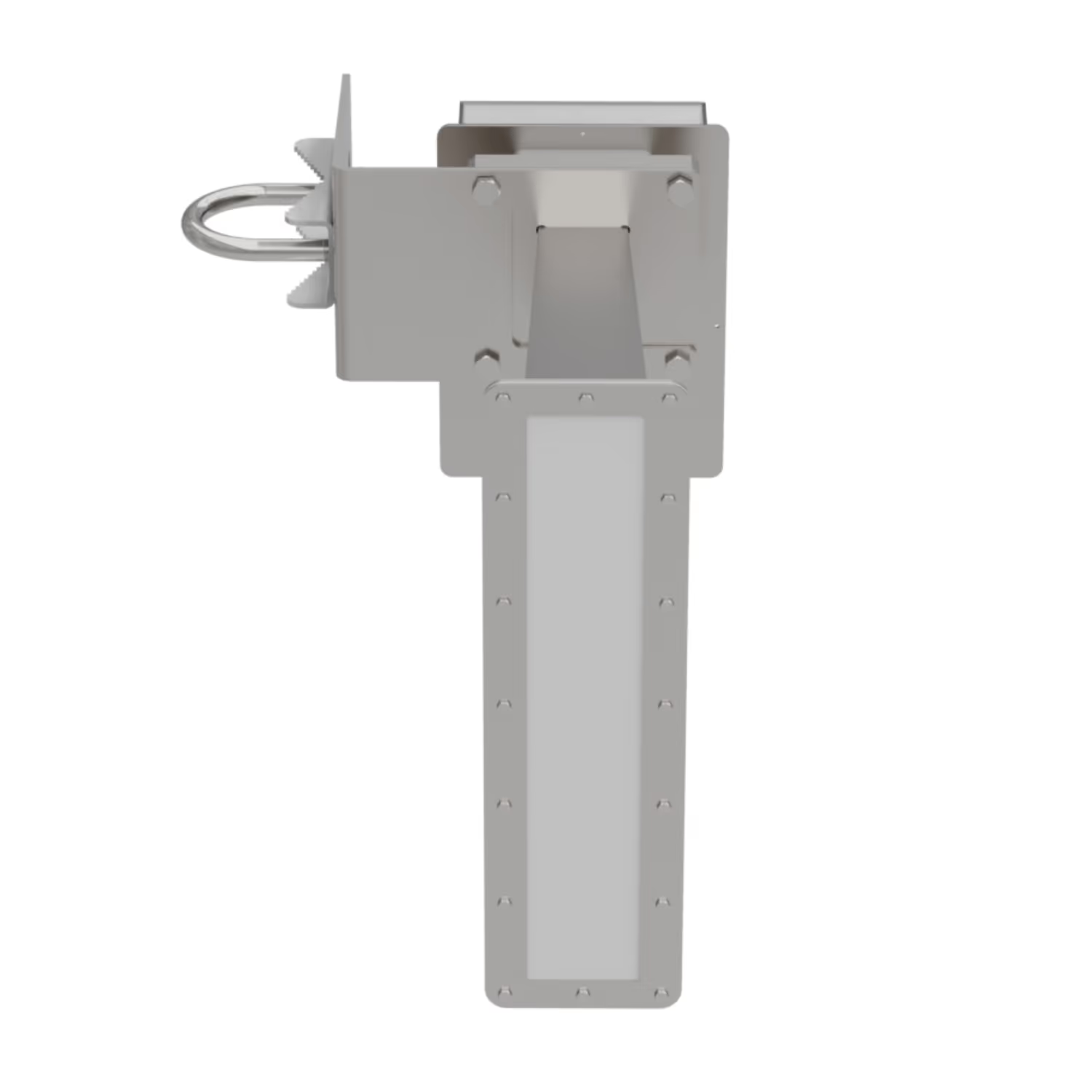
Overview
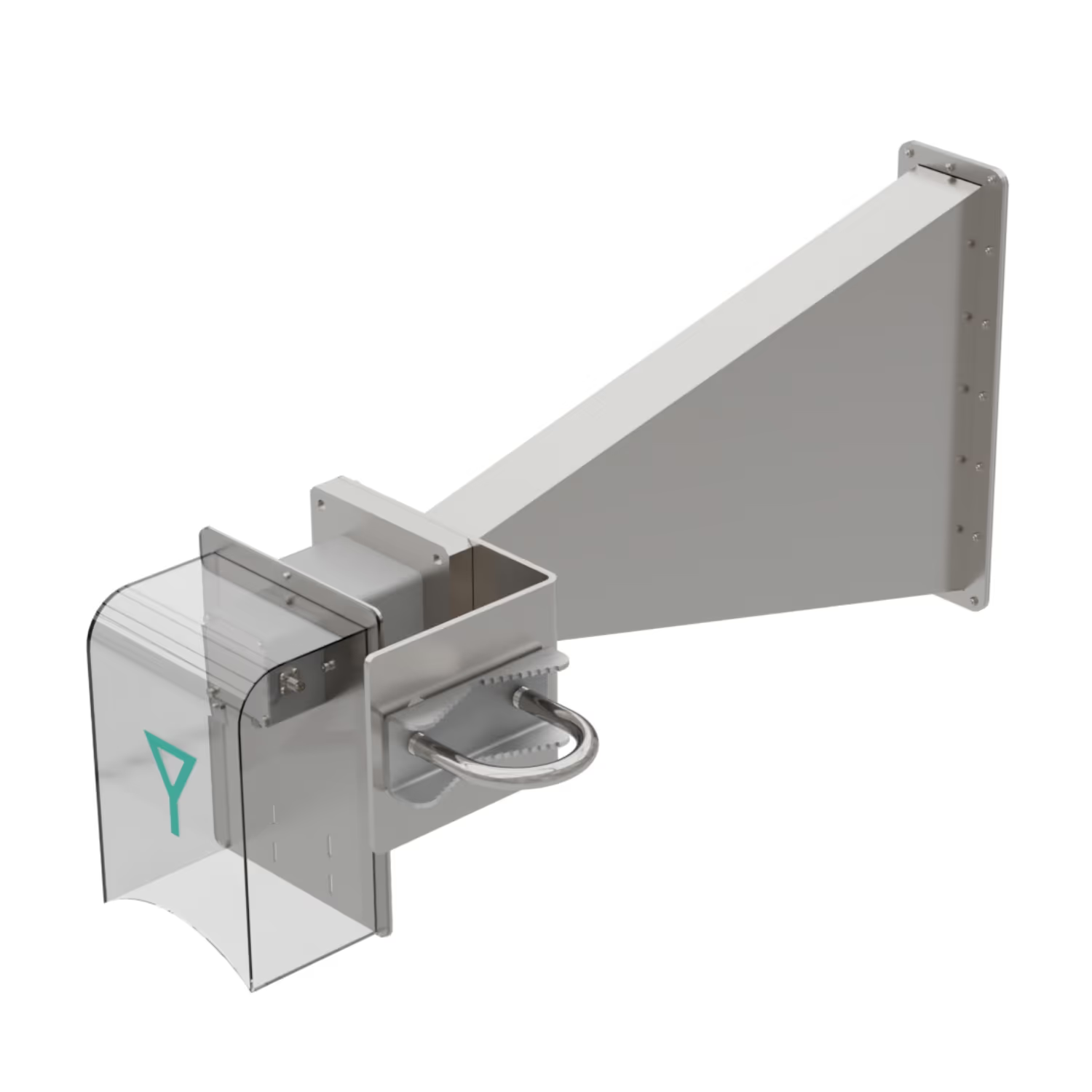
This industry-leading, price-disruptive 5 GHz and 6 GHz, 60-90° asymmetrical wideband horn antenna operates from 4.9–7.1 GHz and is designed to provide high-performance, cost-effective wideband coverage as a point-to-multipoint (PtMP) sector antenna for unobstructed links up to 10 km (depending on the remote-side antenna gain). Install six on a tower to provide full 360° 5 GHz and 6 GHz coverage.
Industry-leading Performance and Signal QualityThe A60 delivers unmatched wideband performance across the entire 5 and 6 GHz unlicensed spectrum, with balanced H/V beams, stable gain, and clean radiation patterns. Cyber Antennas’ wideband 60-90° horn provides the highest 60° sector performance in the WISP industry, offering up to 15% faster subscriber download speeds compared with RF Elements AH60WB, AH60-CC, and AH60-TP horns.
Its asymmetrical beam pattern features highly suppressed sidelobes for excellent noise rejection and scalability. With focused 60° beams, it is ideal for high-density AP clusters and dense co-location deployments. As a top-performing 60° WISP sector, the A60 combines the high gain of a traditional sector panel with the narrow beamwidth of a horn, maximizing noise resistance and frequency reuse.
The A60’s expertly tuned wideband characteristics result in low signal reflection, only about 5% worst case compared with roughly 11% in typical WISP antennas. This improves signal quality, reduces noise, and prevents heat buildup, false DFS hits, and potential radio damage. High-performance wideband tuning across 4.9–7.1 GHz ensures superior gain, efficient signal-power transfer, and clean radiation patterns, outperforming narrowband alternatives and exceeding the realized gain of RF Elements HG3-TP-S60, HG3-CC-S60, and SH60WB horns by more than 15% in subscriber throughput.
Designed for high-capacity PTP links under 2 km or medium-range PtMP access points, the A60 provides reliable performance across 5 and 6 GHz, including Wi-Fi 6E and Wi-Fi 7 MLO applications. Radio compatibility depends on connector type (RP-SMA female), frequency range (4.9–7.1 GHz), and intended use case. Its controlled 60° beam minimizes unwanted signal bleed, enabling excellent scalability and frequency reuse. The coverage pattern provides 3 dB roll-off at ±30° and 6 dB roll-off at ±45°, allowing deployment as a 90° sector or as a 5 GHz external backup antenna for the Ubiquiti Wave AP Gen2.
Balanced Coverage and Noise Rejection
Its asymmetrical beam pattern features highly suppressed sidelobes, offering excellent noise rejection and scalability. The focused 60-90° beams make it ideal for high-density AP clusters and dense co-location deployments. As a top-performing 60-90° WISP sector, the A60 combines the high gain of a traditional sector panel with the narrow beamwidth of a horn, maximizing noise resistance and frequency reuse.
Wideband That Outperforms Narrowband
The A60’s expertly tuned wideband characteristics result in low signal reflection, only about 5% worst case compared with roughly 11% in typical WISP antennas. This improves signal quality, reduces noise, and prevents heat buildup, false DFS hits, and potential radio damage. High-performance wideband tuning across 4.9–7.1 GHz ensures superior gain, efficient signal-power transfer, and clean radiation patterns. It outperforms narrowband alternatives and exceeds the realized gain of RF Elements HG3-TP-S60, HG3-CC-S60, and SH60WB horns by more than 15% in subscriber throughput.
Durable, Lightweight, and Optimized Design
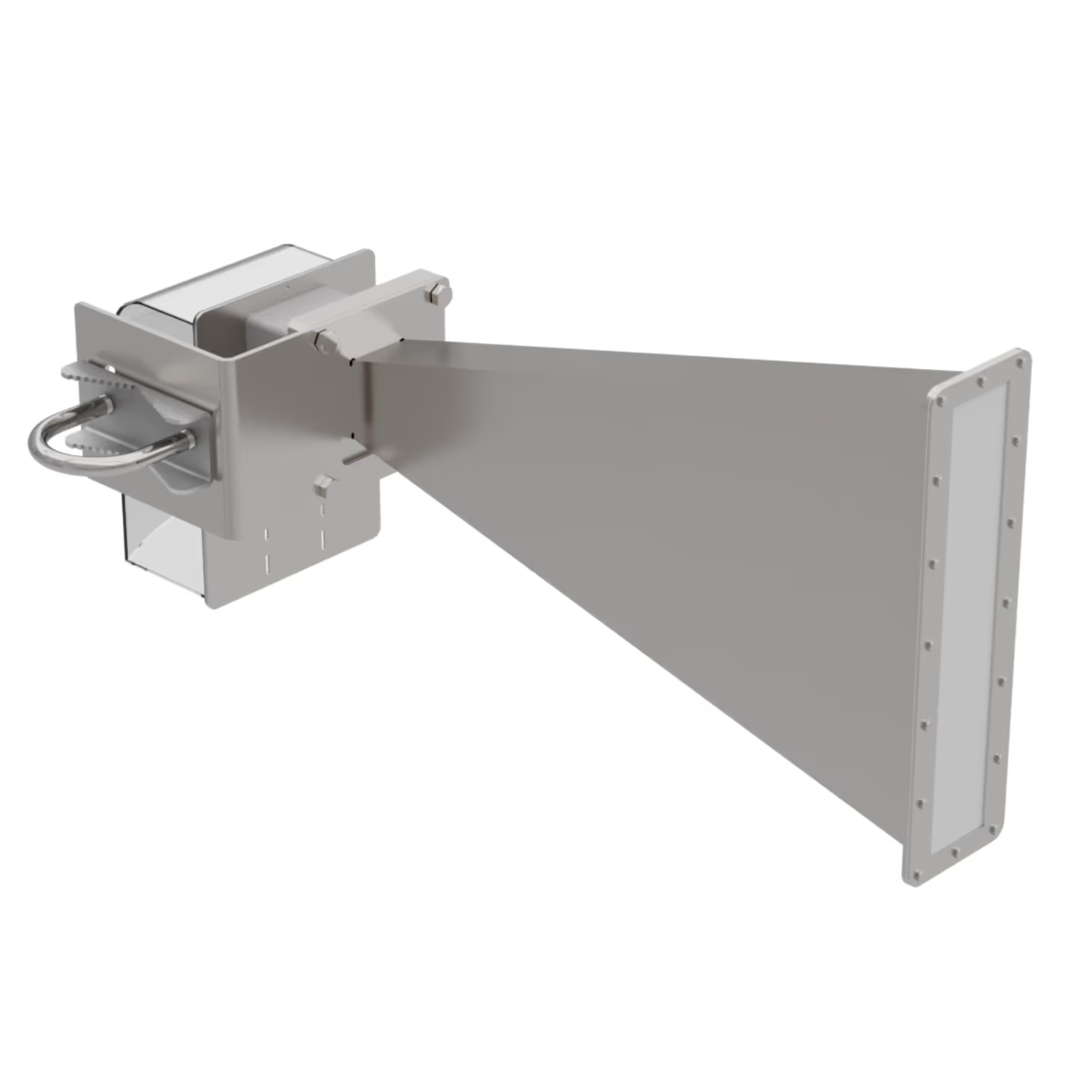
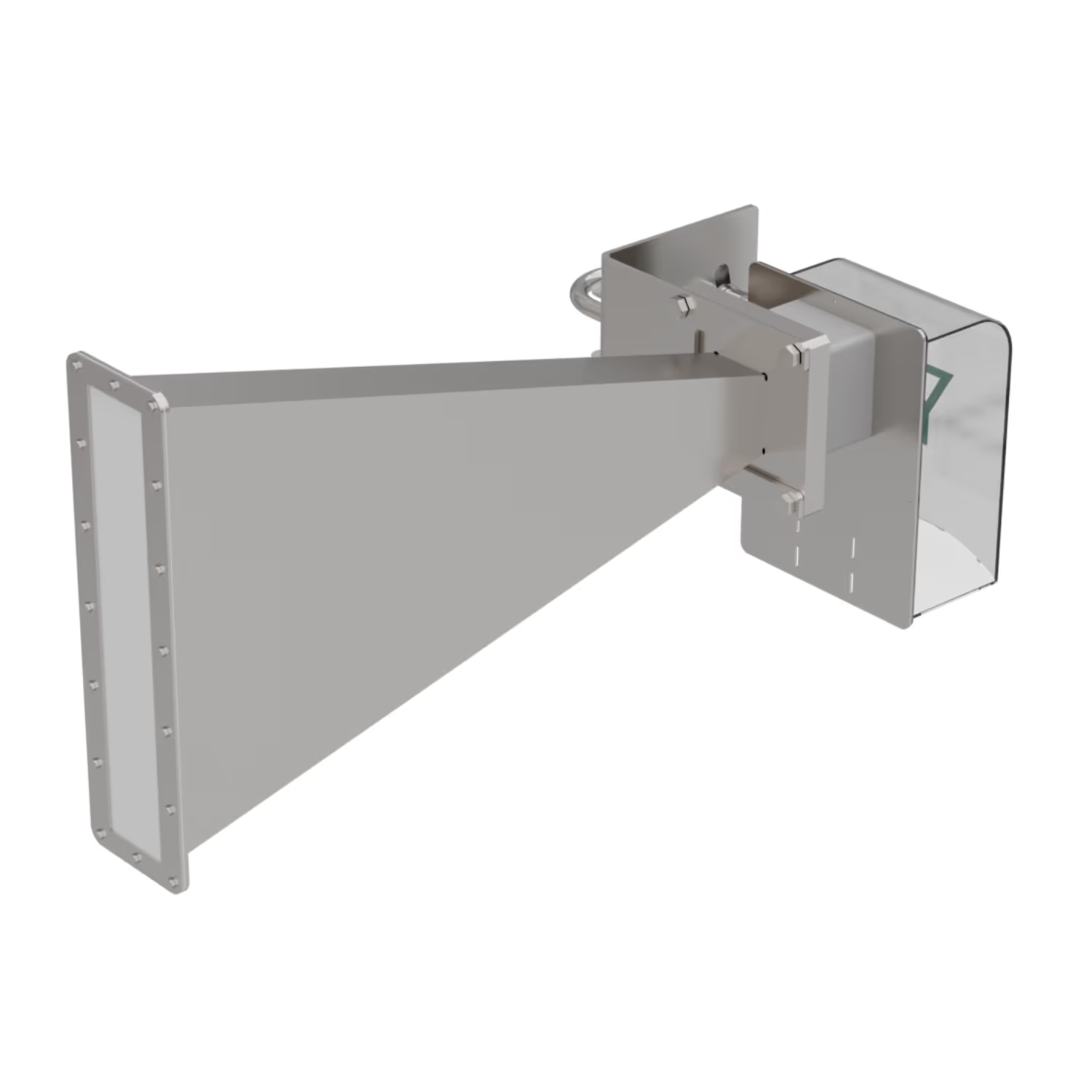
The A60 includes a new industrial design with corrosion-resistant materials:
• Anodized aluminum for extreme durability in marine and saltwater environments
• Extremely lightweight, compact construction for reduced tower and wind load
• Robust stainless steel mount
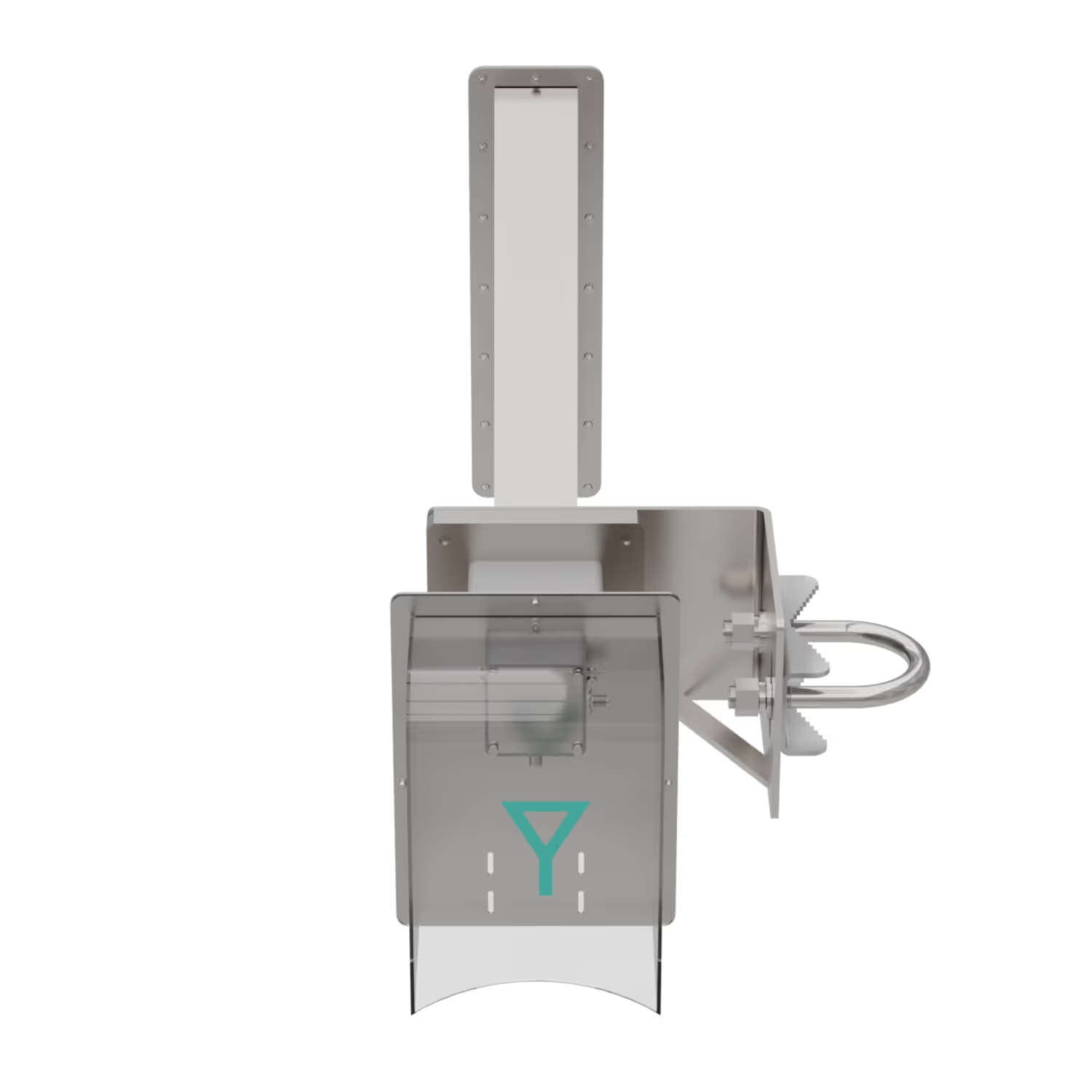
• Rear mount for short cable runs to radios like Mimosa A5, Cambium ePMP 3000/4500c/4600, and Ubiquiti Wave AP Gen2
• Radio-mount plate for short cables to 2×2 WISP radios such as Ubiquiti Rocket Prism AC Gen2, Rocket LTU, and Cambium ePMP 4500L/4600L
• Plastic housing protecting cables from birds and water ingress
Unmatched Design and Build QualityThis best-in-class 60-90° sector horn is engineered for easy deployment and 360° coverage using six antennas. Its lightweight anodized aluminum construction provides long-term durability in harsh environments while minimizing wind load. The mount features gripping teeth for secure installation and reduced maintenance. Stainless steel hardware with anti-seize coating ensures long-term stability, and the design eliminates unnecessary elements, such as oversized handles, that could increase drag.
The Teglar cloth radome, proven in large microwave backhaul antennas, is highly durable and water-repellent. It flexes with wind to shed water and ice, maintaining RF performance in adverse weather.
The antenna includes stainless steel RP-SMA female bulkhead connectors and short, high-quality RF jumpers for direct radio connection. Its wideband efficiency simplifies procurement and deployment, reducing the need for band-specific antennas while improving overall network performance.
The A60 includes a new industrial design with corrosion-resistant materials:
• Anodized aluminum for extreme durability in marine and saltwater environments
• Extremely lightweight, compact construction for reduced tower and wind load
• Robust stainless steel mount
• Rear mount for short cable runs to radios like Mimosa A5, Cambium ePMP 3000/4500c/4600, and Ubiquiti Wave AP Gen2
• Radio-mount plate for short cables to 2×2 WISP radios such as Ubiquiti Rocket Prism AC Gen2, Rocket LTU, and Cambium ePMP 4500L/4600L
• Plastic housing protecting cables from birds and water ingress
Radio Compatibility & Deployment ScenariosThe A60 is designed to support PtMP APs, PtP links, high-density sector deployments, and Wi-Fi 6E/7 MLO applications. It is ideal for operators who need strong, controlled coverage with excellent noise rejection and high frequency reuse. Its wideband operation (4.9–7.1 GHz) enables flexible use across multiple bands without changing antennas as spectrum plans evolve.
It works with a wide range of radios thanks to standard RP-SMA connectivity:
Ubiquiti
• Rocket Prism AC Gen2 (PtMP AP)
• Rocket LTU (PtMP AP)
• Rocket AC Lite (PtMP AP)
Cambium
• 2×2 ePMP 4600L (PtMP AP)
• 2×2 ePMP 4500L (PtMP AP)
• 2×2 ePMP 3000L (PtMP AP)
• 4×4 ePMP 4600 (PtMP AP)
• 4×4 ePMP 3000 (PtMP AP)
• 8×8 ePMP 4500c (PtMP AP)
Mimosa
• A5x (PtMP AP)
Designed to Solve Common WISP ChallengesRF Interference in Congested Environments
The A60's horn antenna design and controlled 60° asymmetrical beam pattern help limit the reception and transmission of unwanted RF energy. This improves noise rejection and helps maintain more stable wireless links in congested deployments.
Limited Network Scalability
As subscriber counts increase, networks often become difficult to scale due to interference and inefficient sector designs. The A60 provides a scalable sector platform that supports frequency reuse and enables operators to expand network capacity more efficiently.
Need for Both 5 GHz and 6 GHz Coverage
Many operators want to deploy both 5 GHz and 6 GHz services without maintaining separate antenna inventories. The A60's wideband 4.9-7.1 GHz coverage allows a single antenna platform to support both frequency bands.
High Equipment Replacement Costs
As networks migrate to Wi-Fi 6E and Wi-Fi 7 technologies, replacing antennas can be expensive. The A60's wideband design supports current and future radio platforms, helping reduce upgrade costs and simplify network planning.
Inconsistent Sector Performance
Traditional sector antennas can experience performance degradation due to excessive RF noise and uncontrolled radiation patterns. The A60's horn design focuses RF energy into a controlled coverage area, helping deliver more consistent throughput and network performance.
Providing Wide-Area Coverage with Fewer Sectors
The A60's 60° coverage pattern allows operators to build full 360° tower coverage using six sectors, simplifying tower designs while providing efficient wide-area PtMP service.
Typical Use Cases for the A60The Cyber Antennas A60 is a wideband 60° asymmetrical horn antenna designed for high-capacity 5 GHz and 6 GHz PtMP deployments. Its clean radiation pattern, suppressed sidelobes, and wideband 4.9-7.1 GHz operation make it suitable for several common WISP applications.
High-Capacity PtMP Access Point Sectors
Deploy the A60 on towers to provide focused 60° sector coverage for residential, business, and enterprise subscribers. Its asymmetrical beam pattern helps reduce interference and allows operators to reuse frequencies more effectively in dense network environments.
Dense Urban and Suburban WISP Networks
The A60 is well suited for areas where multiple sectors and neighboring towers operate on the same frequencies. The horn design minimizes unwanted RF energy and improves sector isolation, resulting in more consistent performance and increased sector capacity.
Multi-Gigabit Wi-Fi 6E and Wi-Fi 7 Deployments
With support across the entire 5 GHz and 6 GHz unlicensed spectrum, the A60 is ideal for deploying modern Wi-Fi 6E and Wi-Fi 7 radios that use wider channels and require stable, clean radiation patterns for maximum throughput.
Frequency Migration and Future Network Upgrades
Because the A60 covers both 5 GHz and 6 GHz, operators can transition between bands or support mixed deployments without replacing antennas, simplifying future network expansion and upgrades.
Short- to Medium-Range Subscriber Coverage
The A60's 60° coverage pattern and stable gain make it suitable for serving clusters of subscribers at short to medium distances while maintaining high modulation rates and reliable service quality.
Who Is the A60 Designed For?The A60 is ideal for:
• Wireless Internet Service Providers (WISPs)
• Fixed wireless broadband operators deploying point-to-multipoint (PtMP) networks
• WISPs building medium- to high-capacity sectors with 60° coverage requirements
• Network operators upgrading to 6 GHz, Wi-Fi 6E, and Wi-Fi 7 technologies
• Service providers using Ubiquiti, Cambium, Mimosa, and other compatible connectorized radio platforms
• Tower owners and network integrators deploying clean, high-performance sectorized networks
• Operators building networks in congested RF environments where sector isolation and frequency reuse are important
• Service providers requiring a single antenna platform for both 5 GHz and 6 GHz deployments
• Providers delivering residential, business, and enterprise broadband services over fixed wireless networks
• Operators seeking a future-ready antenna platform for multi-gigabit PtMP deployments
What Sets the A60 Apart from Similar Products in the IndustryCompared to similar 60° horn and sector antennas in the industry, the A60 stands out in several important ways:
True Wideband 4.9-7.1 GHz Coverage
Many 60° sector antennas are optimized for only a portion of the 5 GHz band or require different antenna models for 5 GHz and 6 GHz deployments. The A60 is engineered to provide consistent performance across the entire 4.9-7.1 GHz range, allowing operators to use a single antenna platform for both current and future networks.
Clean Radiation Pattern with Suppressed Sidelobes
The A60's asymmetrical horn design focuses RF energy into the intended coverage area while minimizing unwanted radiation outside the sector. This improves noise rejection, reduces interference, and enables more efficient frequency reuse in dense PtMP deployments.
Stable Gain Across the Entire Band
Many wideband antennas experience pattern distortion or gain variations at different frequencies. The A60 is designed to maintain stable gain and balanced beam performance throughout its operating range, helping preserve link quality and subscriber performance regardless of channel selection.
Designed Specifically for Modern 5 GHz and 6 GHz Networks
The A60 is optimized for next-generation deployments, including Wi-Fi 6E and Wi-Fi 7 radios operating across the 5 GHz and 6 GHz spectrum. This future-ready design helps protect infrastructure investments and reduces the need for antenna replacements during network upgrades.
Broad Compatibility Without Proprietary Interfaces
The A60 uses standard RP-SMA connections and is compatible with a wide range of connectorized radios from Ubiquiti, Cambium, Mimosa, and other manufacturers. Operators are not locked into a proprietary antenna ecosystem and can deploy the antenna across multiple radio platforms.
Frequently Asked QuestionsWhat is the operating frequency range of the A60?
The A60 operates from 4.9 GHz to 7.1 GHz, providing wideband coverage for both 5 GHz and 6 GHz wireless deployments.
What is the beamwidth of the A60?
The A60 features a 60° asymmetrical beam pattern, making it suitable for high-capacity PtMP sector deployments.
What applications is the A60 designed for?
The A60 is designed primarily for Point-to-Multipoint (PtMP) access point deployments, including residential broadband, business connectivity, and high-density wireless networks.
Which radios are compatible with the A60?
The A60 is compatible with many connectorized radios, including:
• Ubiquiti Wave MLO5
• Ubiquiti Wave MLO6
• Cambium ePMP 4600L
• Cambium ePMP 4500L
• Cambium ePMP 3000L
• Mimosa A5x
• Other compatible 5 GHz and 6 GHz connectorized radios operating within the 4.9-7.1 GHz frequency range.
Does the A60 support Wi-Fi 6E and Wi-Fi 7?
Yes. The A60's wideband design supports Wi-Fi 6E and Wi-Fi 7 deployments operating in the 6 GHz spectrum.
Can the A60 be used for both 5 GHz and 6 GHz networks?
Yes. The A60 covers both frequency bands, allowing operators to use a single antenna platform for mixed or future network deployments.
How many sectors are required for full 360° coverage?
A full 360° deployment can typically be achieved using six A60 sectors.
How does the horn design benefit network performance?
The horn design helps control the antenna's radiation pattern and suppress unwanted RF energy, which can improve sector isolation and reduce interference in dense deployments.
Is the A60 suitable for high-density WISP networks?
Yes. The A60 is specifically designed for high-capacity and high-density PtMP deployments where interference management and efficient frequency reuse are important.
Does the A60 require proprietary mounting hardware or adapters?
No. The A60 is designed to work with compatible connectorized radios and uses standard antenna connections, simplifying installation and deployment.
Is the A60 a future-ready antenna investment?
Yes. Its 4.9-7.1 GHz wideband coverage allows operators to support current 5 GHz networks while preparing for future 6 GHz, Wi-Fi 6E, and Wi-Fi 7 deployments without replacing antennas.
Related Products
No related products found.
Related Products (Category & Subcategory)
Related Tags
 antenna→
 6 GHz→
 5 GHz→
 wideband→
 wifi6e→
 wifi7→
 PtMP→
PtMP→ wireless bridge→
 ePMP 4600L→
 Ubiquiti→
 Cambium→
 Horn→
Horn→ Horn Antenna→
Click on a tag to see related products
Related Products (Tags)
1.8 m Microwave Dish 6 GHz
6 GHz6-ft dish1.8 m dish
30° Symmetrical Horn
PTPbackhaulantenna
20° Asymmetrical Horn
antenna6 GHz5 GHz
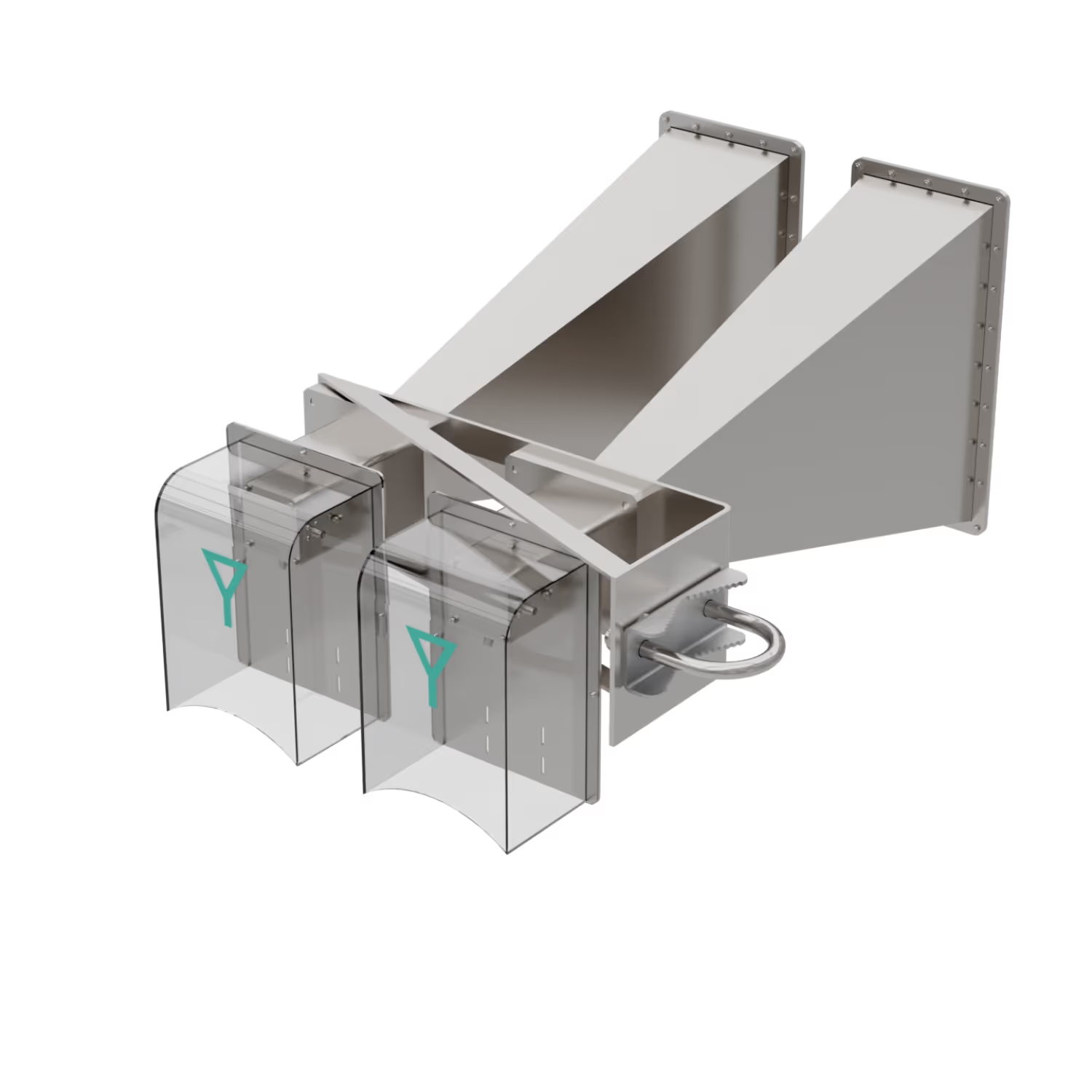
Double 20° Asymmetrical Horn 4x4
antenna6 GHz5 GHz
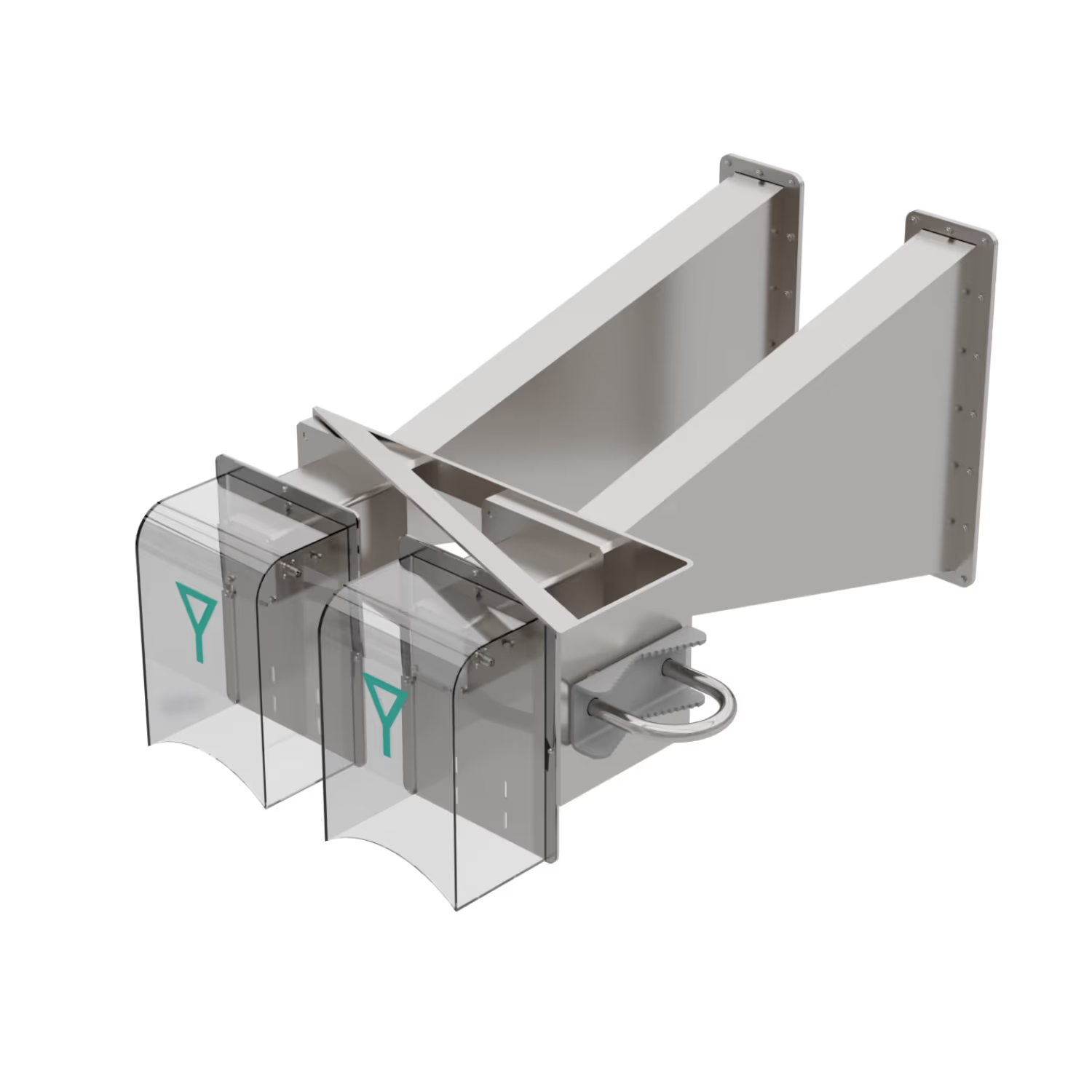
Double Asymmetrical 60° Horn 4x4
antenna6 GHz5 GHz
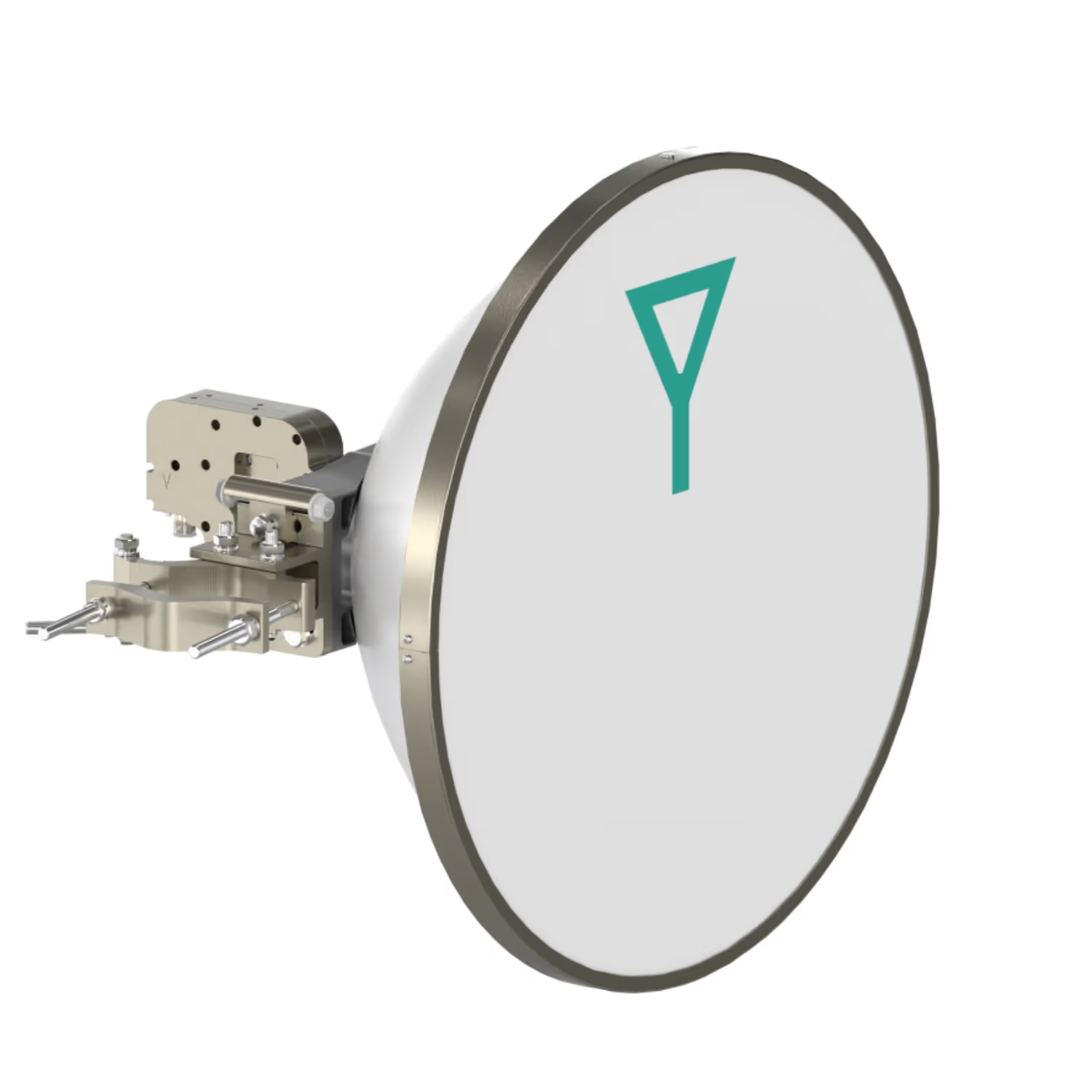
0.6m Dish High Performance
PTPbackhaulantenna
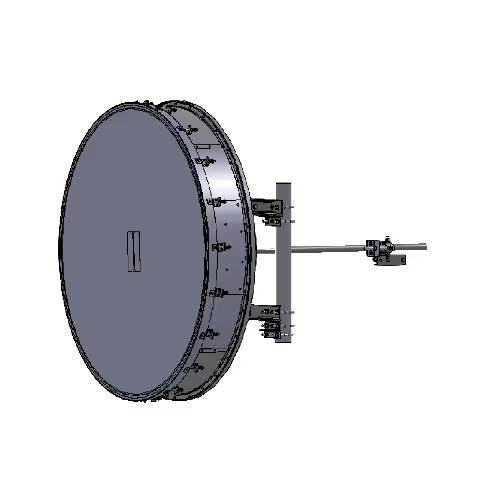
1.8m Dish High Performance
PTPbackhaulantenna
1.2m Dish High Performance
PTPbackhaulantenna
Reviews
Loading…
60° Asymmetrical Horn
Model Number: A60
High performance, lightweight, all-inclusive 60° asymmetrical horn antenna for providing 5 & 6 GHz wideband coverage with a scalable WISP antenna platform.
Features
- 60-90° asymmetrical beam width
- Frequency range: 4.9-7.1 GHz
- Gain: 15-18 dBi
- VSWR max: 1.6
- Port isolation: >35 dB
- RP-SMA female bulkhead connectors (threads outside)
- 2 pieces RP-SMA jumper cables included
Shipping Specifications
- •Dimensions (L×W×H): 690×370×220
- •Weight: 5.25kg
Warehouse availability
Shenzhen
In stock
39 available
Los Angeles
In stock
36 available
Winncom CDMX
In stock
35 available