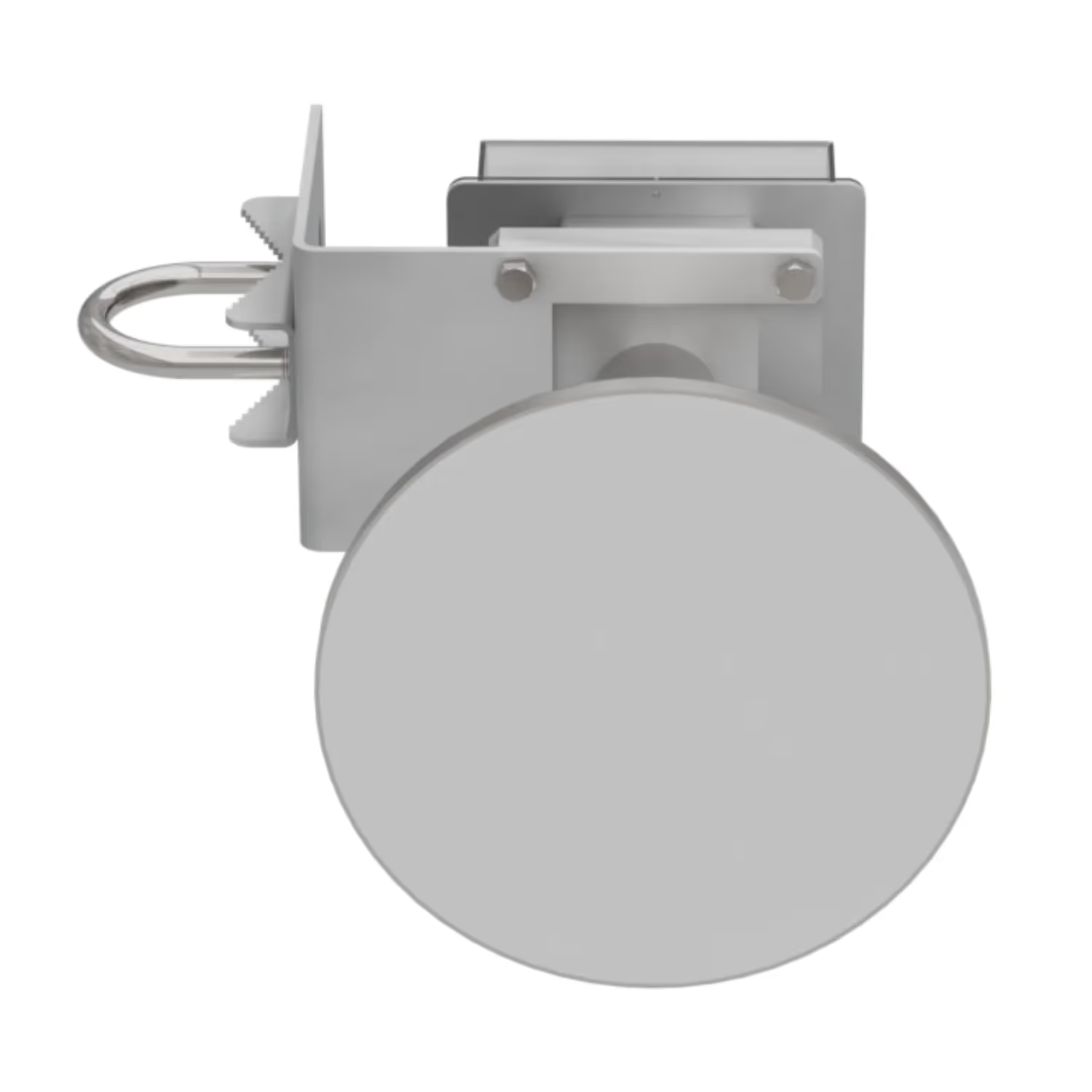
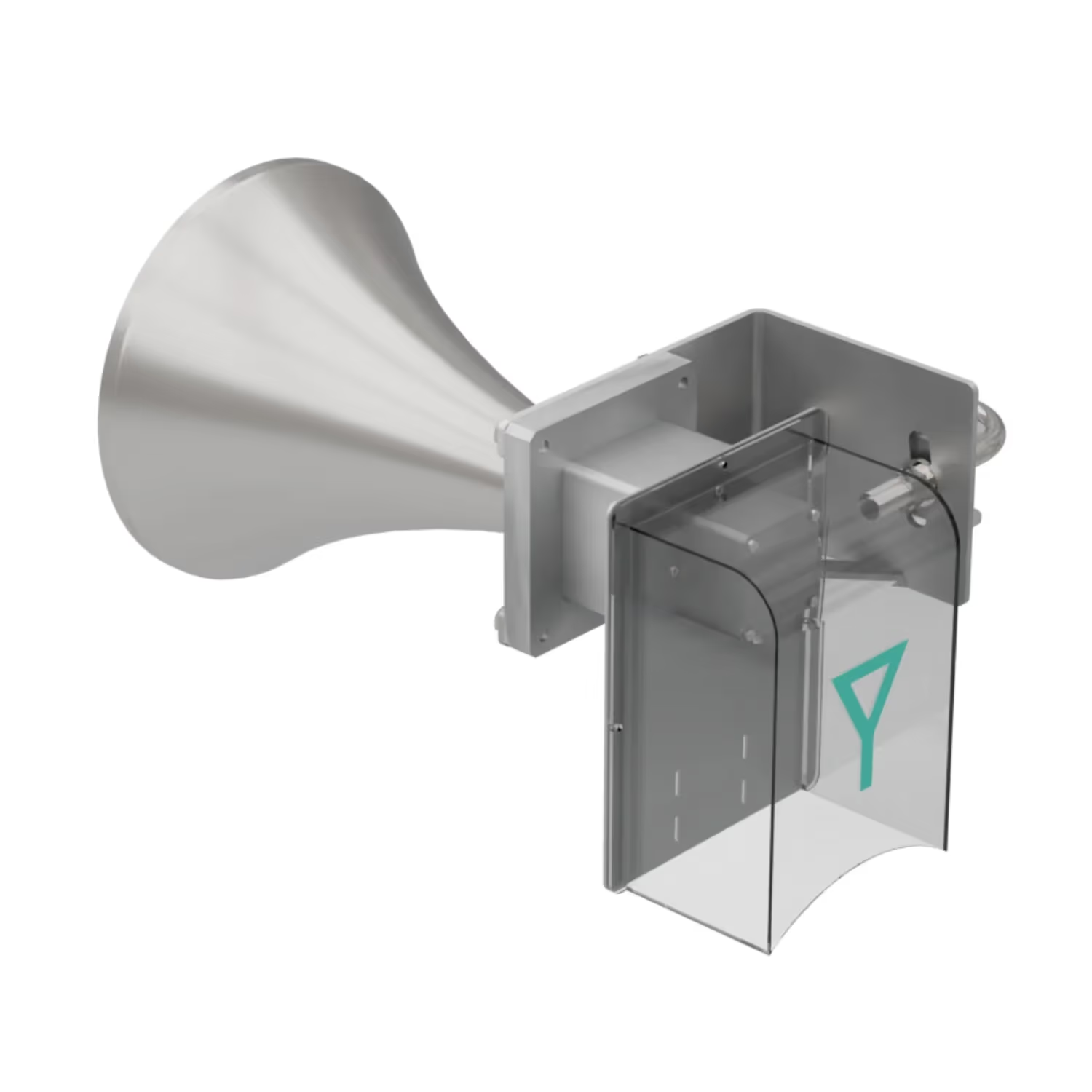
Overview
High performance, lightweight, all-inclusive 5 & 6 GHz wideband 30° symmetrical horn antenna
Industry-leading High-Performance 30° Symmetrical HornHigh performance, lightweight, all-inclusive 5 & 6 GHz wideband 30° symmetrical horn antenna
Best in Class RF Performance
Industry-leading high-performance 5 GHz and 6 GHz wideband antennas deliver exceptional results by outperforming many band-specific narrowband alternatives. Expertly tuned across the antenna’s entire operating range, they provide consistently superior gain, signal power efficiency, and clean radiation patterns, without the limitations imposed by narrowband designs.
This 5 GHz and 6 GHz wideband design ensures reliable operation across 4.9 GHz, 5 GHz, and 6 GHz. It also simplifies procurement and deployment, reduces the need for specialized antennas and multiple parts, and enhances overall network performance.
In addition, this 5 GHz and 6 GHz wideband antenna achieves more efficient signal power transfer and higher realized gain from 4.9 GHz to 7.1 GHz than RF Elements’ narrowband HG3-TP-S30, HG3-CC-S30, and SH30WB 30° symmetrical horn antennas within their respective narrow frequency ranges. As a result, it outperforms comparable RF Elements 30° symmetrical antennas by more than 15% in terms of subscriber download speeds.
Design and Construction
This industry-leading 5 GHz and 6 GHz, 30° symmetrical wideband horn antenna operates from 4.9–7.1 GHz and is versatile enough to serve as a point-to-multipoint (PtMP) sector antenna for unobstructed links up to 10 km (depending on remote-side antenna gain), a short-range point-to-point (PtP) wireless bridge for links under 1 km, and a short-range PtMP CPE antenna, also for links under 1 km.
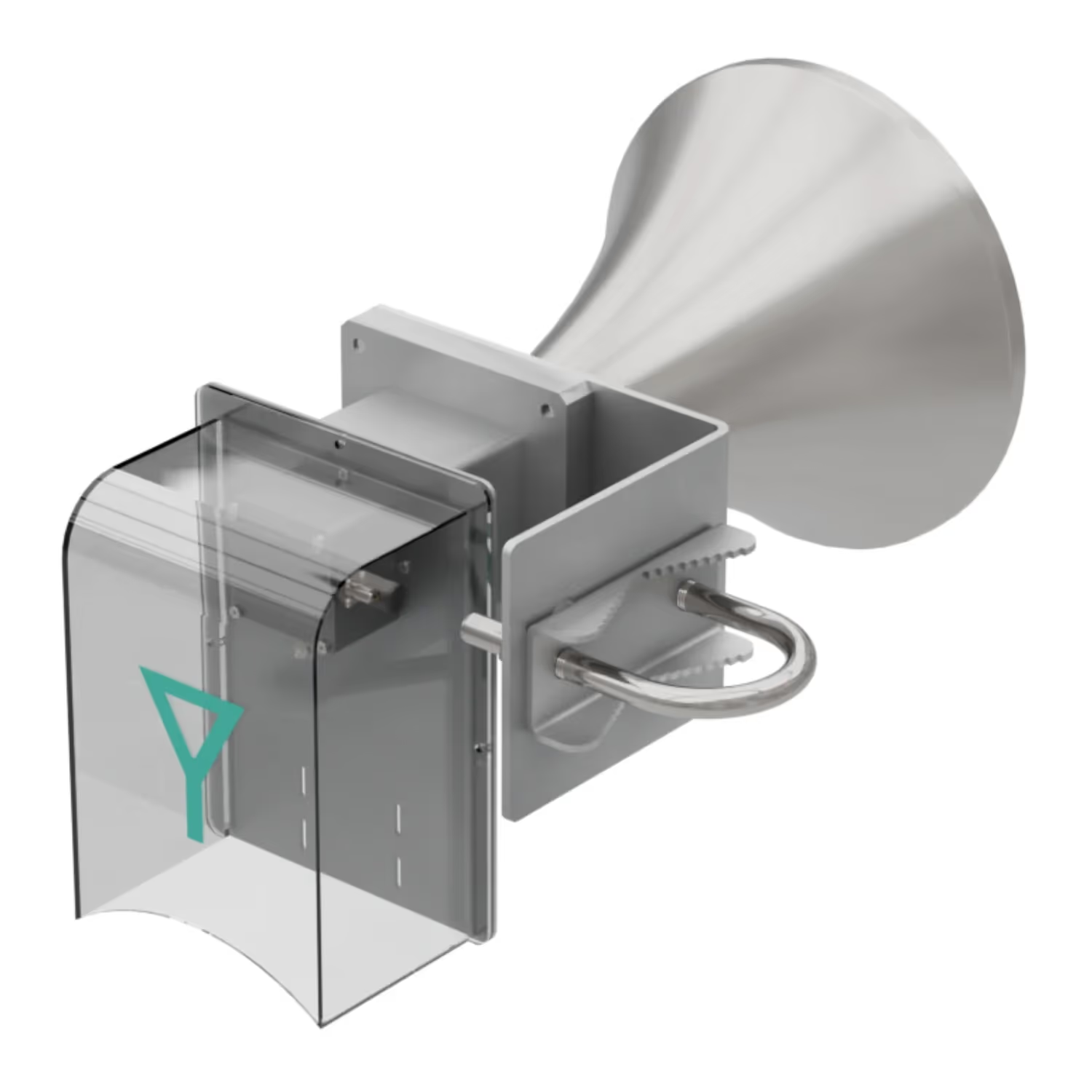
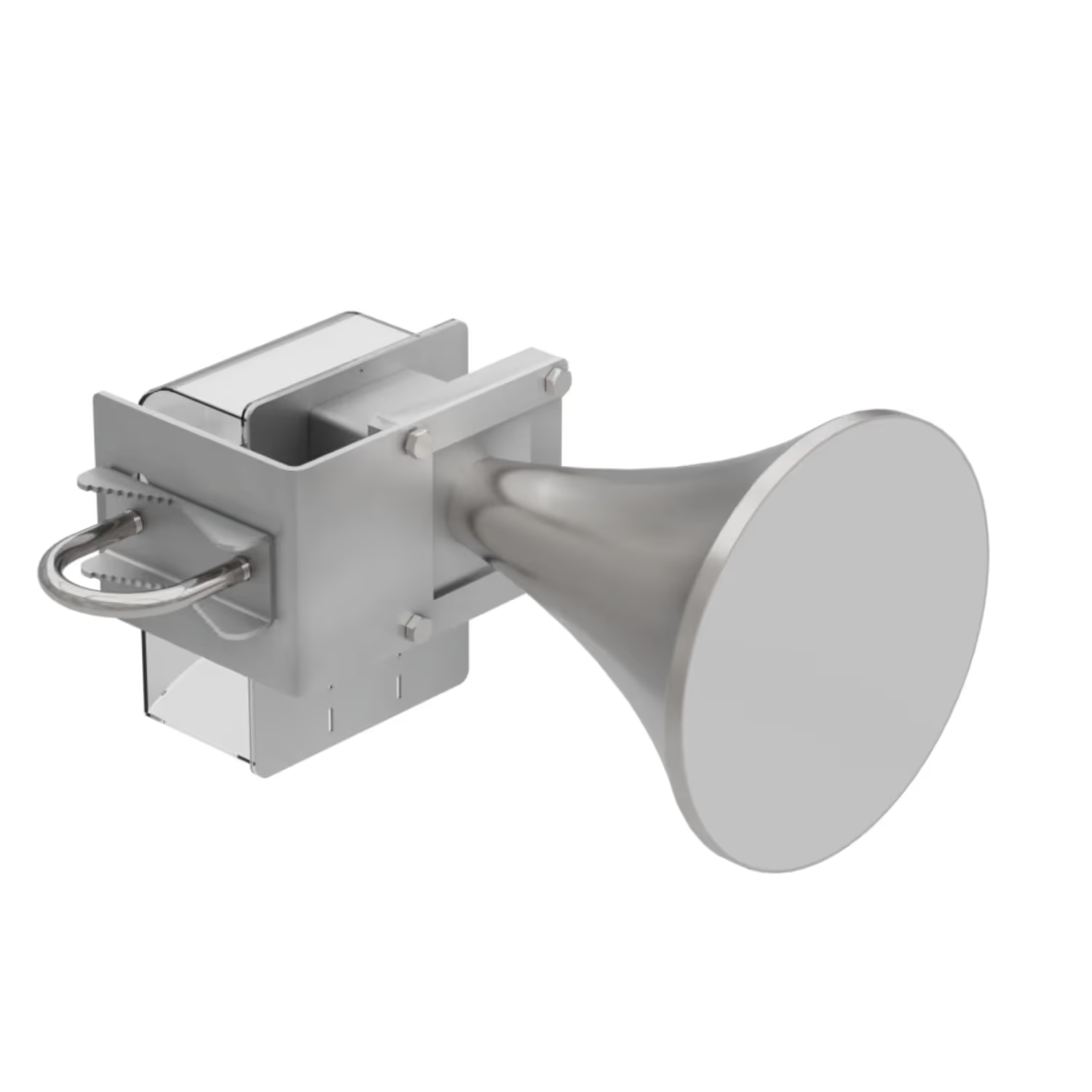
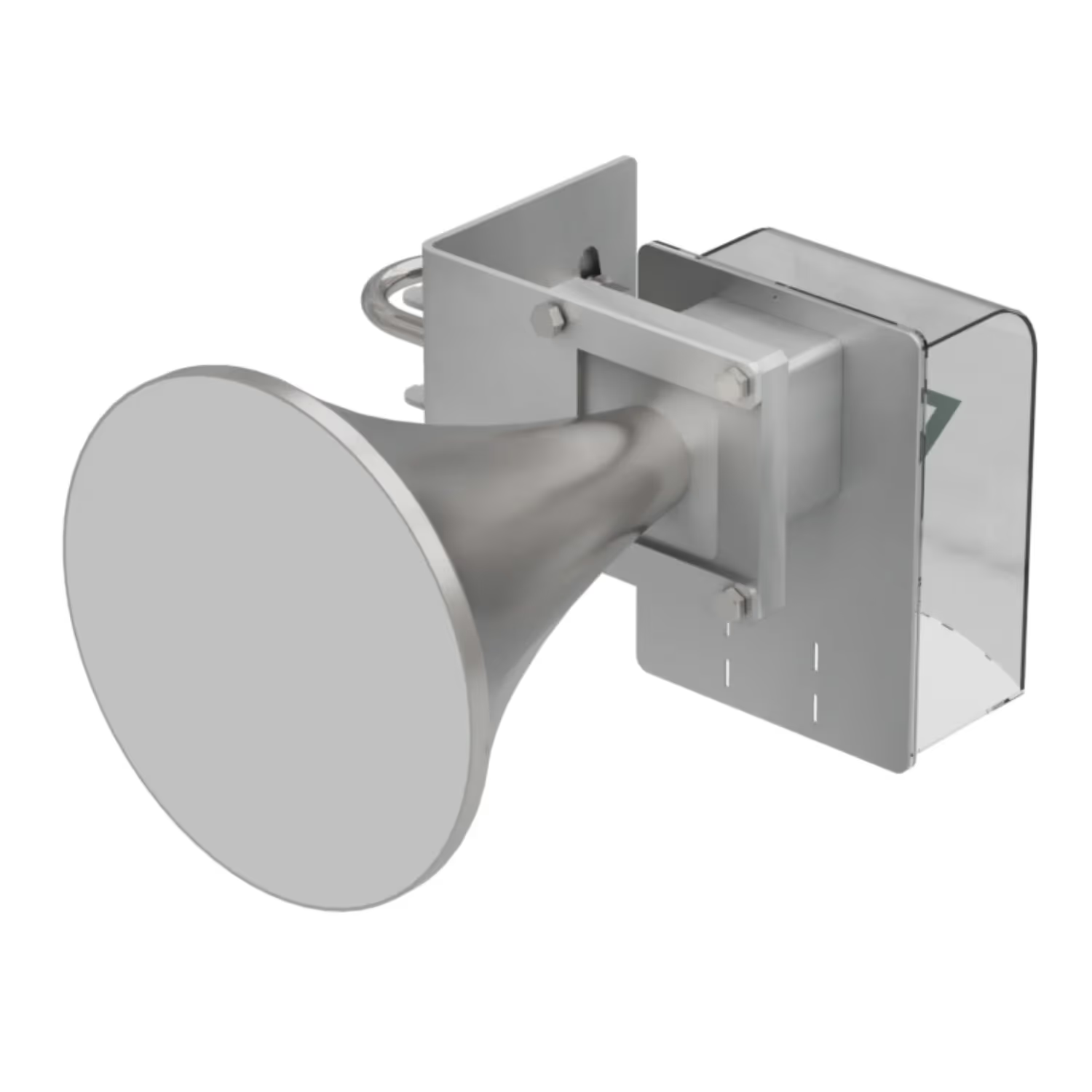
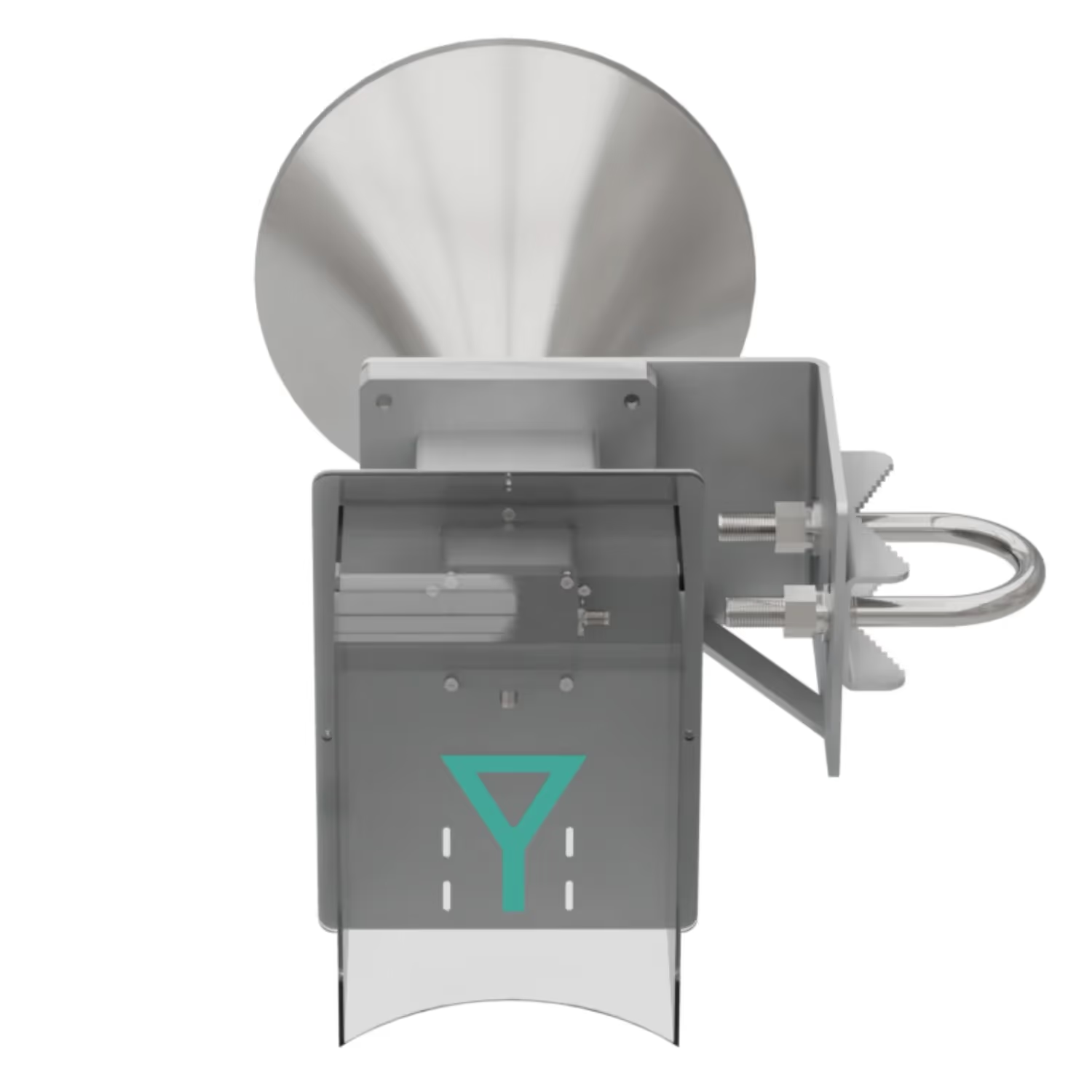
Built from lightweight aluminum, it is engineered for easy deployment while maintaining top RF performance in the industry. Its lightweight design makes deployment convenient and flexible, while the compact form reduces wind loading. The mount includes teeth for gripping the pole, reducing maintenance and tower climbs. Made with stainless steel hardware and an anti-seize coating, the design ensures durability and stability. Additionally, the antenna avoids unnecessary features like oversized handles, preventing extra wind load.
The antenna features stainless steel RP-SMA female (threads outside) bulkhead connectors and short, high-quality RF jumper cables, allowing direct connection to radios with RP-SMA female connectors.
Versatile Deployment Scenarios
Cyber Antennas’ industry-leading 30° Symmetrical WISP Horn delivers wideband performance with a symmetrical beam pattern and suppressed sidelobes, ensuring excellent noise rejection and superior scalability.
Designed for high-capacity short-range PTP links under 2 km or for medium-range PtMP access points, this antenna provides reliable performance across the 5 GHz and 6 GHz unlicensed spectrum bands and works with a wide variety of radios without the need for additional parts. It can also be used for Wi-Fi 6E and Wi-Fi 7 MLO with 30° coverage, or for PtMP WISP deployments with null fill directly below the tower in a 30° coverage pattern.
Radio compatibility is determined by the connector type (RP-SMA female) and the frequency range (4.9–7.1 GHz), and use-case or application.
For a PtMP AP, you want a clean, controlled coverage pattern that delivers strong signal only where needed and minimizes bleed into unwanted areas, reducing self-interference and improving overall network performance. This horn provides excellent 30° beam characteristics for use as a PtMP sector antenna, making it ideal for scaling up capacity on a crowded tower with tightly focused sectors and high frequency reuse, providing symmetrical 30° coverage from a ridge or hilltop down into a valley or along a road or rail corridor, filling coverage nulls directly under or near a tower where traditional sectors tend to overshoot, serving dense clusters of subscribers such as MDUs, small neighborhoods, or industrial sites without wasting energy outside the target zone, and deploying on rooftops or poles in urban or suburban environments as micro point-of-presence (MicroPoP) or host home sites where strict control of interference and noise is critical.
For short-range point-to-point wireless bridge links, this horn antenna delivers high performance in a compact, lightweight form factor with a simple rear-mounted bracket for easy installation and precise alignment. It is ideal for short-range PtP and wireless bridge applications such as extending a fiber network across train tracks or roads, linking buildings on the same campus, connecting remote sheds or outbuildings, backhauling traffic from outdoor access points or security cameras, and creating temporary high-capacity links for events, all with reliable multi-gigabit throughput.
As a short-range PtMP station, this horn provides a tight, well-controlled 30° pattern that focuses energy toward the AP, improving signal quality and rejection of interference from other directions. Its compact size and predictable beam shape make it ideal for high-density deployments near towers or MicroPoP sites, serving clusters of nearby subscribers while minimizing noise pickup, reducing self-interference, and allowing for aggressive frequency reuse. This makes it a strong choice for short-range links in environments like MDUs, business parks, campuses, RV parks, or small neighborhoods where clean, reliable connectivity and efficient spectrum use are critical.
Radio CompatibilityRadio compatibility is determined primarily by the antenna’s connectors, its operating range, and the intended application (PtP, PtMP AP, or PtMP station).
Ubiquiti, Cambium, and Mimosa
Radio compatibility is determined primarily by the antenna’s RP-SMA female connectors, its 4.9–7.1 GHz operating range, and the intended application (PtP, PtMP AP, or PtMP station). When paired with radios that operate in this frequency range and can connect via RP-SMA (directly or through appropriate RF jumpers), the antenna supports a wide variety of Ubiquiti, Cambium, and Mimosa platforms. Typical PtMP AP use cases include Ubiquiti Rocket Prism AC Gen2 and Rocket LTU, as well as Cambium ePMP 4600L, 4500L, and 3000L, and the Mimosa A5x. For PtP or station roles, the antenna works well with Ubiquiti Rocket AC Lite (PtP, PtMP AP or station), AF5XHD (PtP), and Wave MLO5 (PtP); Cambium ePMP Force 4600c, Force 400, and Force 300 CSM (PtP or PtMP stations); and Mimosa B5c (PtP) and C5c (PtP or PtMP station), enabling flexible deployment options across a wide range of modern WISP and enterprise links.
Known Compatible Radios
Ubiquiti
Rocket Prism AC Gen2 (PtMP AP)
Rocket LTU (PtMP AP)
Rocket AC Lite (PtP, PtMP AP or station)
AF5XHD (PtP)
Wave MLO5 (PtP)
Cambium
ePMP 4600L (PtMP AP)
ePMP 4500L (PtMP AP)
ePMP 3000L (PtMP AP)
ePMP Force 4600c (PtP or PtMP station)
ePMP Force 400 (PtP or PtMP station)
ePMP Force 300 CSM (PtP or PtMP station)
Mimosa
A5x (PtMP AP)
B5c (PtP)
C5c (PtP or PtMP station)
Designed to Solve Common WISP ChallengesRF Interference in Congested Environments
The S30's narrow 30° beamwidth and horn antenna design help reject unwanted signals and reduce interference from neighboring sectors and nearby radios. This improves signal quality, network stability, and overall sector performance.
Excessive Sector Overlap
Broad sector antennas can transmit RF energy into areas that do not need coverage, creating unnecessary overlap and self-interference. The S30 provides tightly controlled 30° coverage, allowing operators to target specific service areas with greater precision.
Limited Network Capacity
When too many subscribers share a wide sector, available airtime and throughput can decline. The S30 enables operators to divide coverage into multiple narrow sectors, increasing frequency reuse and improving capacity on high-density tower sites.
Inefficient Spectrum Utilization
In crowded RF environments, every channel is valuable. The S30's focused coverage pattern minimizes unwanted radiation outside the intended service area, allowing operators to reuse frequencies more effectively and maximize available spectrum.
Migration to 6 GHz Networks
With true wideband 4.9–7.1 GHz coverage, the S30 supports both 5 GHz and 6 GHz radios. Operators can transition to Wi-Fi 6E and Wi-Fi 7 technologies without replacing antennas, protecting existing infrastructure investments.
Targeted Coverage Requirements
Some deployments require coverage in a specific direction, such as along highways, valleys, coastlines, or concentrated subscriber clusters. The S30's narrow, symmetrical beam pattern focuses RF energy where it is needed, reducing wasted coverage and improving network efficiency.
Scalability on Existing Tower Sites
As subscriber demand grows, operators often need to increase sector density without adding new towers. The S30 makes it easier to deploy additional narrow sectors on existing infrastructure, helping expand network capacity while minimizing deployment costs.
Typical Use CasesHigh-Density WISP Tower Sites
The S30's narrow 30° beamwidth allows operators to divide coverage into multiple small sectors rather than relying on broad 90° or 120° sectors. This reduces co-channel interference, improves frequency reuse, and increases the amount of airtime available to each subscriber.
Point-to-Multipoint (PtMP) Access Point Sectors
The S30 is well suited for PtMP deployments where subscribers are concentrated in a specific direction. Its symmetrical beam pattern provides predictable coverage while minimizing unwanted radiation outside the intended service area, helping maintain stable connections and higher modulation rates.
Long, Narrow Coverage Corridors
Networks serving subscribers along highways, valleys, coastlines, pipelines, railways, or other linear service areas can benefit from the focused 30° coverage pattern. The antenna concentrates RF energy where it is needed instead of transmitting into unused areas.
Noisy RF Environments
In crowded wireless environments with multiple nearby access points and radios, the S30's horn design and low sidelobe characteristics help reject unwanted signals and reduce interference. This can improve signal quality, network stability, and overall sector performance.
Point-to-Point (PtP) Wireless Links
Because the S30 supports wideband operation from 4.9–7.1 GHz, it can also be used for short- to medium-distance PtP links where a wider beam is acceptable or where precise alignment may be challenging. The antenna's consistent performance across 4.9 GHz, 5 GHz, and 6 GHz bands provides flexibility when selecting channels.
Multi-Band 5 GHz and 6 GHz Deployments
WISPs transitioning from 5 GHz to 6 GHz networks can use the S30 as a single antenna platform for both bands. Its wideband design supports legacy 5 GHz radios and newer Wi-Fi 6E and Wi-Fi 7 equipment, simplifying inventory management and enabling gradual network upgrades.
Who Is the S30 Designed For?The S30 is ideal for:
• Wireless Internet Service Providers (WISPs)
• Fixed wireless broadband operators deploying point-to-multipoint (PtMP) networks
• WISPs operating high-density tower sites that require narrow-sector coverage
• Network operators upgrading to 6 GHz, Wi-Fi 6E, and Wi-Fi 7 technologies
• Service providers using Ubiquiti, Cambium, Mimosa, MikroTik, and other connectorized radio platforms
• Tower owners and network integrators deploying targeted coverage sectors and frequency reuse strategies
• Operators building networks in congested RF environments where interference mitigation is critical
• Service providers requiring a single antenna platform for both 5 GHz and 6 GHz deployments
What Sets the S30 Apart from Similar Products in the IndustryCompared to similar 30° horn and sector antennas in the industry, the S30 stands out in several important ways:
True Wideband 4.9-7.1 GHz Coverage
Many 30° sector and horn antennas are designed primarily for the 5 GHz band and do not fully support modern 6 GHz deployments. The S30 covers the entire 4.9-7.1 GHz frequency range, allowing WISPs to deploy both 5 GHz and 6 GHz radios on a single antenna platform and transition to newer technologies without replacing antennas.
Controlled 30° Symmetrical Beam Pattern
Unlike conventional sector antennas that can produce uneven coverage and excessive sidelobes, the S30 delivers clean, symmetrical 30° coverage with well-defined boundaries. This focused pattern provides predictable RF performance and makes network planning and optimization easier.
Designed for High-Density Deployments
The narrow 30° beamwidth enables operators to divide coverage into multiple small sectors, increasing frequency reuse and network capacity. This makes the S30 particularly effective on crowded tower sites where maximizing spectrum efficiency is critical.
Superior Noise Rejection
The horn antenna architecture naturally reduces the reception of unwanted signals and minimizes interference from neighboring sectors and competing networks. This helps maintain better signal quality and more stable wireless links in congested RF environments.
Future-Ready Infrastructure Investment
Because the S30 supports both 5 GHz and 6 GHz radios, operators can adopt Wi-Fi 6E and Wi-Fi 7 technologies at their own pace without replacing existing antennas. This protects capital investments and simplifies future network upgrades.
Flexible Deployment Options
While primarily designed for point-to-multipoint access point sectors, the S30 can also be used for targeted coverage areas and short- to medium-distance point-to-point links. Its combination of wideband operation and controlled coverage makes it a versatile solution for a variety of wireless broadband deployments.
Frequently Asked QuestionsWhat's the difference between this horn and the RF Elements HG3-TP-S30 5GHz Symmetrical Horn TwistPort 30°?
Cyber Antennas S30
✔ Frequency range: 4.9-7.1 GHz
✔ Realized gain: 16-18 dBi
✔ VSWR max: 1.6
✔ Port isolation: >35 dB
RF Elements HG3-TP-S30
✘ Frequency range: Band specific TwistPort Adapters
✘ Claimed gain: 18.4 dBi
✘ VSWR: Not disclosed in datasheet
✘ Port isolation: Not disclosed in datasheet
In practical terms: Cyber Antennas S30 horn is a 4.9–7.1 GHz, RP-SMA, single-SKU wideband 30° sector/station horn that covers 4.9, 5, and 6 GHz with one antenna, whereas the HG3-TP-S30 is a 5 GHz–oriented, TwistPort-only 30° horn optimized around mid-5 GHz and tied to the RF Elements adaptor ecosystem.
Key advantages of the S30 over the RF Elements HG3-TP-S30:
Frequency range / bands
✅ The S30 is a true 4.9–7.1 GHz wideband horn, covering 4.9 GHz, all of 5 GHz, and essentially the full 6 GHz unlicensed band for Wi-Fi 6E / Wi-Fi 7 and 6 GHz WISP use with a single antenna.
❌ The HG3-TP-S30 operates only from about 5.18–6.78 GHz, leaving out 4.9 GHz, the lower portion of 5 GHz, and the upper portion of the 6 GHz band, forcing additional SKUs and more complex RF planning and less future flexibility when needing to find an available channel.
Connector / radio ecosystem
✅ The S30 uses standard stainless RP-SMA female bulkhead connectors with short RF jumpers, plugging directly into mainstream radios from Ubiquiti, Cambium, Mimosa, and others without special adapters, extra cost, or proprietary lock-in.
❌ The HG3-TP-S30 relies on a proprietary TwistPort waveguide interface, typically requiring separate TwistPort adaptors for most radios and tying deployments tightly to that ecosystem. There is no guarantee your antenna will be compatible with future radios.
Wideband vs. 5 GHz–centric design
✅ The S30 is engineered as a high performance 4.9–7.1 GHz wideband 30° symmetrical horn, so one antenna cleanly supports 4.9 GHz, 5 GHz, and 6 GHz PtP, PtMP AP, and station roles (including Wi-Fi 6E / 7 MLO) without hardware changes.
❌ The HG3-TP-S30 is fundamentally a 5 GHz symmetrical horn that doesn't even cover the entire 5 GHz band and happens to reach into part of 6 GHz, so it cannot function as a single-antenna solution for full 4.9–7.1 GHz operations.
Performance characteristics
✅ The S30 is tuned for consistent gain, impedance match, and pattern quality across the entire 4.9–7.1 GHz span, so links can be moved between 5 GHz and 6 GHz without sacrificing performance; in testing and field deployments, it has delivered more than 15% higher subscriber download speeds than comparable RF Elements 30° horns, including the HG3-TP-S30, in 5 GHz.
❌ The HG3-TP-S30 is a poor performing 5 GHz horn that does not even cover the entire 5 GHz band and is not optimized for high performance across the full 4.9–7.1 GHz band.
Mechanical / installation
✅ The S30 features a lightweight aluminum body, compact form factor, low wind load, a standard pole clamp with “teeth” to grip the mast, stainless hardware with anti-seize, and no oversized handles—prioritizing quick, predictable tower work and minimal ongoing maintenance.
❌ The HG3-TP-S30 is a heavier TwistPort horn with bracket assembly with more bulk and a more complex mechanical system, which can make handling, mounting, and long-term service less convenient than the simpler, lighter S30 hardware approach.
What's the difference between this horn and the RF Elements SH30WB Symmetrical Horn 30° Wideband Antenna?
Cyber Antennas S30
✔ Frequency range: 4.9-7.1 GHz
✔ Realized gain: 16-18 dBi
✔ VSWR max: 1.6
✔ Port isolation: >35 dB
RF Elements SH30WB
✘ Frequency range: Band specific TwistPort Adapters
✘ Computer modeled gain: 18 dBi
✘ VSWR: Not disclosed in datasheet
✘ Port isolation: Not disclosed in datasheet
Frequency range / bands
✅ The S30 is a true 4.9–7.1 GHz wideband horn, designed from the outset to handle 4.9 GHz, 5 GHz, and 6 GHz PtP and PtMP roles (including Wi-Fi 6E / Wi-Fi 7 MLO) with a single SKU that you can move freely across bands as your spectrum plan evolves.
❌ The SH30WB also covers roughly 4.9–7.125 GHz, but is positioned primarily as a 5 & 6 GHz AP sector; realizing similar multi-role flexibility typically involves pairing it with specific TwistPort adaptors and feeds, adding complexity to band and role changes.
Connector / radio ecosystem
✅ The S30 uses standard stainless RP-SMA female bulkhead connectors and short RF jumpers, so it plugs directly into common Ubiquiti, Cambium, Mimosa, and other radios without proprietary adapters, extra cost, or vendor lock-in.
❌ The SH30WB uses RF Elements’ proprietary TwistPort™ waveguide connector, which is excellent from a pure RF-loss standpoint but usually requires a dedicated TwistPort adaptor for each radio family, adding cost, inventory, and ecosystem lock-in for many deployments.
Wideband tuning & roles
✅ The S30 is tuned as a wideband 30° horn specifically to act as a single antenna for 4.9/5/6 GHz PtP backhaul, PtMP AP sectors, and PtMP stations/CPEs, so you can standardize one pattern and use-case across the network instead of juggling multiple horn families.
❌ The SH30WB is an excellent wideband AP sector horn with stable beam and high beam efficiency, but its TwistPort-centric design and marketing focus are oriented mainly around high-density AP clusters rather than also serving as a simple, direct-connect station/CPE or PtP antenna with the same ease.
Performance characteristics
✅ The S30 is engineered for efficient signal-power transfer and consistent realized gain across 4.9–7.1 GHz; in testing and field deployments it has delivered more than 15% higher subscriber download speeds than comparable RF Elements 30° horns, including the SH30WB, over the same bands.
❌ The SH30WB is specified at 18 dBi gain with a 30° symmetrical beam, 96% beam efficiency, and 30 dB front-to-back ratio, which are strong on-paper specs—but they do not translate into the same real-world throughput you see from the S30 across mixed 4.9/5/6 GHz deployments.
Mechanical / installation
✅ The S30 uses a compact, lightweight aluminum body with a low-profile form factor, low wind load, a simple pole clamp with “teeth” for solid grip, stainless hardware with anti-seize, and no oversized handles—prioritizing quick installation, easy alignment, and minimal snag points on crowded towers.
❌ The SH30WB includes a larger integrated handle and a multi-piece UBR bracket assembly; while robust, this results in more bulk and hardware to work around, which can be less convenient in tight clusters and may contribute to higher effective wind loading compared with the S30’s simpler, cleaner mechanical design.
What is the difference between the A20 and S30 horns?
The S30 has a symmetrical beam pattern in both the elevation and azimuth planes, while the A20 narrows the beam in the elevation plane and concentrates more energy across the azimuth plane.
In practice, the S30 is better suited for installations above the coverage area, such as on a ridgeline aimed down into a town or on top of a tall tower where null fill is needed directly below the site. The A20 is better suited for deployments aimed toward the horizon.
Although both antennas offer a 20–30° azimuth beamwidth, the A20 provides higher gain and is generally the better choice for a typical WISP point-to-multipoint sector. The S30, with its smaller form factor, can also be a good option for short-distance wireless bridge links or compact PtMP installations.
Related Products
No related products found.
Related Products (Category & Subcategory)







Related Products (Tags)
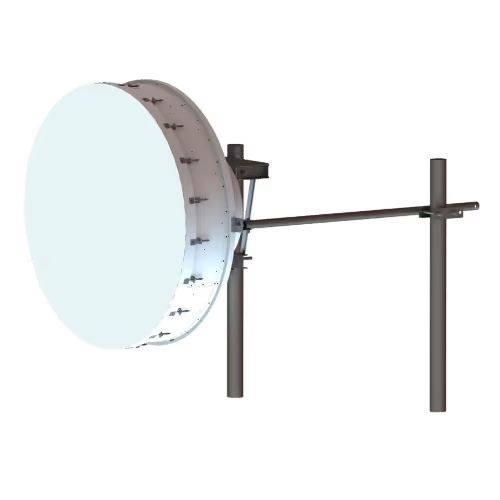
1.8 m Microwave Dish 6 GHz
6 GHz6-ft dish1.8 m dish
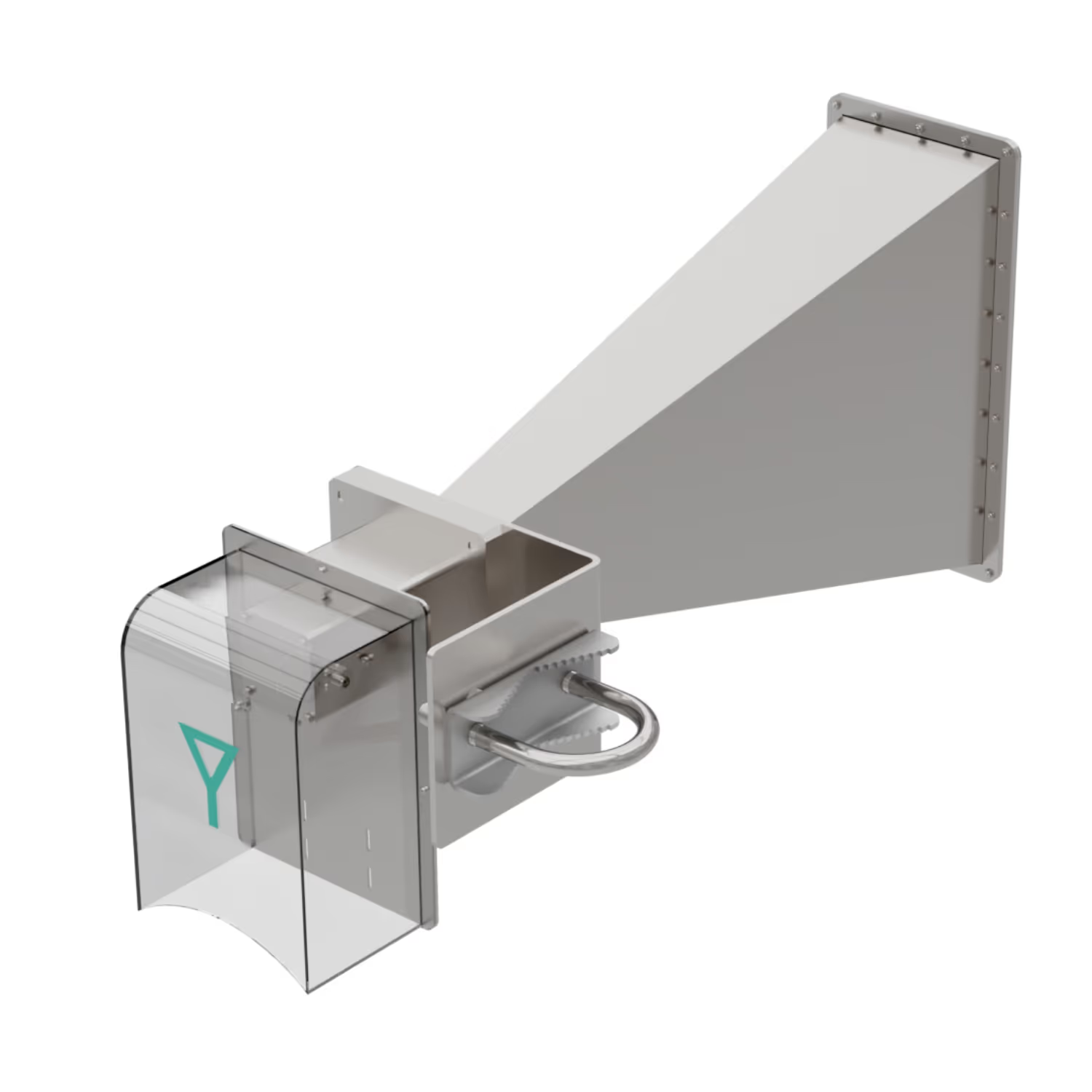
20° Asymmetrical Horn
antenna6 GHz5 GHz
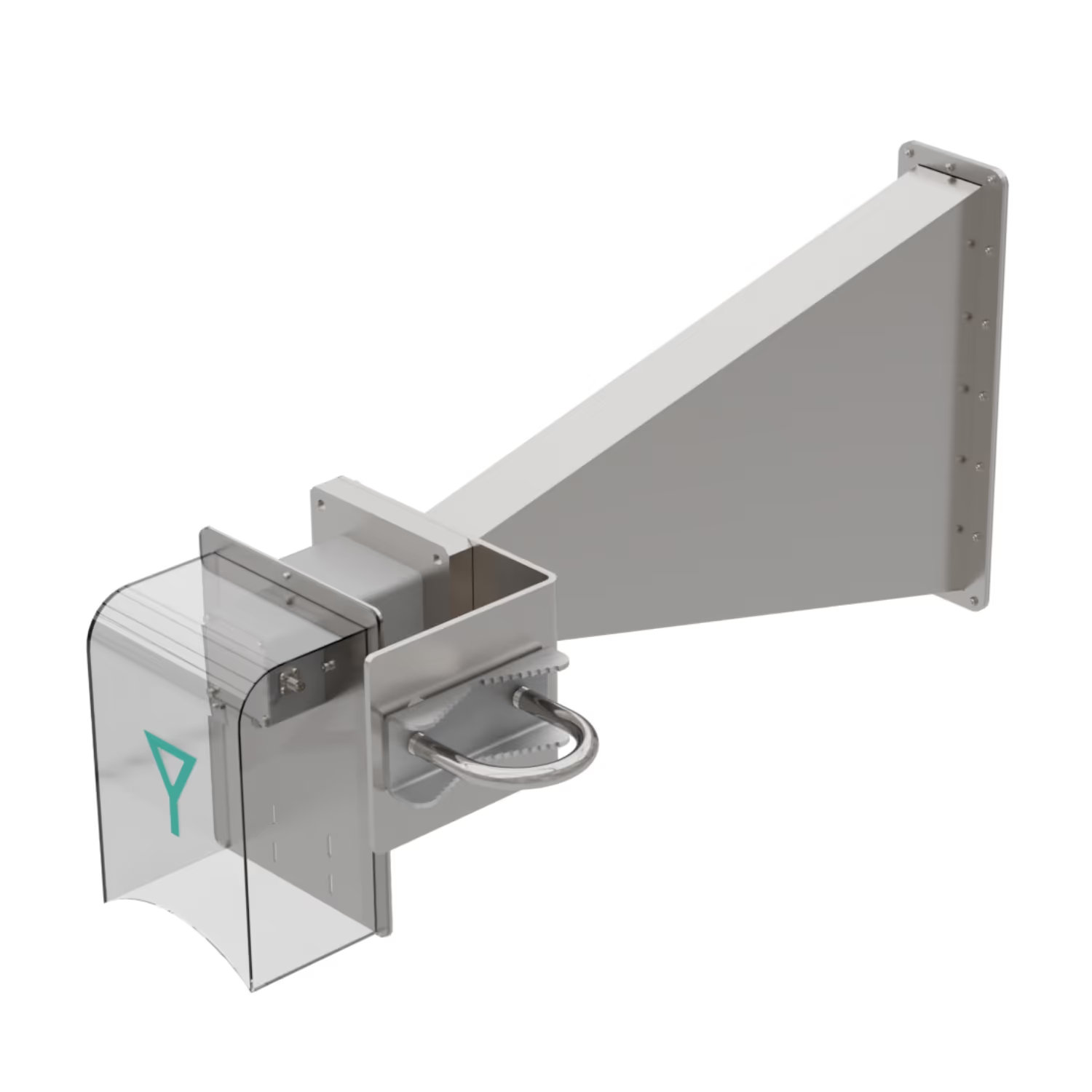
60° Asymmetrical Horn
antenna6 GHz5 GHz
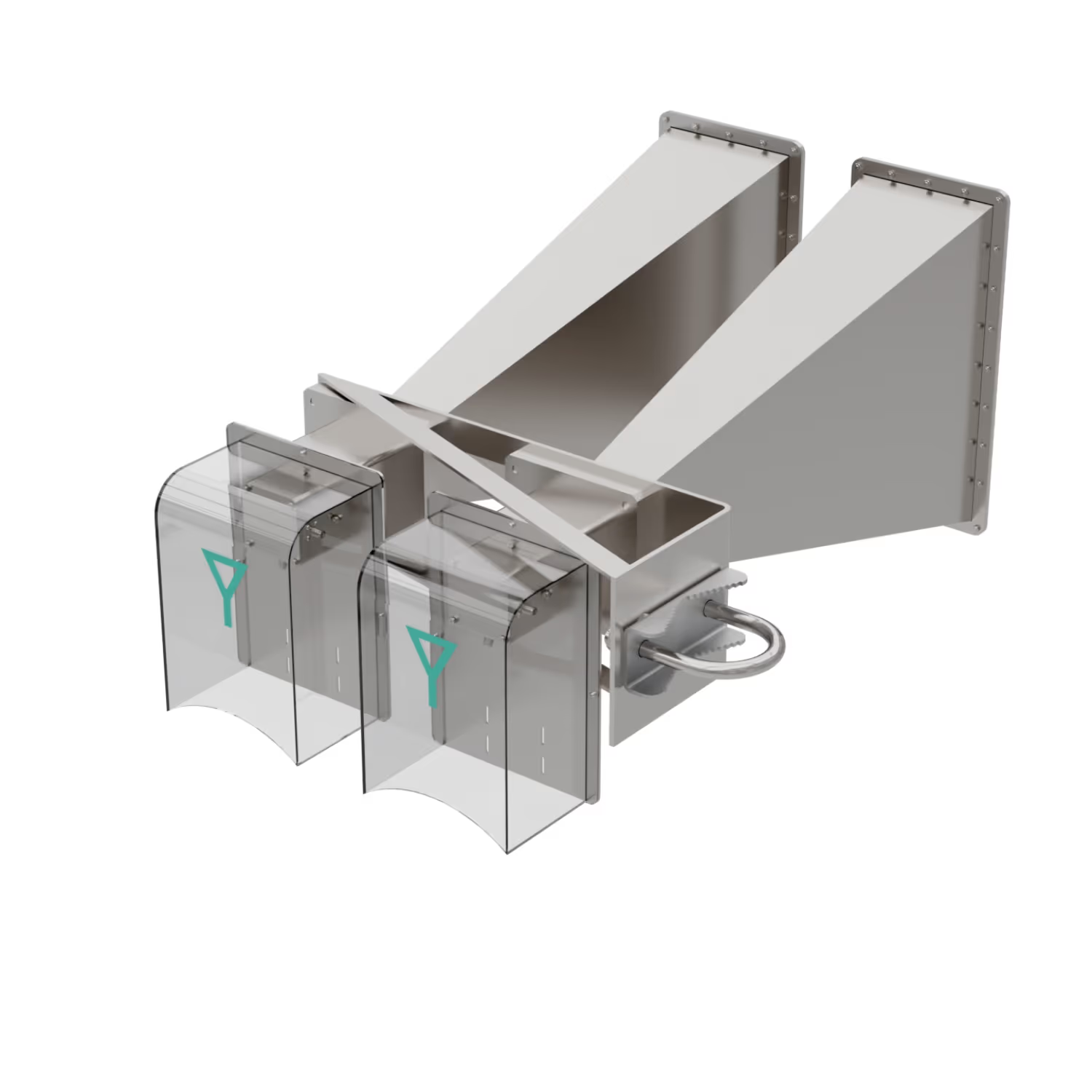
Double 20° Asymmetrical Horn 4x4
antenna6 GHz5 GHz
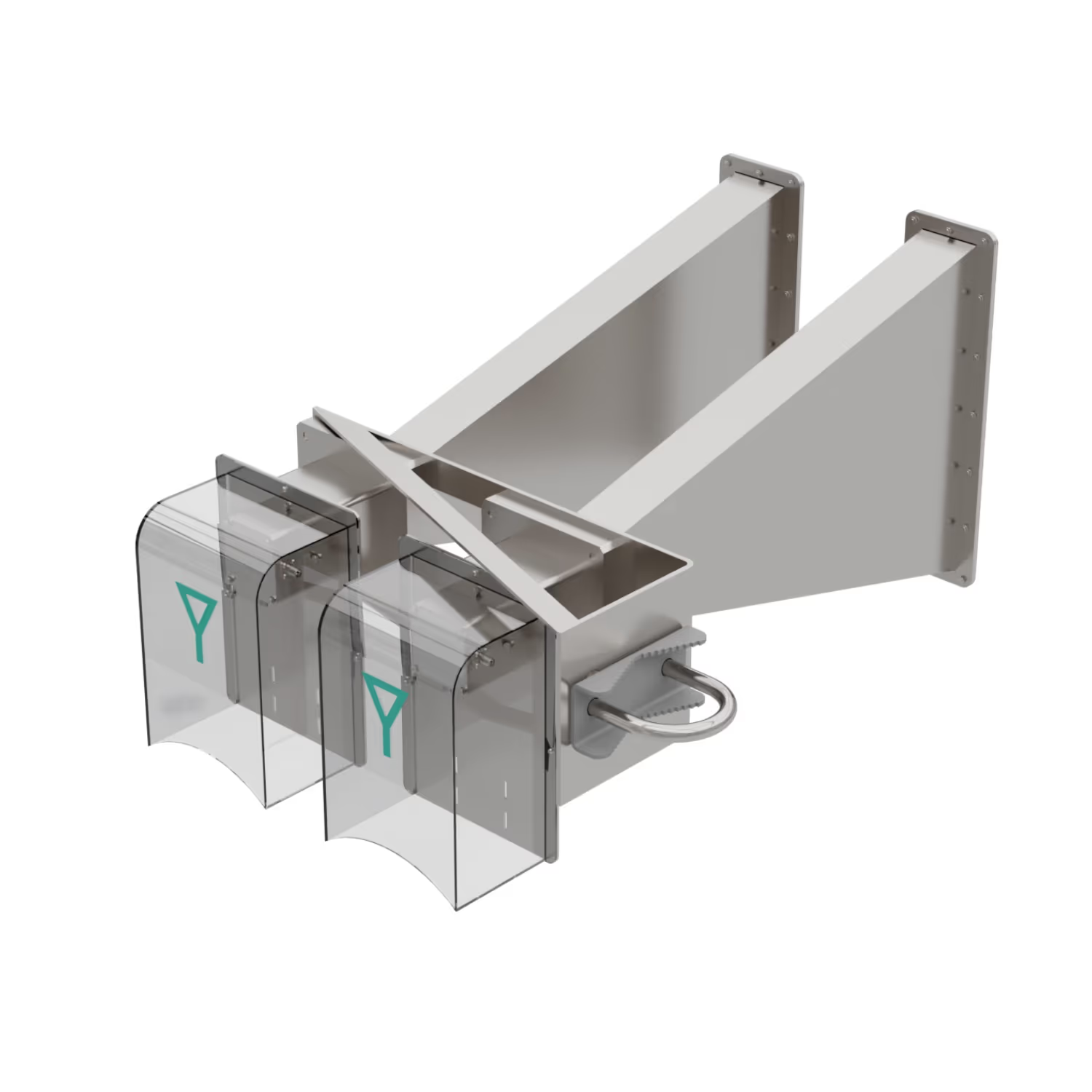
Double Asymmetrical 60° Horn 4x4
antenna6 GHz5 GHz
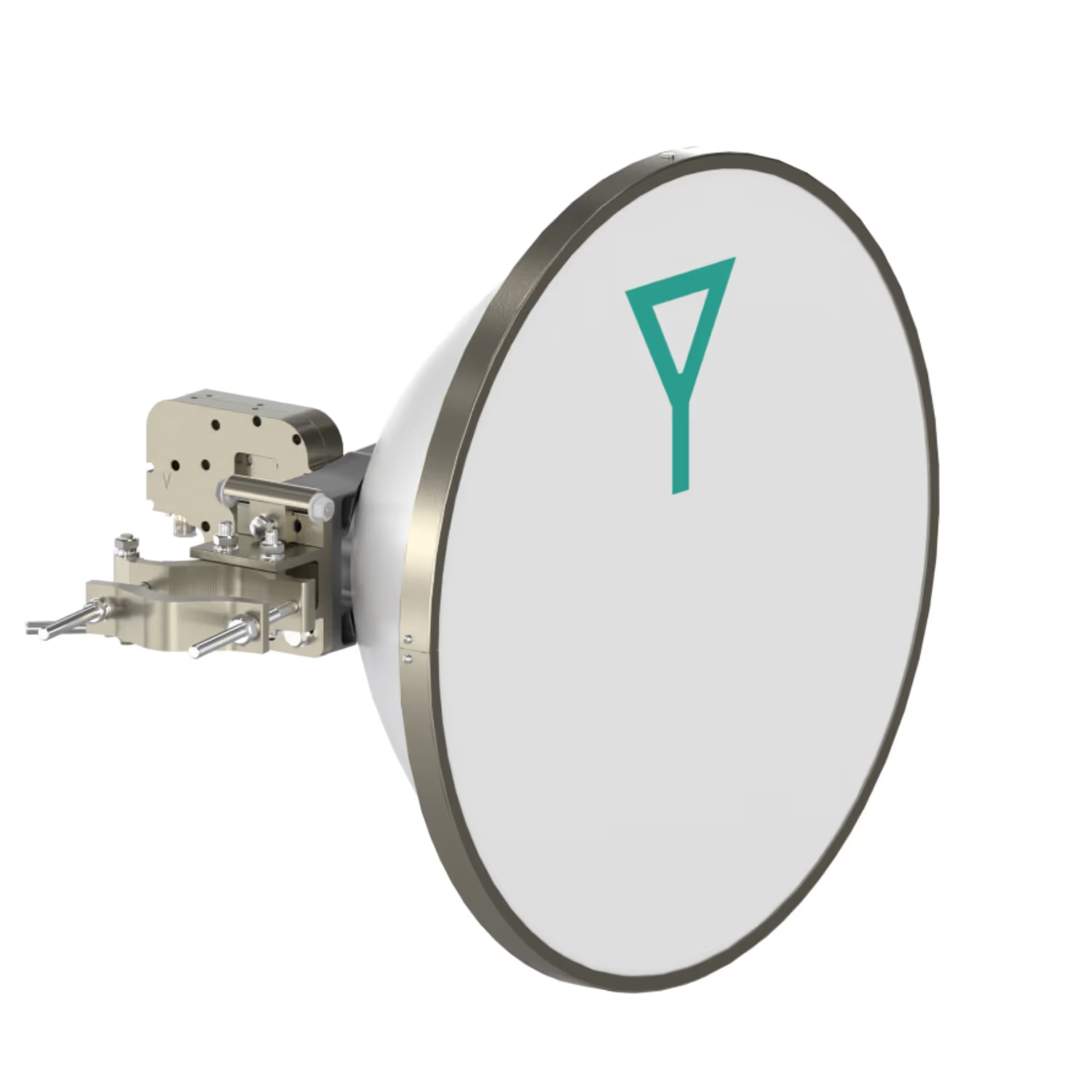
0.6m Dish High Performance
PTPbackhaulantenna
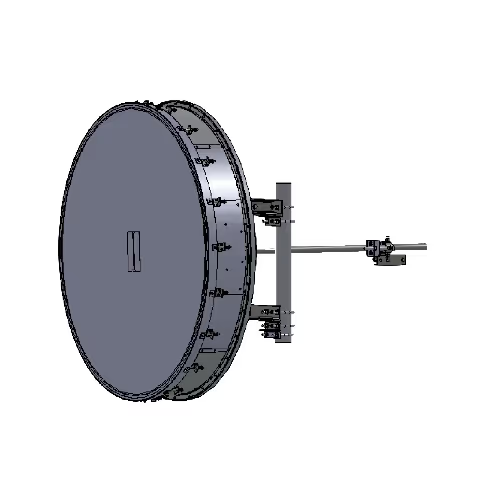
1.8m Dish High Performance
PTPbackhaulantenna
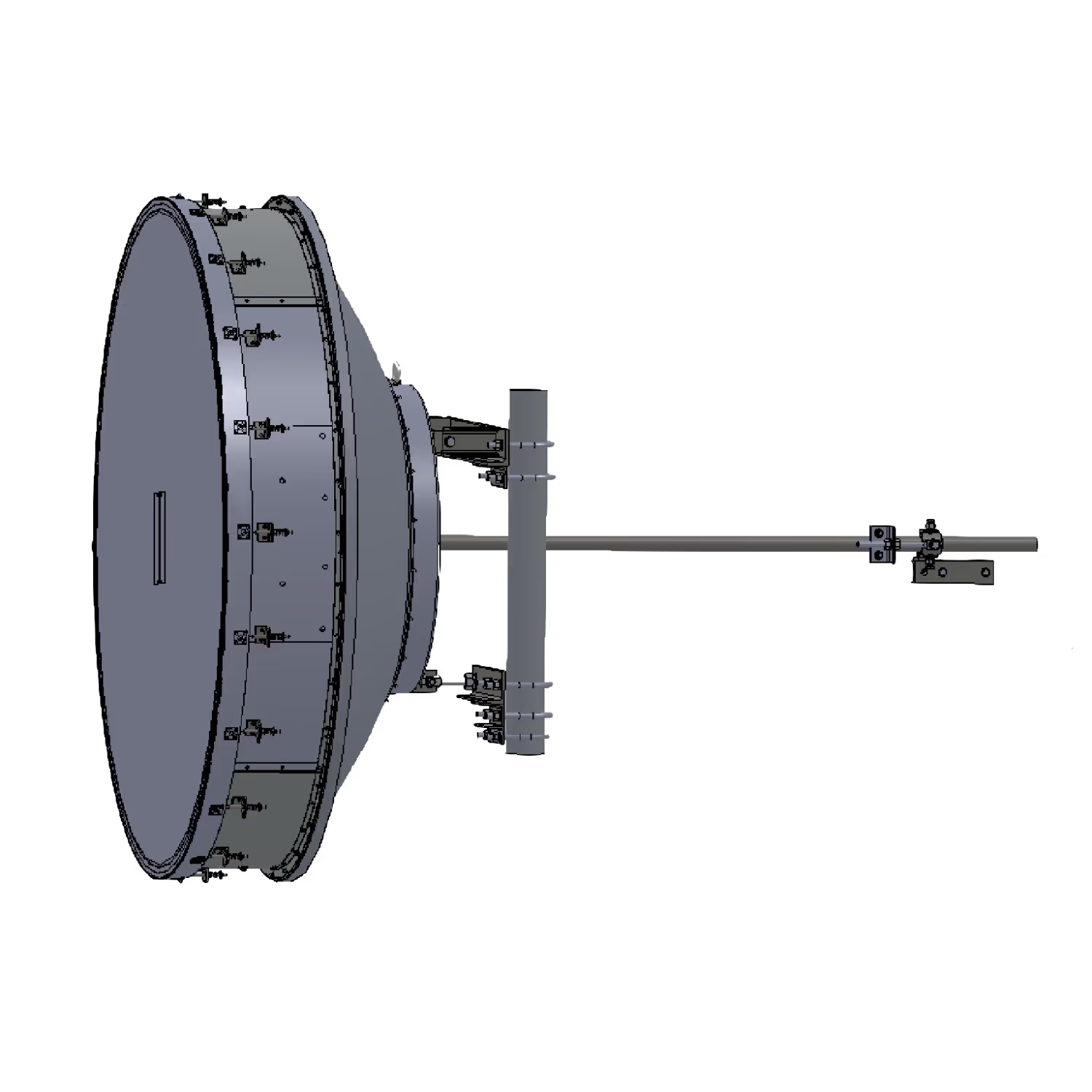
1.2m Dish High Performance
PTPbackhaulantenna
Reviews
Loading…
30° Symmetrical Horn
Model Number: S30
High performance, lightweight, all-inclusive 5 & 6 GHz wideband 30° symmetrical horn antenna
Features
- 30° symmetrical beam width
- Frequency range: 4.9-7.125 GHz
- Max gain: 18 dBi
- VSWR: <1.6
- Port isolation: >35 dB
- 2 pieces RP-SMA jumper cables included
Shipping Specifications
- •Dimensions (L×W×H): 480×370×310
- •Weight: 4.25kg
Warehouse availability
Los Angeles
In stock
37 available