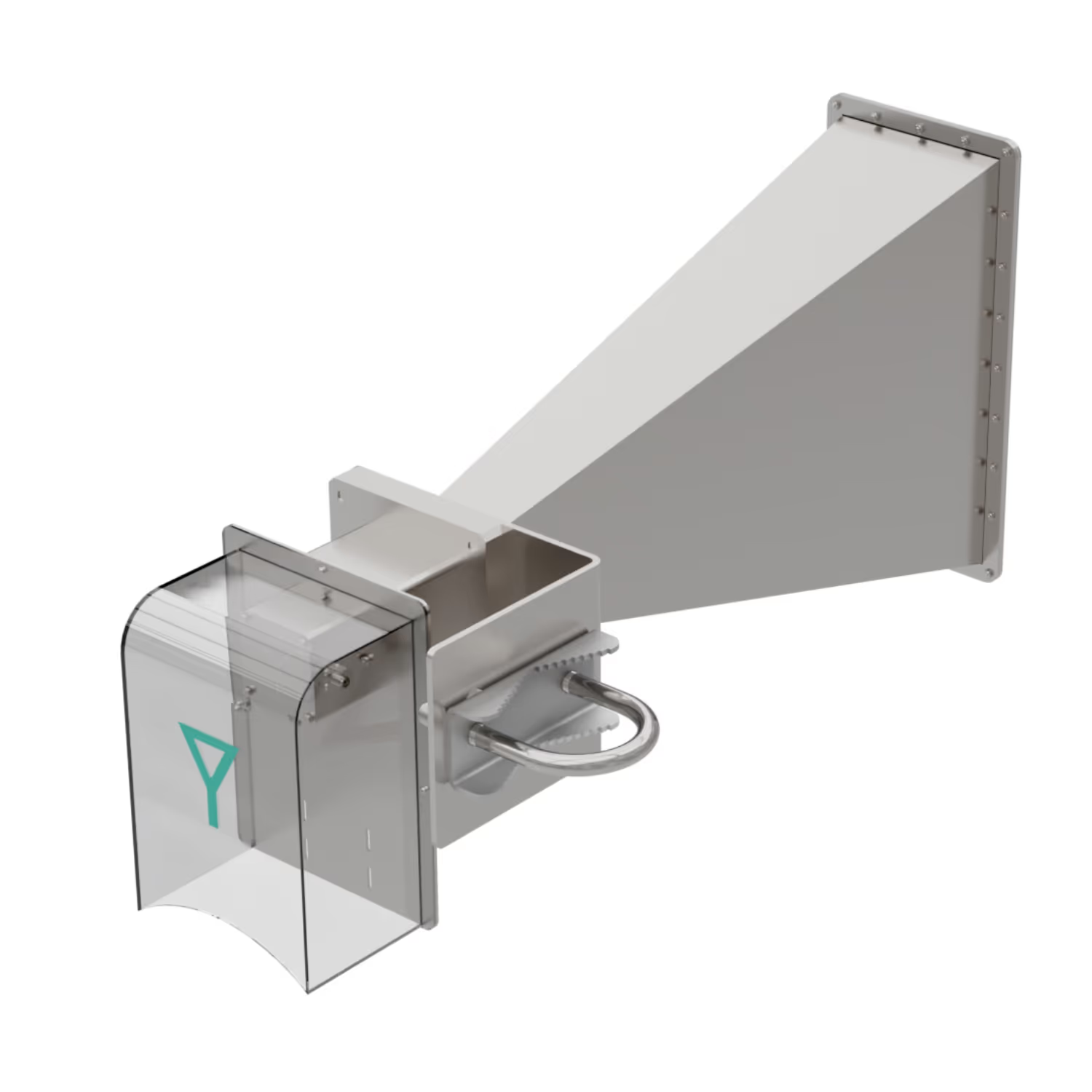
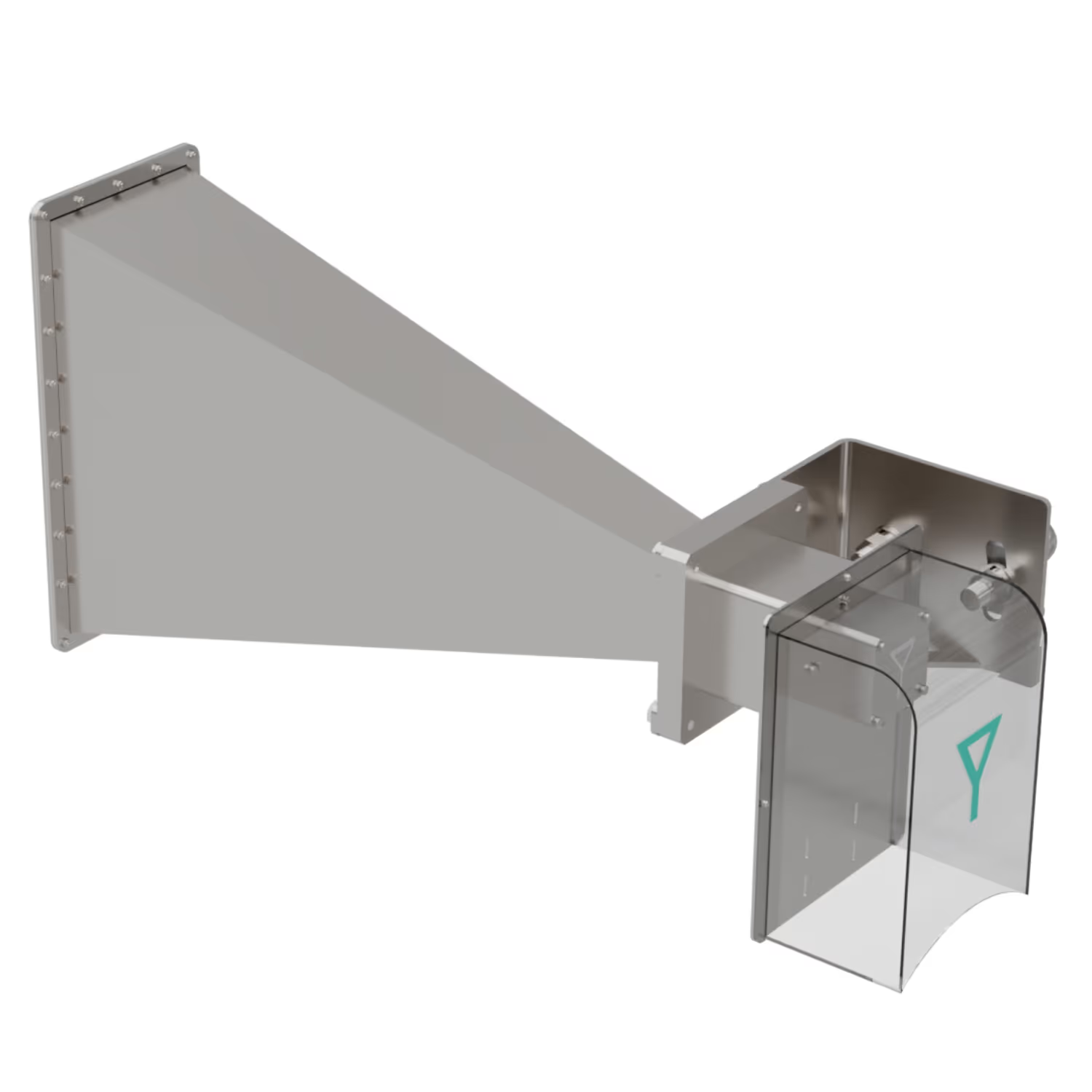
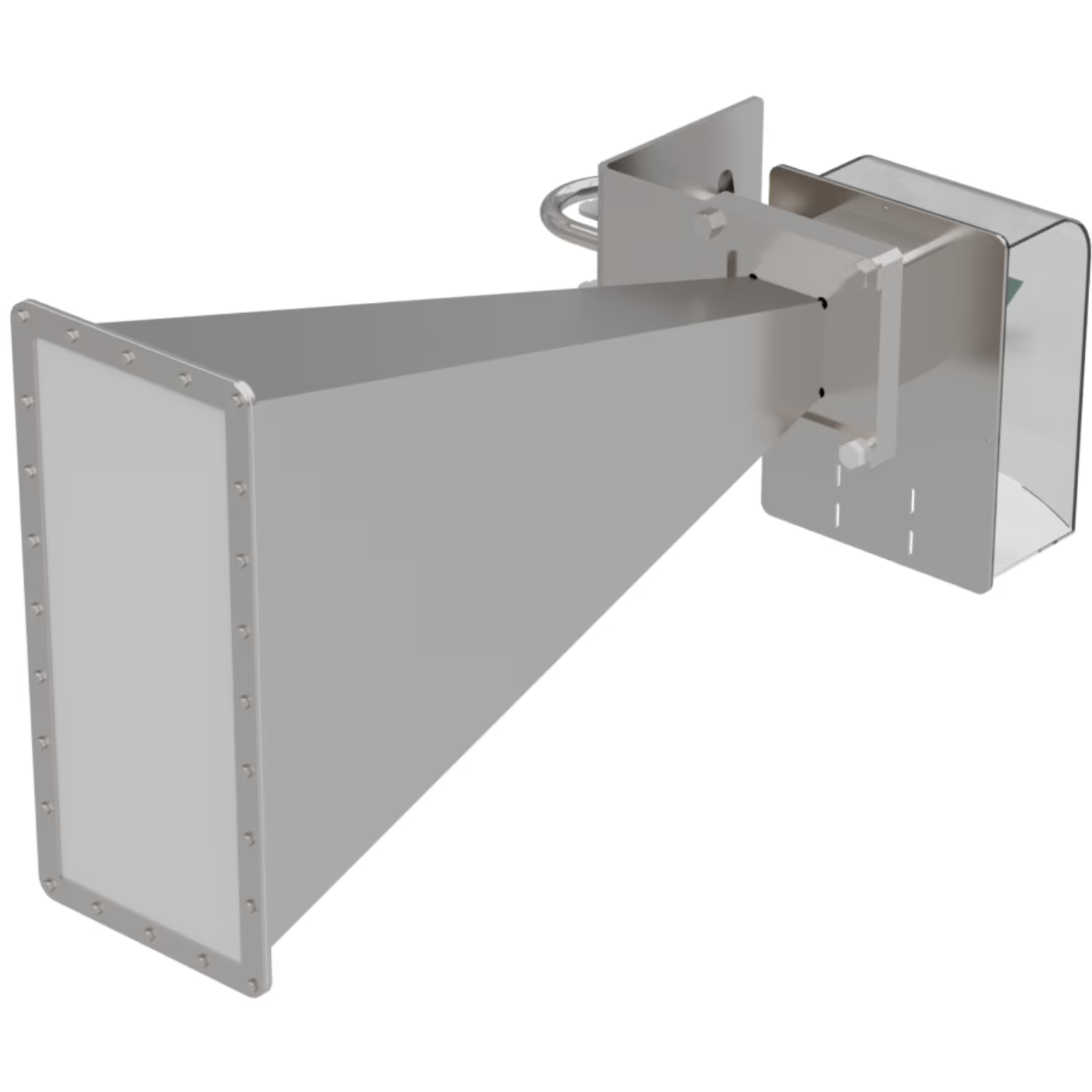
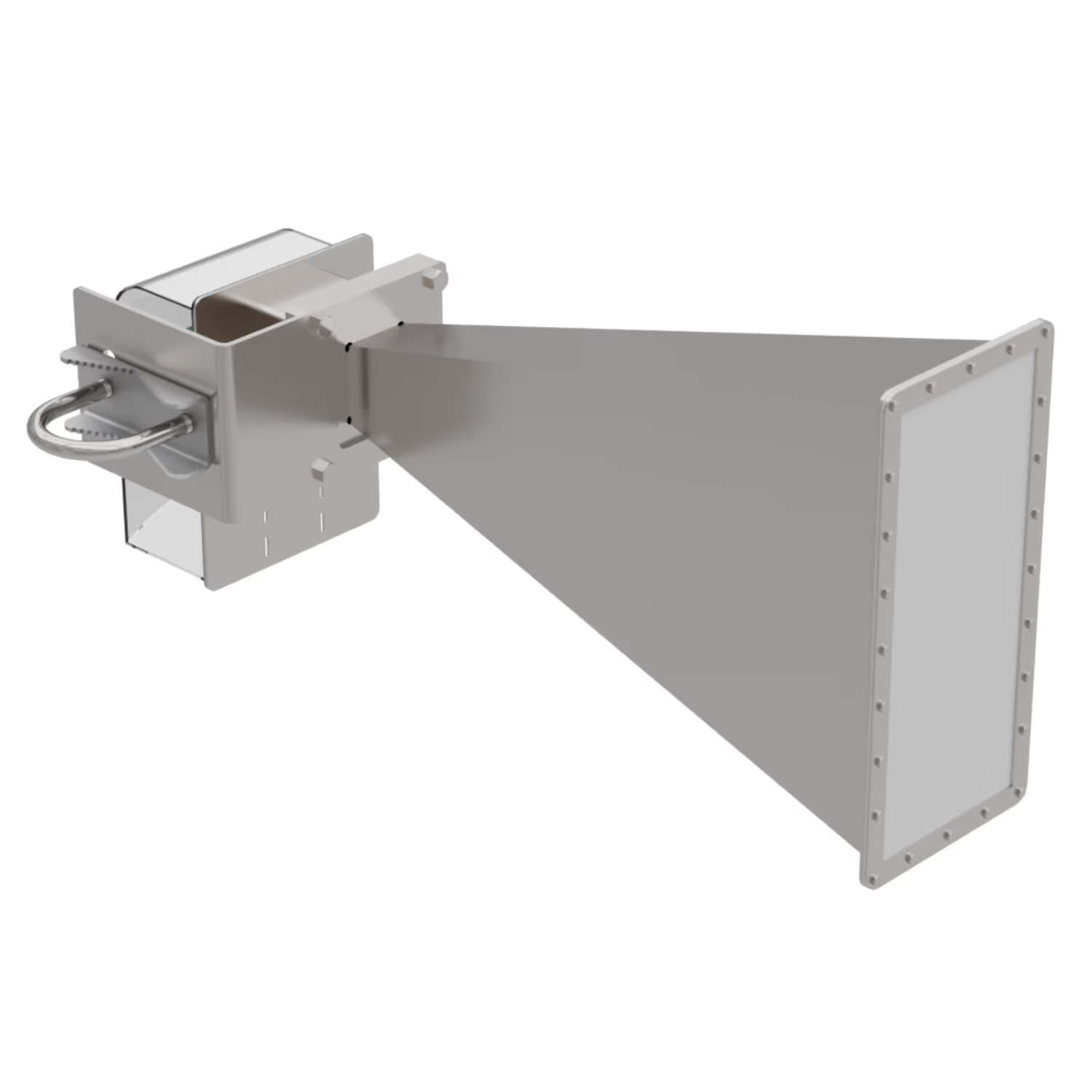
Aperçu
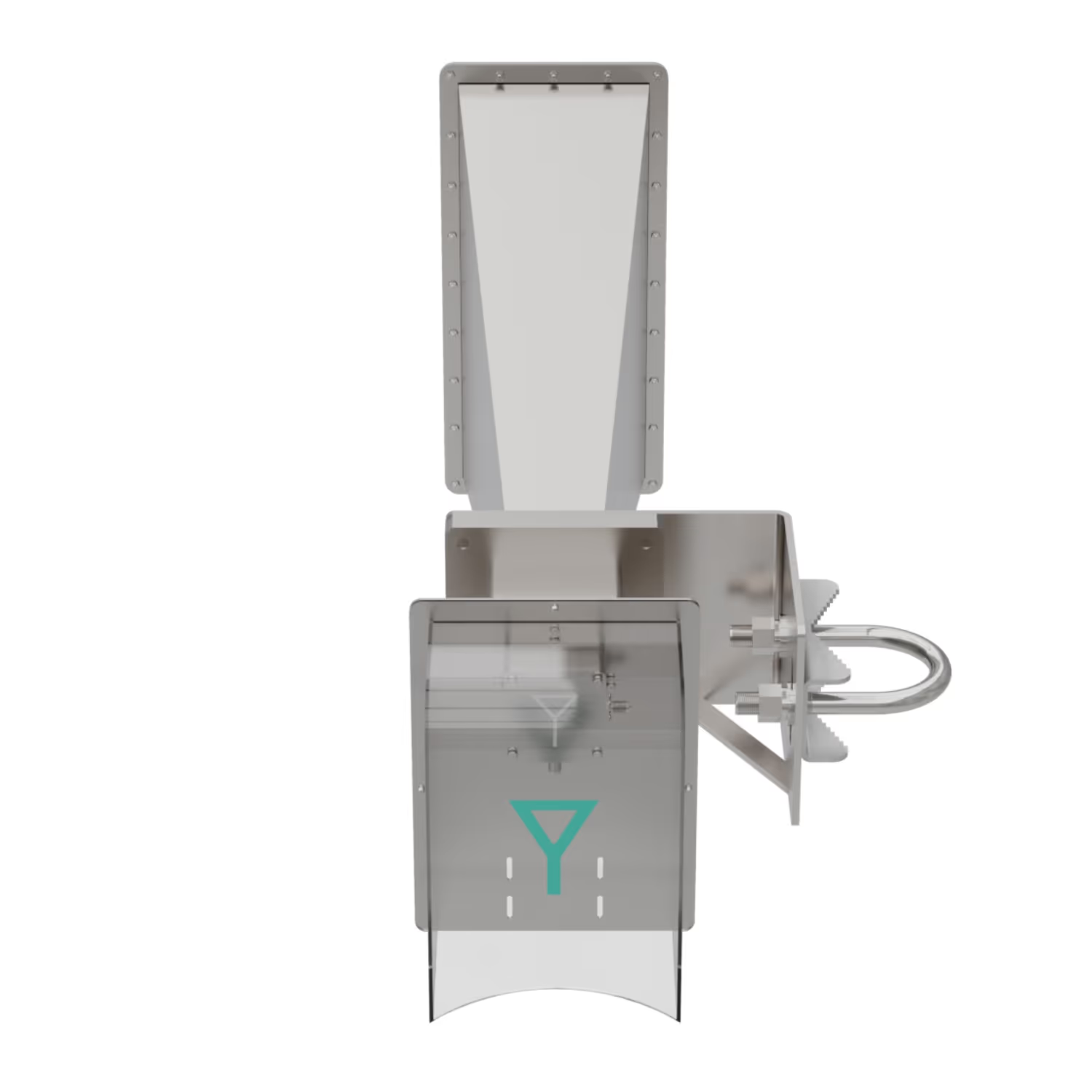
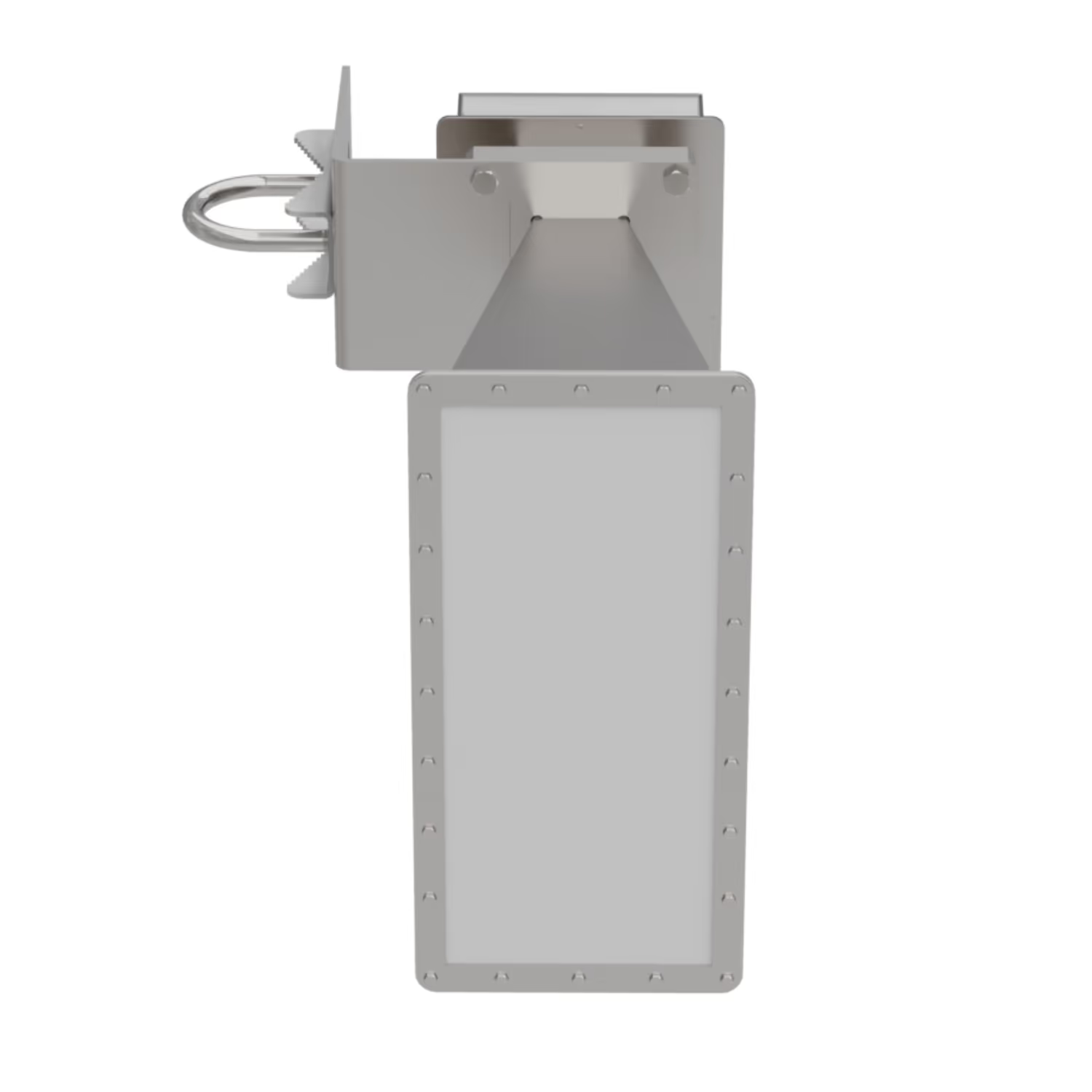
L'antenne cornet asymétrique 20° de Cyber Antennas (A20) est une antenne cornet large bande de pointe fonctionnant entre 4,9 et 7,1 GHz, spécialement conçue pour aider les fournisseurs d'accès Internet sans fil (WISP) à déployer des réseaux point à point (PtMP) denses et à haute capacité dans des environnements perturbés. Son faisceau asymétrique étroit de 20° la rend idéale comme antenne sectorielle PtMP à gain élevé pour des liaisons sans obstacle jusqu'à environ 10 km (selon le gain de l'antenne distante) et pour une réutilisation intensive des fréquences sur les pylônes encombrés.
Réseaux PtMP denses à grande échelle L'antenne cornet asymétrique 20° (A20) de Cyber Antennas offre aux fournisseurs d'accès Internet sans fil (WISP) un secteur à gain élevé et à faisceau concentré, spécialement conçu pour le déploiement à grande échelle de réseaux point à point (PtMP) denses et à haute capacité sur les bandes non licenciées de 5 GHz et 6 GHz. Son faisceau étroit de 20° assure une couverture nette et contrôlée, maintenant le signal là où il est nécessaire et évitant les interférences. Ceci permet une réutilisation intensive des fréquences, des taux de modulation plus élevés et un plus grand nombre d'abonnés par tour. Fonctionnant sur la bande large 4,9–7,1 GHz, l'A20 permet aux opérateurs de standardiser leurs déploiements sur les bandes 5 GHz et 6 GHz, simplifiant ainsi la planification, l'approvisionnement et la gestion des pièces de rechange, tout en libérant du spectre supplémentaire pour la croissance. Conçue comme un secteur PtMP plutôt que comme un pont point à point (PtP) à usage général, l'A20 aide les WISP à optimiser la capacité de leurs réseaux avec un spectre limité, même sur des sites bruyants et encombrés.
Secteur de corne à gain élevé de 20° pour tours encombrées Le faisceau asymétrique étroit de 20° de l'A20 permet aux fournisseurs d'accès Internet sans fil (WISP) de segmenter un site en zones de couverture bien définies, améliorant considérablement l'isolation des secteurs sur les pylônes encombrés. En remplaçant les secteurs larges et chevauchants par des antennes cornet focalisées à 20°, les opérateurs peuvent réduire les interférences internes, augmenter le rapport signal sur bruit (SINR) et maintenir des niveaux de couverture maximale (MCS) plus élevés, ce qui se traduit directement par une capacité utilisable accrue par point d'accès. Le gain élevé et le diagramme de rayonnement précis de l'A20 contribuent à concentrer l'énergie dans la zone de service prévue, évitant ainsi son débordement vers les secteurs adjacents ou hors site. Ceci est crucial lorsque chaque décibel de qualité de signal compte.
Réutilisation agressive des fréquences et contrôle des interférences Grâce à son lobe principal finement contrôlé et à ses lobes secondaires atténués, l'A20 permet aux fournisseurs d'accès Internet sans fil (WISP) de réutiliser plus efficacement les mêmes canaux autour d'une tour ou entre sites voisins. La pureté du diagramme de rayonnement limite les chevauchements indésirables entre les secteurs, simplifiant ainsi la conception de plans de fréquences qui évitent les interférences destructives tout en maximisant le débit total. Ce contrôle précis de l'énergie RF est particulièrement précieux dans les environnements bruyants, où la réduction de la captation de bruit hors axe et des interférences propres permet souvent d'obtenir une capacité supérieure à celle obtenue par l'ajout de spectre.
Couverture optimisée pour les topologies WISP réelles L'A20 est conçue pour s'adapter à la manière dont les fournisseurs d'accès Internet sans fil (WISP) déploient leurs réseaux : des crêtes et des flancs de collines jusqu'aux vallées, le long des routes et des voies ferrées, et à travers les quartiers à densité mixte, les parcs d'activités et les zones industrielles. Son faisceau de 20° permet de cibler avec précision des zones de couverture longues et étroites, ou des directions perturbées nécessitant un gain et une isolation accrus. Les opérateurs peuvent ainsi aligner leur couverture radiofréquence sur la configuration physique des habitations et des entreprises qu'ils desservent, au lieu d'imposer une couverture générique à large faisceau qui gaspille le signal en dehors de la zone cible.
Performances à large bande de 5 GHz et 6 GHz à la pointe de l'industrie L'antenne cornet asymétrique 20° (A20) de Cyber Antennas est conçue comme un véritable secteur large bande 5 GHz et 6 GHz, offrant un gain élevé et constant ainsi qu'un diagramme de rayonnement optimal de 4,9 à 7,1 GHz. Contrairement à de nombreuses antennes spécifiques à une bande qui présentent une zone de fonctionnement optimale étroite, l'A20 maintient d'excellentes performances sur toute la bande, permettant aux fournisseurs d'accès Internet sans fil (WISP) de basculer librement entre les canaux 5 GHz et 6 GHz sans compromettre le débit ni la qualité du signal. Cette large bande passante améliore non seulement les débits réels des abonnés, mais simplifie également la conception du réseau, la planification des fréquences et la gestion des équipements, permettant aux opérateurs de standardiser leur déploiement sur un seul secteur 20° à gain élevé, aussi bien pour les infrastructures existantes que pour les déploiements de nouvelle génération.
Performances à gain élevé de 4,9 à 7,1 GHz L'antenne A20 est conçue pour offrir un gain élevé et constant, ainsi qu'un transfert de puissance efficace sur toute sa bande de fréquences (4,9–7,1 GHz). Au lieu d'un pic de performance sur une portion étroite de la bande, sa réponse est optimisée pour garantir des bilans de liaison et des taux de modulation performants, que vous utilisiez les canaux 5 GHz traditionnels ou la bande 6 GHz. Ces performances stables et prévisibles permettent aux fournisseurs d'accès Internet sans fil (WISP) de concevoir et de faire évoluer leurs réseaux sans craindre qu'un changement de canal ou de bande n'affecte la puissance du signal ou la couverture.
Diagrammes de rayonnement propres De nombreuses antennes à « gain élevé » atteignent leur gain au détriment de la qualité du diagramme de rayonnement ou en étant fortement optimisées pour une portion étroite du spectre. La conception à cornet large bande de l'antenne A20 offre les deux : un gain élevé et un diagramme de rayonnement net et contrôlé, avec des lobes secondaires supprimés sur toute la bande prise en charge. Ainsi, les fournisseurs d'accès Internet sans fil (WISP) bénéficient d'une forme de faisceau fiable, d'une isolation optimale et d'une maîtrise des interférences, qu'ils opèrent à 4,9 GHz, 5 GHz ou 6 GHz, évitant les distorsions de diagramme et les baisses de performance qui peuvent survenir lorsque des antennes à bande étroite sont utilisées en dehors de leur plage de fréquences optimale.
Approvisionnement simplifié et déploiements standardisés L'antenne A20 couvrant la bande 4,9–7,1 GHz avec une conception unique, permet aux opérateurs de standardiser leur installation sur un seul modèle sectoriel de 20° au lieu de gérer plusieurs références pour différentes parties de la bande. Ceci simplifie l'approvisionnement, la gestion des pièces détachées et la planification des pylônes : la même antenne cornet peut être utilisée pour la bande 5 GHz aujourd'hui et pour l'extension à 6 GHz demain, sans modification du matériel. Il en résulte une complexité réduite sur le terrain, moins de mauvaises surprises lors de la configuration et une évolutivité facilitée lorsque de nouvelles fréquences sont disponibles ou que des ajustements sont nécessaires pour gérer le bruit.
Débit supérieur aux alternatives spécifiques à chaque bande L'efficacité à large bande et la géométrie optimisée du cornet A20 ont été testées et offrent un transfert de puissance du signal plus efficace et un gain réalisé supérieur entre 4,9 et 7,1 GHz par rapport aux secteurs de cornet à bande étroite comparables dans leurs tranches de fréquence respectives. Dans les déploiements WISP réels, cela se traduit par des niveaux MCS plus élevés, des budgets de liaison descendante renforcés et une amélioration de plus de 15 % des débits de téléchargement des abonnés par rapport à de nombreux secteurs de cornet à bande étroite similaires (20-30°). En combinant un faisceau étroit de 20° avec des performances à large bande de pointe, l'A20 offre aux opérateurs un levier puissant pour augmenter la capacité par secteur sans ajouter de spectre.
Prêts pour le 5 GHz aujourd'hui et le 6 GHz demain Avec une couverture complète de la bande 5 GHz traditionnelle et des nouvelles bandes 6 GHz, l'A20 est compatible avec les plateformes radio actuelles et futures, notamment les systèmes PtMP basés sur le Wi-Fi 6E et le Wi-Fi 7 MLO. Les fournisseurs d'accès Internet sans fil (WISP) peuvent déployer l'A20 sur leur infrastructure 5 GHz existante et migrer ultérieurement des secteurs ou des sites entiers vers la bande 6 GHz au fur et à mesure de l'évolution des technologies radio et de la réglementation, en utilisant la même antenne sectorielle de 20° éprouvée. Ceci permet de préserver les investissements dans l'infrastructure et de garantir la rentabilité des travaux de déploiement réalisés aujourd'hui, lors de la transition des réseaux vers les canaux 6 GHz à plus grande capacité.
Compatibilité radio et scénarios de déploiement WISP La compatibilité radio est déterminée par le type de connecteur, la gamme de fréquences et l'application prévue.
Cette antenne possède des connecteurs femelles RP-SMA pour montage sur cloison et comprend de courts câbles de raccordement RF pour une connexion directe aux radios Ubiquiti, Cambium, Mimosa et MikroTik les plus courantes dotées de connecteurs.
L'A20 fonctionne de 4,9 à 7,1 GHz, y compris l'intégralité des bandes 4,9 GHz, 5 GHz et 6 GHz.
Il est optimisé pour la couverture du secteur PtMP et est particulièrement efficace dans les déploiements denses et sujets aux interférences, tels que les tours encombrées, les MicroPoP, les quartiers urbains, où une couverture précise et une réutilisation agressive des fréquences sont essentielles.
Secteurs de points d'accès PtMP à haute capacité sur des tours encombrées Le point d'accès A20 excelle en tant que secteur PtMP sur les pylônes encombrés où les fournisseurs d'accès Internet sans fil (WISP) doivent optimiser l'utilisation du spectre limité. Associé à des radios comme la Rocket LTU, l'ePMP 4600L ou la Mimosa A5x, son faisceau étroit de 20° et son gain élevé permettent aux opérateurs de segmenter les sites en tranches de couverture étroites à fort rapport signal/bruit (SINR), réduisant ainsi le chevauchement et les interférences entre les secteurs. Ceci permet une réutilisation plus efficace des fréquences et des niveaux de couverture multipoints (MCS) soutenus plus élevés, ce qui se traduit par un plus grand nombre d'abonnés par point d'accès et un débit agrégé plus important par pylône. Son format compact et léger, ainsi que son système de fixation sécurisé, facilitent également le déploiement de plusieurs secteurs A20 dans des espaces restreints, tant verticalement qu'horizontalement.
Conçu pour résoudre les problèmes courants des fournisseurs d'accès Internet sans fil Interférences radiofréquences dans les environnements encombrés
La conception de l'antenne cornet et le faisceau asymétrique étroit de 20° du A20 contribuent à rejeter les signaux indésirables et à réduire les interférences provenant des secteurs voisins et des radios à proximité. Ceci améliore la qualité du signal, la stabilité du réseau et ses performances globales dans les environnements RF denses.
Chevauchement excessif des secteurs
Les antennes sectorielles larges classiques émettent souvent de l'énergie RF dans des zones non ciblées, créant des chevauchements et des interférences entre les secteurs. L'antenne A20 offre une couverture de 20° étroitement contrôlée, permettant aux opérateurs de desservir des zones spécifiques avec une plus grande précision et un dépassement minimal.
Capacité du réseau limitée
Lorsque trop d'abonnés partagent une vaste zone de couverture, le temps d'antenne disponible et le débit peuvent diminuer. L'A20 permet aux opérateurs de diviser la couverture en plusieurs secteurs étroits, ce qui accroît la réutilisation des fréquences et améliore la capacité sur les sites d'antennes à haute densité.
Utilisation inefficace du spectre
Dans les environnements sans fil encombrés, les canaux disponibles sont une ressource précieuse. Le faisceau concentré de l'A20 minimise les rayonnements indésirables en dehors de la zone de couverture prévue, permettant ainsi aux opérateurs de réutiliser les fréquences plus efficacement et d'optimiser l'utilisation du spectre.
Migration vers les réseaux 6 GHz
Grâce à sa véritable couverture large bande de 4,9 à 7,1 GHz, le routeur A20 prend en charge les fréquences 5 GHz et 6 GHz. Les opérateurs peuvent ainsi déployer les technologies Wi-Fi 6E et Wi-Fi 7 sans remplacer leurs antennes, préservant leurs investissements d'infrastructure existants et simplifiant les futures mises à niveau du réseau.
Couverture des zones de service longues et étroites
Certains déploiements nécessitent une couverture dans une direction précise, par exemple le long des autoroutes, des vallées, des littoraux, des zones industrielles ou des zones à forte concentration d'abonnés. Le diagramme de rayonnement asymétrique et étroit de l'A20 concentre l'énergie radiofréquence précisément là où elle est nécessaire, réduisant ainsi le gaspillage de couverture et améliorant l'efficacité du réseau.
Évolutivité sur les sites de tours existants
Face à la demande croissante des abonnés, les opérateurs doivent souvent étendre leur couverture sans construire de nouvelles antennes. Grâce à son angle de couverture compact de 20°, l'A20 facilite le déploiement de nouveaux secteurs sur l'infrastructure existante, augmentant ainsi la capacité du réseau tout en minimisant les coûts de déploiement.
Déploiements de tours à haute densité
La présence simultanée de radios et d'antennes sur des sites de tours très fréquentés peut engendrer une congestion du réseau radiofréquence et limiter les performances. L'excellent contrôle du faisceau et la forte réjection avant-arrière de l'A20 contribuent à réduire les interférences entre secteurs, ce qui la rend particulièrement adaptée aux déploiements multisecteurs à haute densité.
Cas d'utilisation typiques Secteurs PtMP à haute densité
Créer des zones de couverture très ciblées qui prennent en charge davantage d'abonnés tout en minimisant les interférences internes.
Déploiements de tours encombrées
Améliorer l'isolation sectorielle et réduire le bruit RF sur les tours comportant plusieurs points d'accès et des zones de couverture qui se chevauchent.
Zones de couverture longues et étroites
Fournir une couverture ciblée le long des routes, des vallées, des côtes, des corridors ferroviaires et autres zones de service allongées.
Environnements RF bruyants
Fournir des signaux plus nets et maintenir des taux de modulation plus élevés dans les environnements sans fil encombrés.
Mise à niveau du réseau de 5 GHz vers 6 GHz
Déployer une plateforme d'antenne unique prenant en charge à la fois les réseaux 5 GHz existants et les futures extensions 6 GHz.
Réseaux Wi-Fi 6E et Wi-Fi 7 PtMP à haute capacité
Permettre les déploiements de nouvelle génération qui nécessitent une couverture précise, une capacité sectorielle élevée et une utilisation efficace du spectre.
À qui est destiné le A20 ?
L'A20 est idéal pour :
• Fournisseurs d'accès Internet sans fil (WISP)
• Opérateurs de haut débit sans fil fixe déployant des réseaux point à multipoint (PtMP) à haute capacité
• Les fournisseurs d'accès Internet sans fil (WISP) exploitant des sites de tours à haute densité qui nécessitent une couverture sectorielle ultra-étroite et une réutilisation maximale des fréquences
• Les opérateurs de réseau migrent vers les technologies 6 GHz, Wi-Fi 6E et Wi-Fi 7
• Les fournisseurs de services utilisant les plateformes radio connectées Ubiquiti, Cambium, Mimosa, MikroTik et autres.
• Les propriétaires de tours et les intégrateurs de réseaux déployant des secteurs de couverture ciblés dans des environnements à forte densité d'abonnés
• Les opérateurs qui déploient des réseaux dans des environnements radiofréquences encombrés où la minimisation des interférences et la maximisation de la capacité sectorielle sont essentielles
• Les fournisseurs de services qui exigent une plateforme d'antenne unique pour les déploiements à 5 GHz et à 6 GHz
• Les fournisseurs d'accès Internet sans fil desservant des groupes d'abonnés concentrés où une couverture étroite et hautement contrôlée est nécessaire
• Les opérateurs qui cherchent à augmenter la capacité de leur réseau et la densité de leurs abonnés sans ajouter de nouveaux sites de tours
Qu'est-ce qui distingue l'A20 des produits similaires sur le marché ? Comparée aux antennes sectorielles et à cornet de 20° similaires du marché, l'A20 se distingue par plusieurs aspects importants :
Couverture à large bande réelle de 4,9 à 7,1 GHz
De nombreuses antennes sectorielles à faisceau étroit sont conçues principalement pour la bande 5 GHz et ne prennent pas pleinement en charge les déploiements modernes à 6 GHz. L'A20 couvre toute la gamme de fréquences de 4,9 à 7,1 GHz, permettant aux fournisseurs d'accès Internet sans fil (WISP) de déployer des radios 5 GHz et 6 GHz sur une seule plateforme d'antenne et de passer aux nouvelles technologies sans remplacer les antennes.
Diagramme de faisceau asymétrique contrôlé à 20°
Contrairement aux antennes sectorielles classiques qui génèrent souvent un dépassement excessif et des rayonnements RF indésirables, l'A20 offre une couverture asymétrique de 20° parfaitement maîtrisée, avec des limites bien définies. Ce diagramme de rayonnement ciblé permet un ciblage plus précis et simplifie la planification et l'optimisation du réseau.
Conçu pour les déploiements à très haute densité
La faible largeur de faisceau de 20° permet aux opérateurs de déployer un plus grand nombre de secteurs sur une même tour tout en minimisant les interférences entre eux. Ceci accroît la réutilisation des fréquences et la capacité du réseau, rendant l'A20 particulièrement efficace dans les environnements à forte densité d'abonnés et sur les sites de tours encombrés.
Rejet du bruit supérieur
L'architecture de l'antenne cornet rejette naturellement les signaux indésirables et réduit la réception d'interférences provenant des secteurs voisins et des réseaux concurrents. Ceci contribue à maintenir une meilleure qualité de signal, des taux de modulation améliorés et des liaisons sans fil plus stables dans les environnements radiofréquences encombrés.
Investissement dans les infrastructures prêtes pour l'avenir
Grâce à sa compatibilité avec les bandes de fréquences 5 GHz et 6 GHz, l'A20 permet aux opérateurs d'adopter les technologies Wi-Fi 6E et Wi-Fi 7 à leur propre rythme, sans avoir à remplacer leurs antennes existantes. Ceci préserve leurs investissements et simplifie les futures mises à niveau du réseau.
Optimisé pour les applications de couverture ciblée
Le diagramme de rayonnement asymétrique de l'A20 est particulièrement efficace pour couvrir des zones longues et étroites telles que les routes, les vallées, les littoraux, les zones industrielles et les zones à forte concentration d'abonnés. En dirigeant l'énergie radiofréquence là où elle est nécessaire et en minimisant la couverture dans les zones indésirables, l'antenne améliore l'efficacité du réseau et réduit le gaspillage de spectre.
Options de déploiement flexibles
Conçu principalement pour les liaisons point à multipoint, le routeur A20 peut également être utilisé pour des applications de couverture très ciblée et des déploiements point à point spécialisés sur de courtes et moyennes distances. Son fonctionnement à large bande, son contrôle précis du faisceau et son excellente réjection des interférences en font une solution polyvalente pour divers réseaux haut débit sans fil.
Foire aux questions
À quoi sert le klaxon asymétrique A20 ?
L'A20 est une antenne sectorielle à gain élevé conçue pour les WISP construisant des réseaux point-à-multipoint (PtMP) à haute capacité dans des environnements RF denses et bruyants.
Quelles bandes de fréquences le A20 prend-il en charge ?
L'A20 fonctionne de 4,9 GHz à 7,1 GHz, offrant une couverture à large bande de l'ensemble des bandes 4,9 GHz, 5 GHz et 6 GHz avec une seule antenne.
Le modèle A20 peut-il être utilisé avec des radios 5 GHz et 6 GHz ?
Oui. Le A20 est conçu pour fonctionner à la fois avec les radios 5 GHz actuelles et les plateformes 6 GHz plus récentes, y compris les déploiements Wi-Fi 6E et Wi-Fi 7.
Quelle est la largeur du faisceau de l'A20 ?
L'A20 est dotée d'un faisceau asymétrique focalisé de 20 à 30° qui offre une excellente isolation sectorielle et une couverture précise.
Comment l'A20 améliore-t-elle la capacité du réseau ?
Son faisceau étroit et ses lobes latéraux supprimés réduisent les interférences, maintiennent des taux de modulation plus élevés et permettent une réutilisation plus agressive des fréquences, permettant aux opérateurs de desservir davantage d'abonnés par point d'accès.
L'A20 est-elle adaptée aux tours très fréquentées ?
Oui. L'A20 est spécialement conçue pour les tours encombrées et les déploiements à haute densité où la minimisation des interférences internes et la maximisation de la capacité du secteur sont essentielles.
Quel est le gain du A20 ?
L'A20 offre un gain d'environ 17 à 21 dBi, contribuant à améliorer la force du signal, la qualité du signal et les performances globales du réseau.
Quelles radios sont compatibles avec l'A20 ?
L'A20 est compatible avec de nombreuses radios populaires d'Ubiquiti, Cambium, Mimosa et MikroTik qui fonctionnent dans la gamme de fréquences 4,9-7,1 GHz et utilisent des connecteurs compatibles.
Quels connecteurs utilise le A20 ?
L'antenne comprend des connecteurs femelles RP-SMA pour montage sur cloison et est livrée avec deux câbles de raccordement RP-SMA pour une intégration radio facile.
Le A20 peut-il prendre en charge les déploiements PtMP longue distance ?
Oui. Le gain élevé et le faisceau concentré de l'A20 la rendent adaptée aux liaisons point à point sans obstacle d'environ 10 km (6,2 miles) ou plus, en fonction du gain de l'antenne distante et des conditions de déploiement.
Pourquoi choisir l'A20 plutôt qu'une antenne sectorielle plus large ?
L'A20 concentre l'énergie RF dans une zone de couverture étroite, réduisant les interférences et augmentant la capacité par secteur, ce qui la rend idéale pour les zones à forte densité d'abonnés et les sites à spectre limité.
Puis-je standardiser les mises à niveau du réseau sur le modèle A20 ?
Oui. L'A20 couvrant les bandes 4,9 GHz, 5 GHz et 6 GHz, les opérateurs peuvent utiliser la même antenne pour les déploiements actuels et les extensions futures, ce qui simplifie la gestion des stocks et la planification du réseau.
L'antenne Cyber Antennas A20 remplace-t-elle l'antenne RF Elements SH20WB ? Oui. Pour les fournisseurs d'accès Internet sans fil (WISP) qui recherchent une alternative à l'antenne RF Elements SH20WB, l'antenne Cyber Antennas A20 est conçue pour offrir une couverture sectorielle plus utile, des performances RF prévisibles et une plus grande flexibilité de déploiement.
Contrairement à une antenne cornet symétrique qui répartit l'énergie de manière plus uniforme au-dessus et en dessous de l'horizon, l'A20 utilise un diagramme de rayonnement asymétrique conçu pour concentrer davantage d'énergie radiofréquence vers la zone de service où se trouvent généralement les abonnés. Ceci permet d'améliorer l'efficacité du secteur, de réduire les rayonnements inutiles en dehors de la zone de couverture prévue et de favoriser une réutilisation plus propre des fréquences.
Comment le gain du A20 se compare-t-il à celui du SH20WB ? L'antenne Cyber Antennas A20 offre un gain mesuré jusqu'à 22 dBi . Cyber Antennas spécifie le gain de ses antennes à partir de mesures effectuées sur des antennes de production, plutôt que de se fier uniquement à des valeurs nominales ou calculées.
Cette distinction offre aux fournisseurs d'accès Internet sans fil une base plus pratique pour les calculs de bilan de liaison et la planification de réseau. Les valeurs de gain nominal publiées ne reflètent pas toujours les performances mesurées exactes de chaque antenne de production ; l'utilisation de données de production mesurées permet donc d'avoir une plus grande confiance lors de la conception d'un secteur.
Comment la largeur de faisceau de 20° du A20 est-elle spécifiée ? L'antenne Cyber Antennas A20 spécifie une largeur de faisceau de 20° aux points de demi-puissance de -3 dB, une norme du secteur.
Ceci est important lors de la comparaison d'antennes, car les valeurs de largeur de faisceau ne sont directement comparables que si elles sont mesurées au même niveau de signal. RF Elements indique une largeur de faisceau de 20° pour la SH20WB à -6 dB.
À gain maximal égal, une antenne mesurée à -3 dB conserve deux fois plus de puissance de signal à la limite de son faisceau qu'une antenne mesurée à -6 dB. Par conséquent, en comparant les spécifications publiées pour un angle de 20°, l'antenne A20 conserve 3 dB de signal en plus à la limite du secteur indiqué.
L'A20 peut-il également être utilisé comme secteur à 30° ? Oui ! L'antenne Cyber Antennas A20 possède une largeur de faisceau d'environ 30° à -6 dB, offrant aux WISP la flexibilité d'utiliser l'antenne pour une couverture sectorielle plus large tout en conservant un diagramme de rayonnement asymétrique et focalisé.
La largeur du faisceau varie légèrement en fonction de la fréquence ; il est donc conseillé aux clients de consulter la fiche technique du modèle A20 pour connaître la largeur de faisceau exacte à -6 dB pour chaque fréquence de fonctionnement. Les diagrammes de rayonnement publiés offrent la représentation la plus précise de la largeur du faisceau et de la couverture sur la plage de fréquences prise en charge.
L'antenne A20 doit-elle être utilisée comme un secteur de 20° ou de 30° ? Cela dépend des objectifs de déploiement du FAI sans fil.
Pour des niveaux de signal plus élevés et une plus grande marge de liaison aux extrémités du secteur, l'A20 est mieux conçu autour de sa largeur de faisceau d'environ 20° -3 dB.
Pour une couverture plus large et plus économique, l'A20 peut également être déployée en tant que secteur d'environ 30° en utilisant sa largeur de faisceau de -6 dB.
La largeur du faisceau varie en fonction de la fréquence, les fournisseurs d'accès Internet sans fil (WISP) doivent donc se référer à la fiche technique et aux diagrammes de rayonnement du A20 pour connaître la largeur de faisceau exacte de -3 dB et -6 dB à la fréquence de fonctionnement prévue.
Qu’est-ce que cela signifie dans le cadre d’un déploiement WISP réel ? L'A20 est conçue pour fournir une couverture robuste et prévisible sur l'ensemble du secteur utilisable :
Au niveau de l'axe de visée, les opérateurs bénéficient de spécifications de gain basées sur des antennes de production mesurées.
Aux extrémités du faisceau de 20° indiqué, le A20 est spécifié à seulement 3 dB en dessous du gain maximal.
Entre le centre et les bords du secteur, sa configuration asymétrique est conçue pour diriger davantage d'énergie RF utile vers l'horizon.
Ensemble, ces caractéristiques peuvent offrir aux fournisseurs d'accès Internet sans fil une couverture plus prévisible et une utilisation plus efficace de l'énergie RF disponible.
L'A20 peut-elle être utilisée pour une couverture sectorielle plus étendue ? Oui. Bien que l'A20 offre une largeur de faisceau à mi-puissance de 20°, son diagramme de rayonnement peut également le rendre pratique pour des déploiements sectoriels d'environ 30° lorsque l'atténuation supplémentaire en bordure est acceptable pour la conception du réseau.
Cela donne aux fournisseurs d'accès Internet sans fil la flexibilité de choisir entre des secteurs plus étroits et plus performants et une couverture plus large et plus rentable en fonction de la densité d'abonnés, de la configuration des tours et des exigences en matière de budget de liaison.
L'A20 est-il facile à intégrer aux radios WISP existantes ? Oui. L'antenne Cyber Antennas A20 utilise des connecteurs RP-SMA standard et comprend des câbles de raccordement RP-SMA de 16 cm , ce qui facilite la connexion aux radios WISP compatibles.
Cette connectivité standardisée offre également aux opérateurs une plus grande flexibilité lors de la mise à niveau des sites existants ou du changement de plateformes radio.
Pourquoi choisir l'antenne Cyber Antennas A20 plutôt que l'antenne RF Elements SH20WB ? Pour les fournisseurs d'accès Internet sans fil qui comparent les deux antennes, l'A20 offre plusieurs avantages clairement définis :
Gain mesuré jusqu'à 22 dBi
Largeur de faisceau de 20° spécifiée à -3 dB
Un diagramme de rayonnement asymétrique optimisé pour une couverture sectorielle vers l'horizon
Des performances solides et prévisibles dans l'ensemble du secteur utilisable
Utilisation flexible dans des déploiements sectoriels d'environ 20° ou 30°
Connectivité RP-SMA standard de l'industrie
Câbles de raccordement RP-SMA de 16 cm inclus
Pour les WISP cherchant à remplacer le RF Elements SH20WB, la Cyber Antennas A20 est une antenne sectorielle spécialement conçue autour de spécifications mesurables et des exigences pratiques de couverture des réseaux WISP du monde réel.
Produits associés
Aucun produit associé trouvé.
Related Products (Category & Subcategory)
Tags associés
 antenna→
 6 GHz→
 5 GHz→
 wideband→
 wifi6e→
 wifi7→
 PtMP→
PtMP→ wireless bridge→
 ePMP 4600L→
 Ubiquiti→
 Cambium→
 Horn→
Horn→ Horn Antenna→
Cliquez sur un tag pour voir les produits associés
Related Products (Tags)
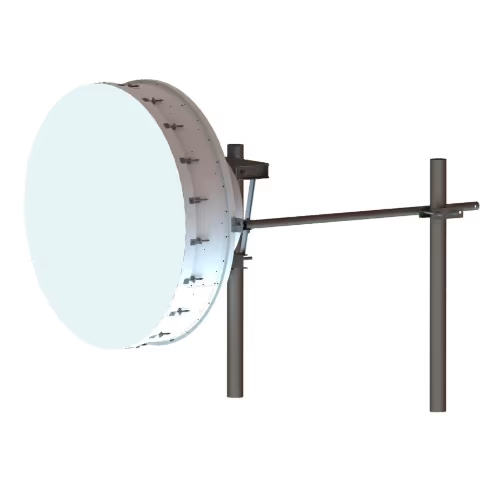
1.8 m Microwave Dish 6 GHz
6 GHz6-ft dish1.8 m dish
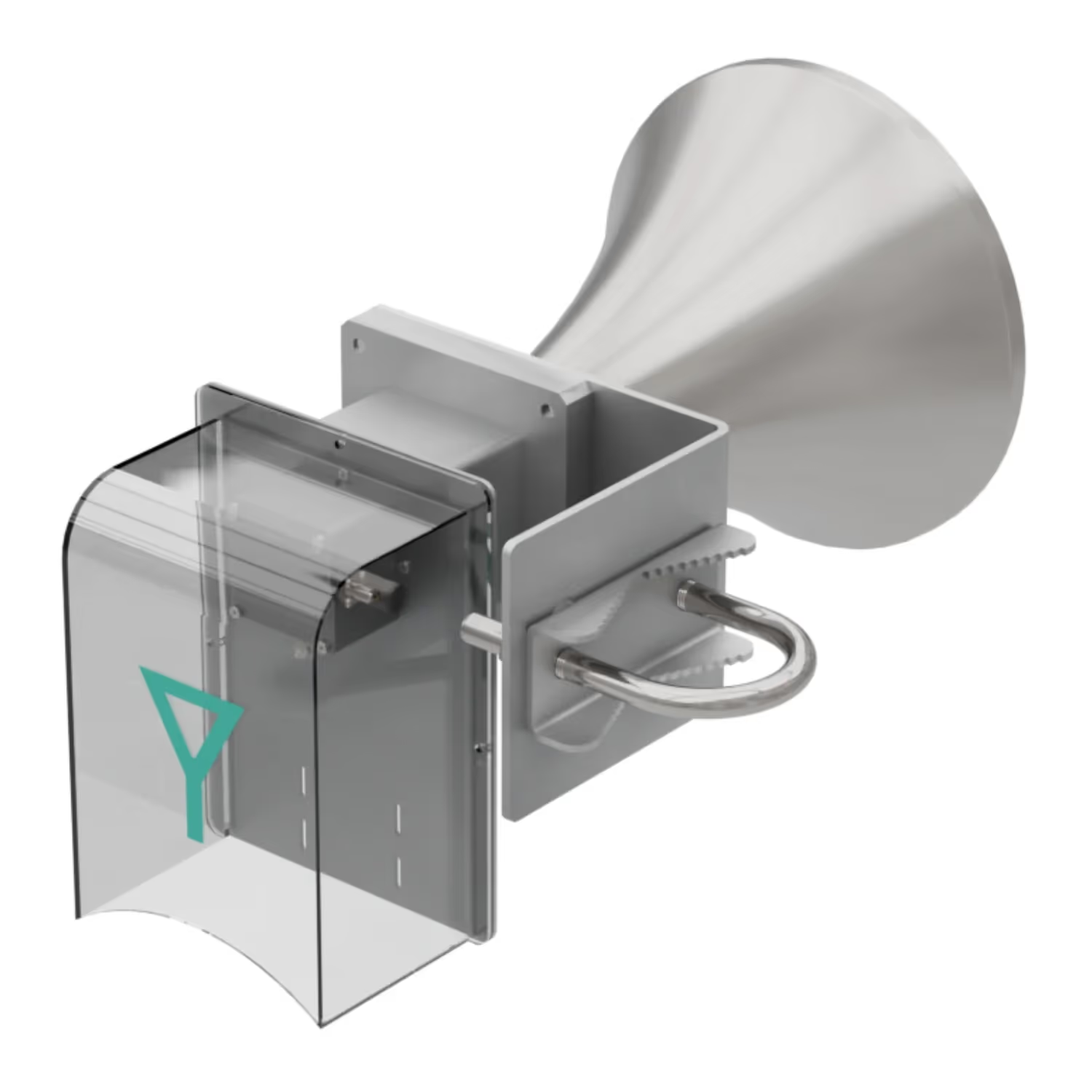
30° Symmetrical Horn
PTPbackhaulantenna
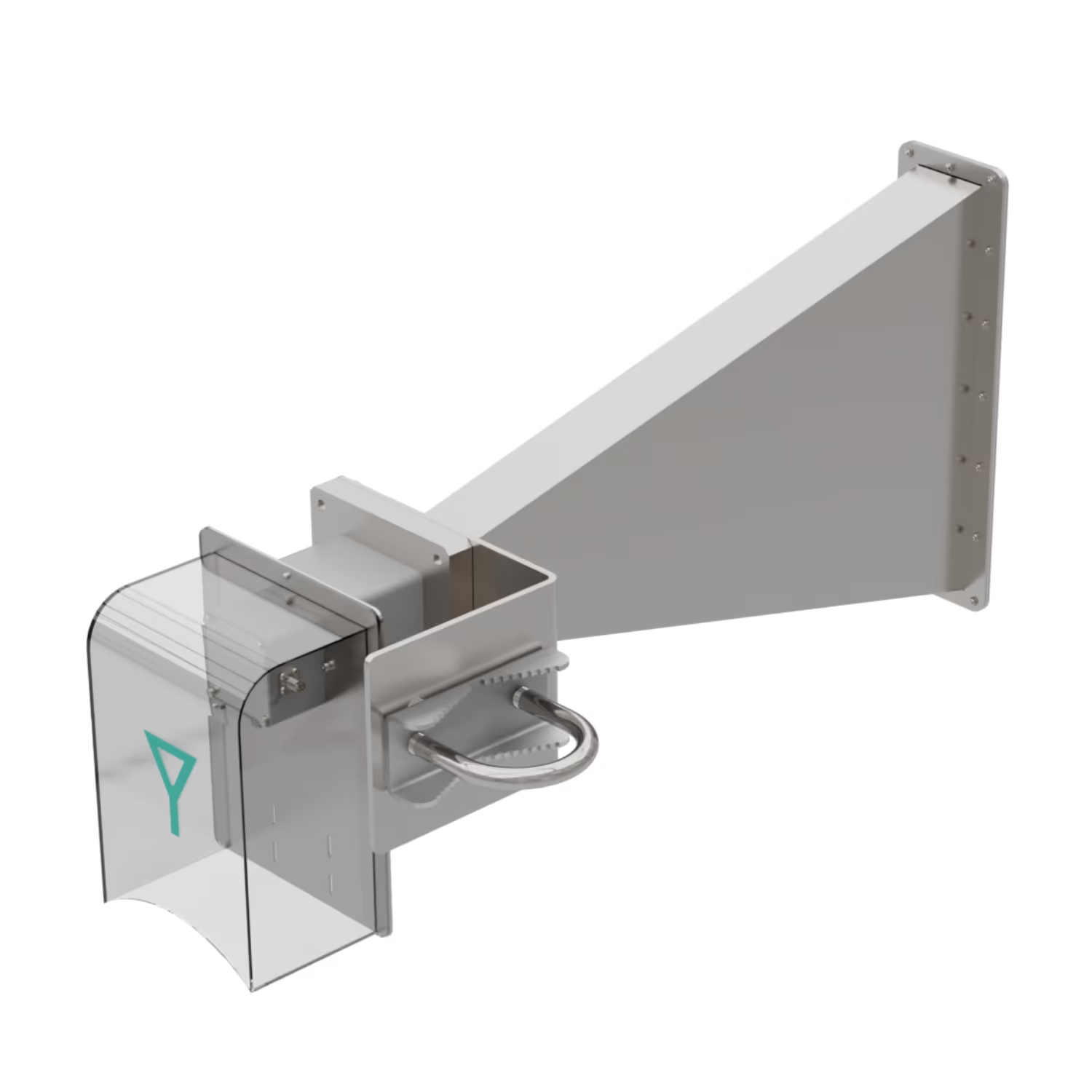
60° Asymmetrical Horn
antenna6 GHz5 GHz
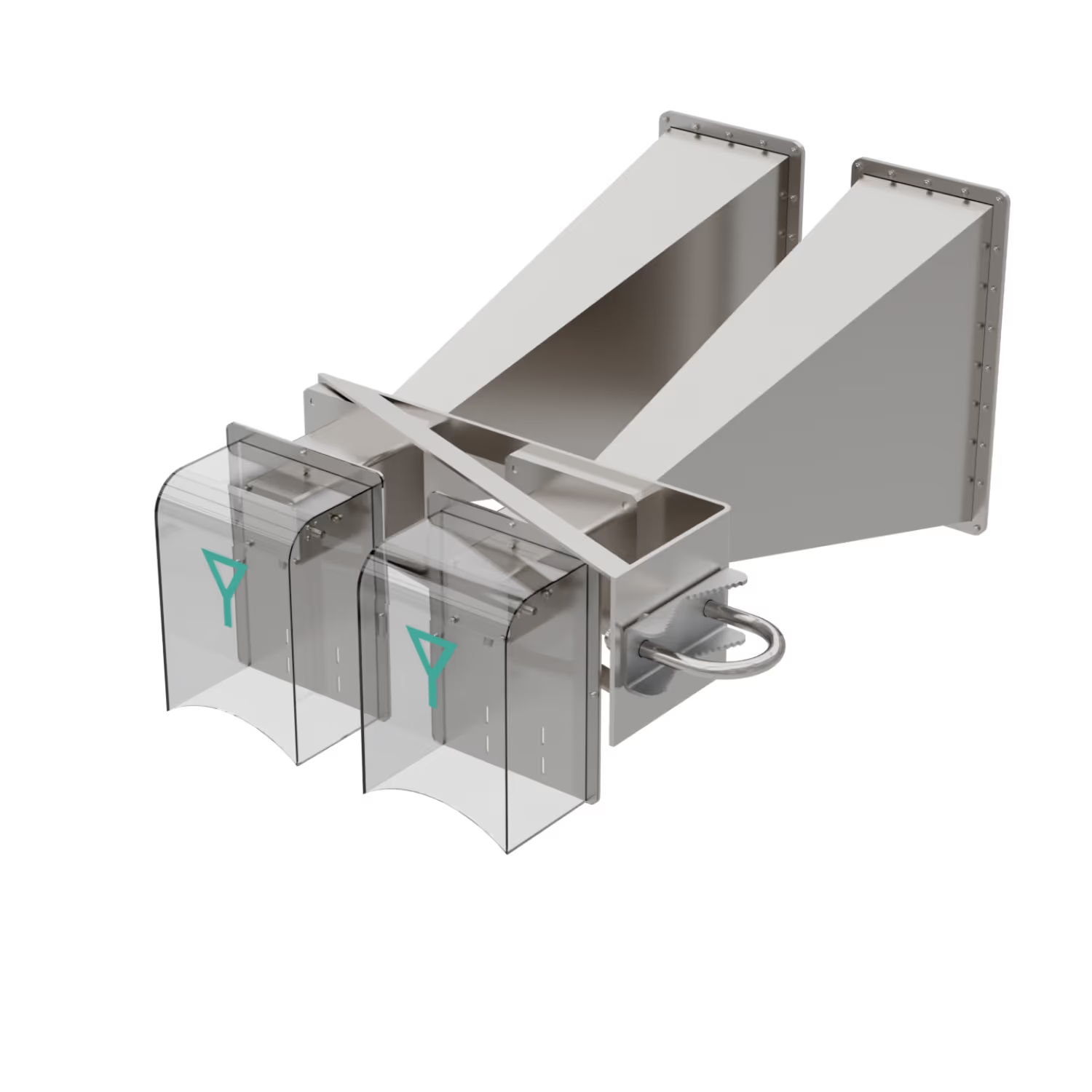
Double 20° Asymmetrical Horn 4x4
antenna6 GHz5 GHz
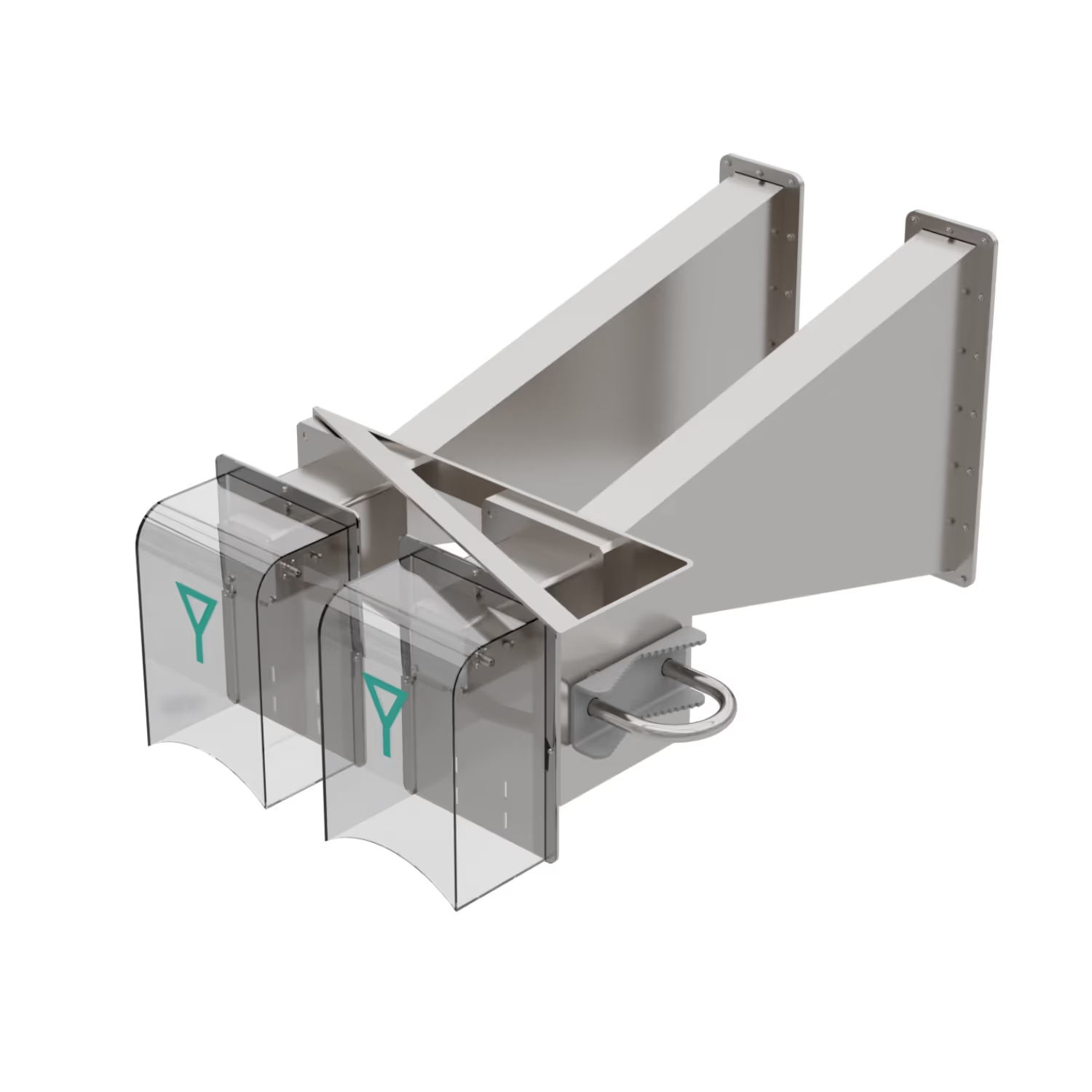
Double Asymmetrical 60° Horn 4x4
antenna6 GHz5 GHz
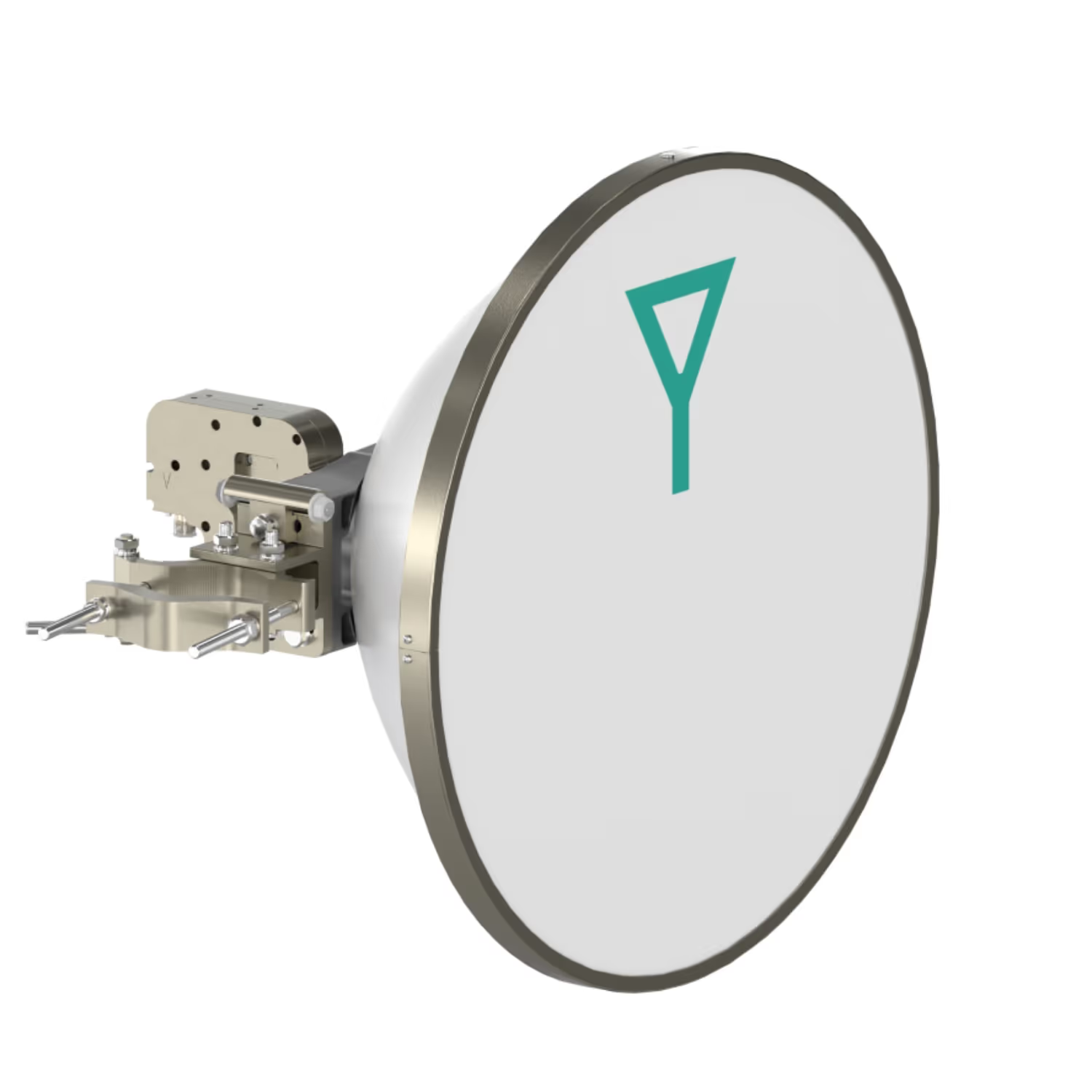
0.6m Dish High Performance
PTPbackhaulantenna
1.8m Dish High Performance
PTPbackhaulantenna
1.2m Dish High Performance
PTPbackhaulantenna
Avis
Loading…
20° Asymmetrical Horn
Numéro du modèle : A20
Antenne cornet asymétrique 20-30° haute performance, légère et tout-en-un, fonctionnant sur les bandes 5 et 6 GHz, pour l'extension des réseaux WISP dans les environnements bruyants.
Caractéristiques
- largeur de faisceau asymétrique de 20 à 30°
- Gamme de fréquences : 4,9-7,1 GHz
- Gain : 17-21 dBi
- ROS max : 1,6
- Isolation des ports : >35 dB
- Connecteurs femelles RP-SMA pour traversée de cloison (filetage extérieur)
- 2 câbles de connexion RP-SMA inclus
Spécifications d’expédition
- •Dimensions (L×l×H): 690×370×220
- •Poids: 5.40kg
Warehouse availability
Los Angeles
In stock
60 available
Shenzhen
In stock
2 available
Winncom CDMX
In stock
2 available