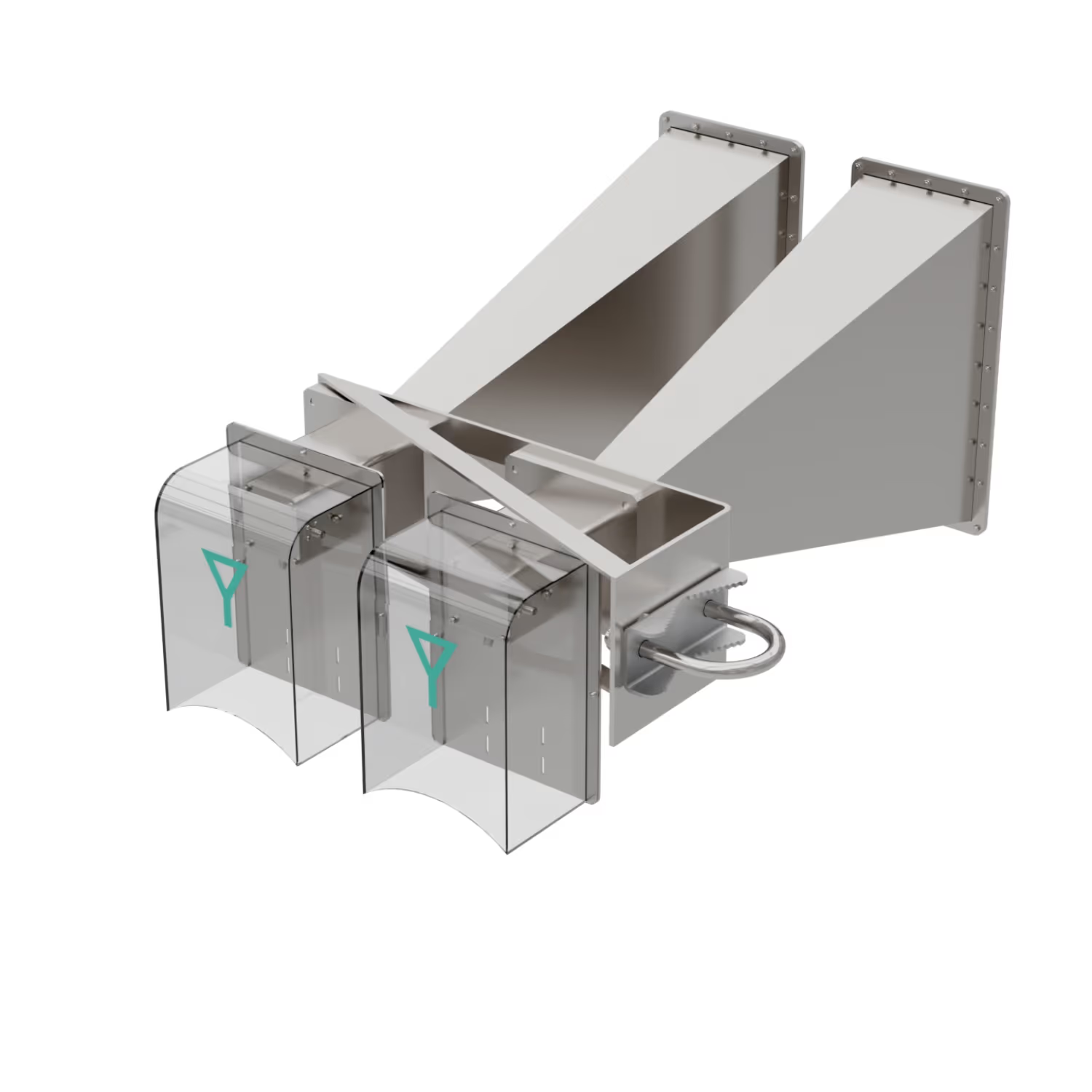
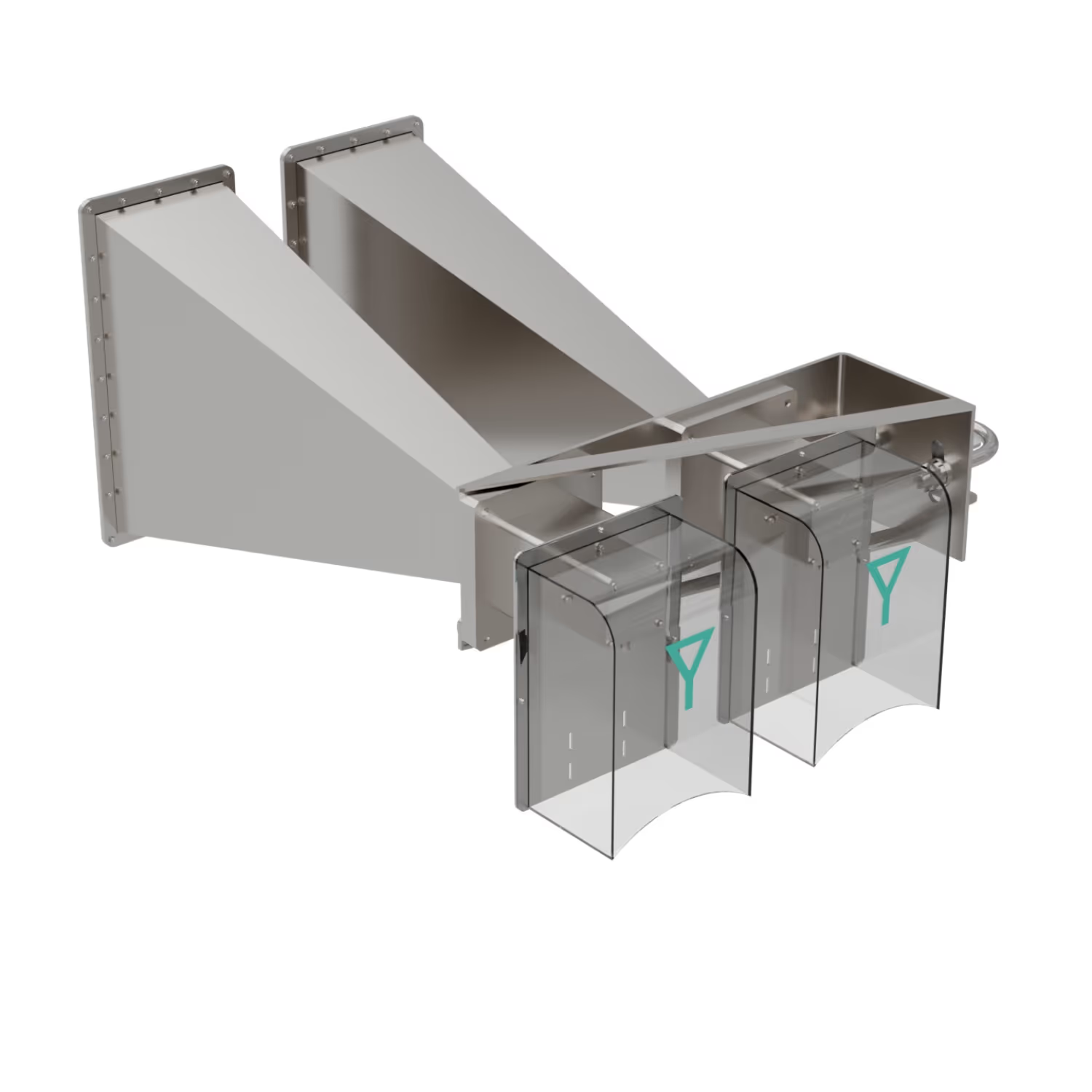
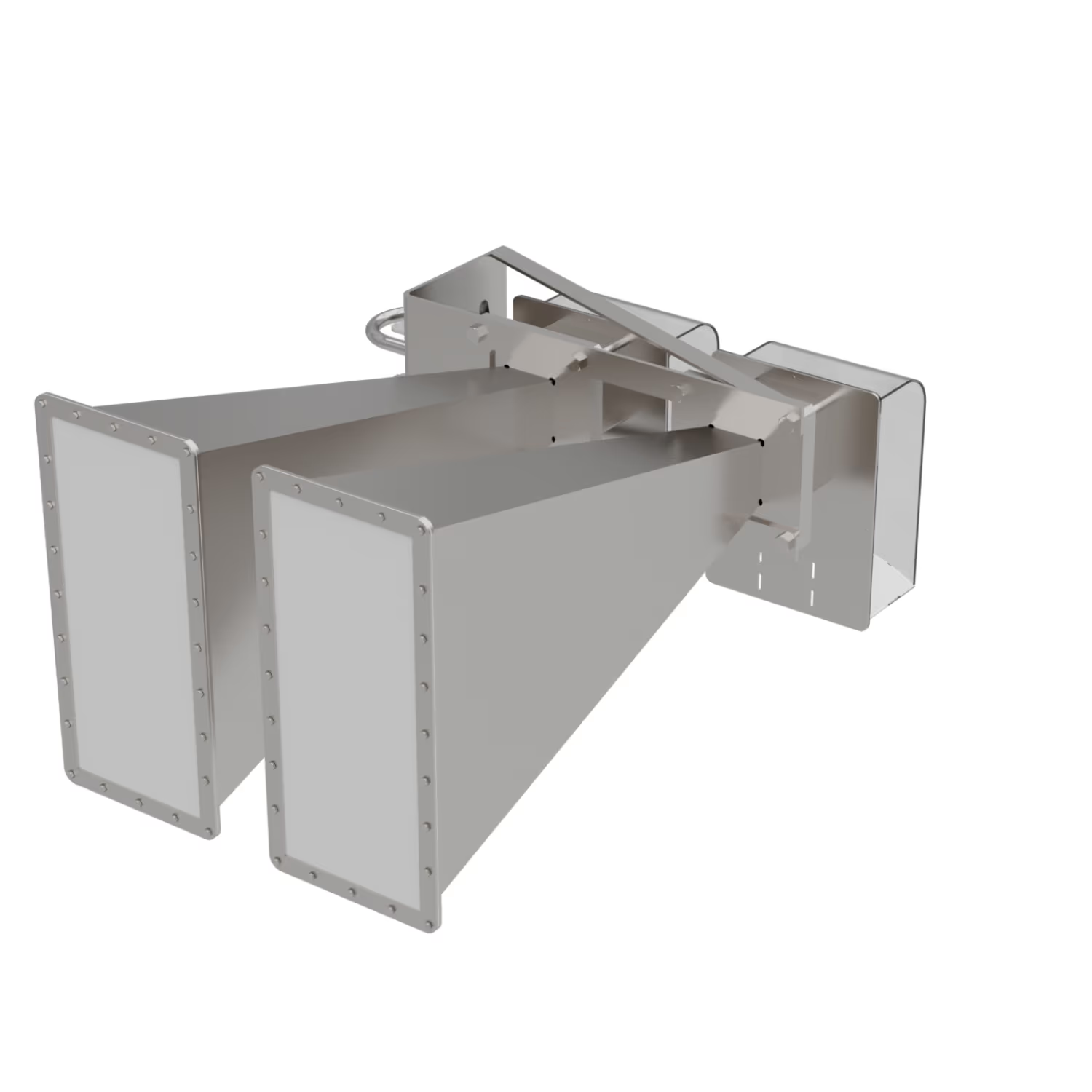
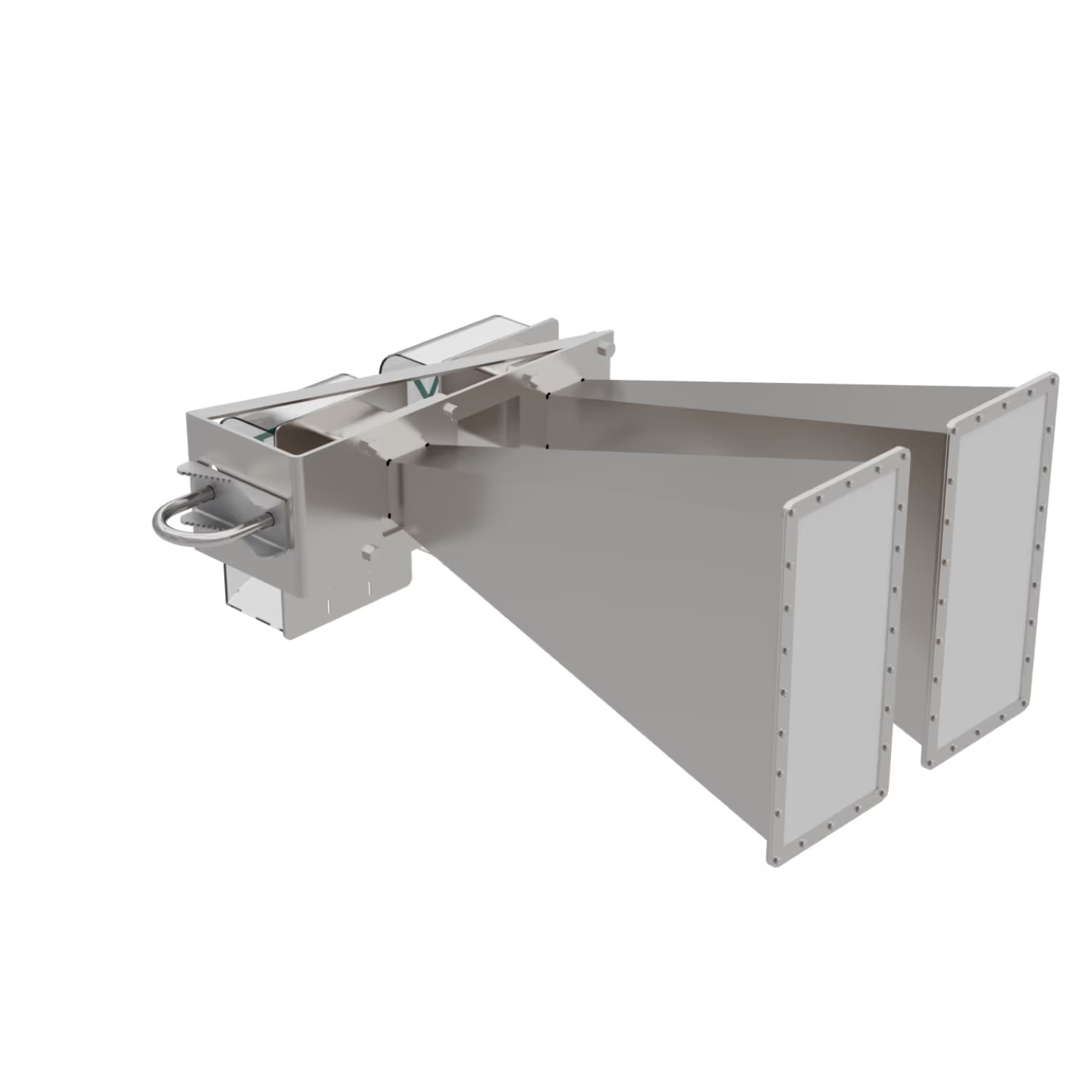
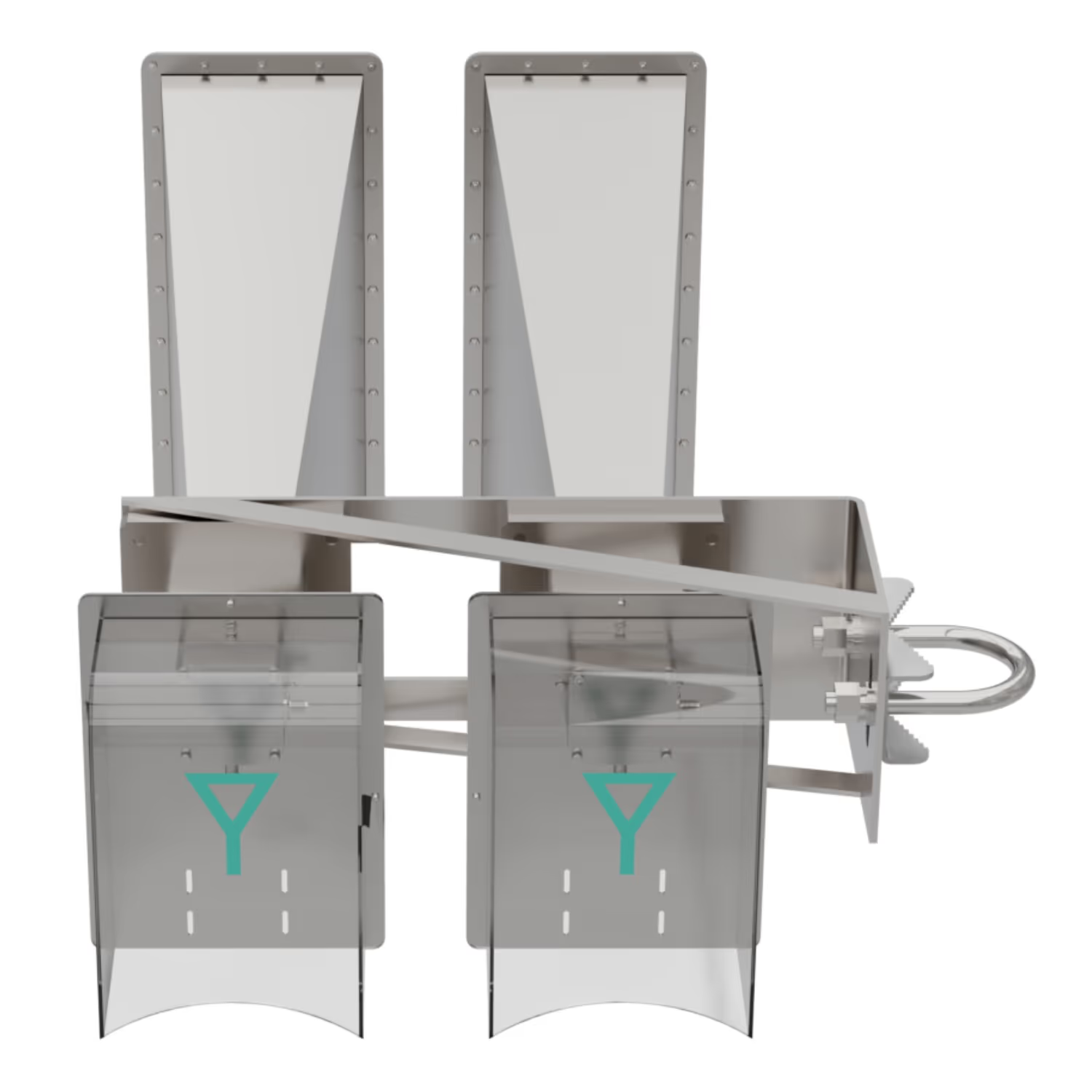
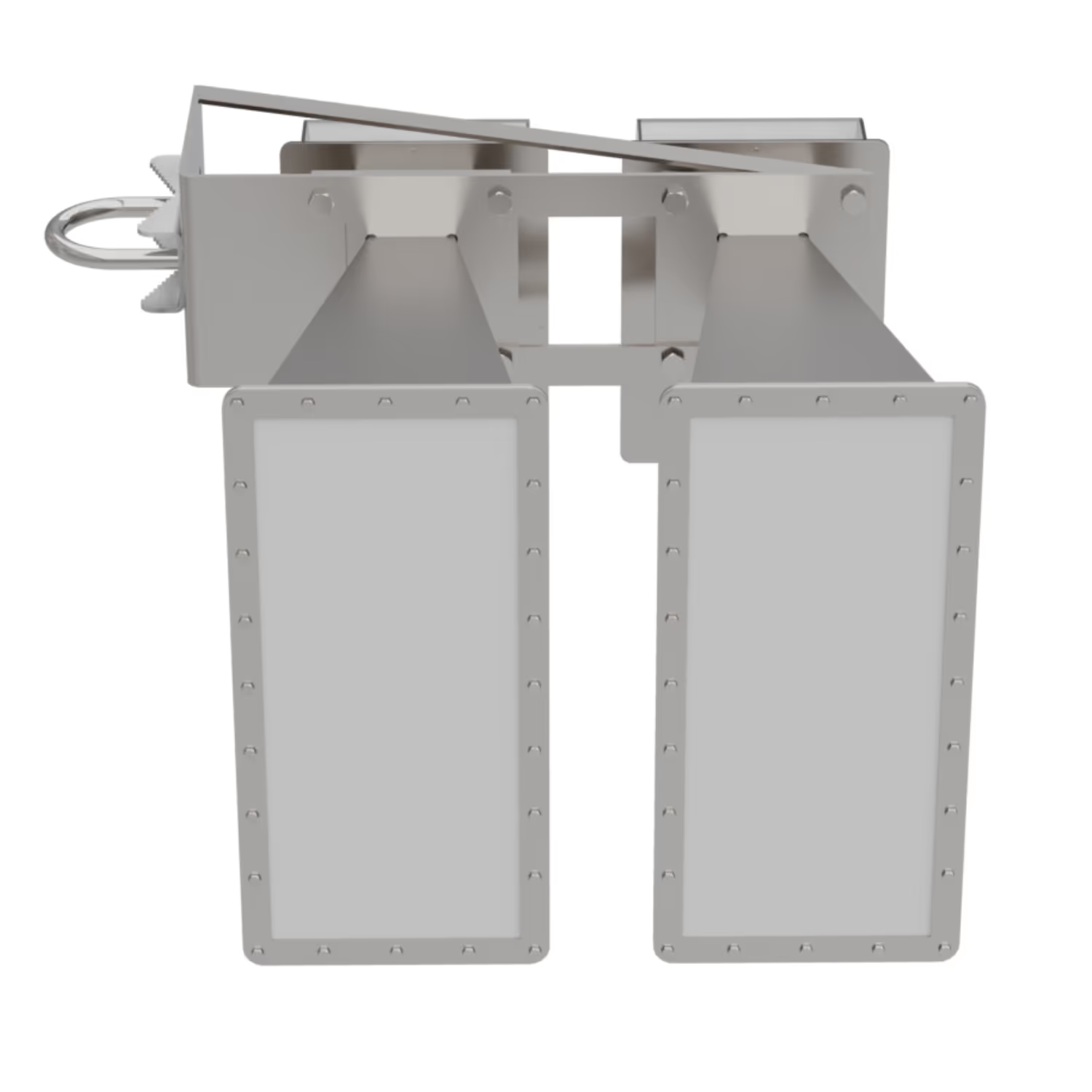
Overview
The Cyber Antennas Double 20° Asymmetrical Horn 4x4 (DOUBLE-A20) is an industry-leading 5 and 6 GHz wideband horn antenna operating from 4.9-7.1 GHz, engineered specifically to help WISPs scale dense, high-capacity PtMP networks in noisy environments. Its tight 20° to 30° asymmetrical beam width makes it ideal for use as a high-gain PtMP sector antenna for unobstructed links up to about 10 km (depending on remote-side antenna gain) and for aggressive frequency reuse on crowded towers.
Scale Dense PtMP NetworksCyber Antennas’ Double 20° Asymmetrical Horn 4x4 gives WISPs a high-gain, tightly focused sector specifically tuned for scaling dense, high-capacity PtMP networks across the 5 GHz and 6 GHz unlicensed bands. Its narrow 20-30° beam delivers clean, controlled coverage that keeps signal where it is needed and out of where it isn’t, enabling aggressive frequency reuse, higher modulation rates, and more subscribers per tower. With wideband 4.9-7.1 GHz operation, operators can standardize on the Double A20 for both 5 GHz and 6 GHz deployments, simplifying planning, procurement, and spares while unlocking additional spectrum for growth. Designed as a PtMP sector rather than a general-purpose PtP bridge, the Double A20 helps WISPs push more capacity through limited spectrum, even on noisy, congested sites.
High-Gain 20-30° Horn Sector for Crowded Towers
The Double A20’s narrow 20° to 30° asymmetrical beam allows WISPs to break a site into tightly defined coverage slices, dramatically improving sector isolation on crowded towers. By replacing wide, overlapping sectors with focused 20° to 30° horns, operators can reduce self-interference, raise SINR, and maintain higher MCS levels, translating directly into more usable capacity per AP. The Double A20’s high gain and clean radiation pattern help ensure that energy is concentrated into the intended service area instead of spilling into adjacent sectors or off-site, which is critical when every dB of signal quality matters.
Aggressive Frequency Reuse and Interference Control
Because the Double A20 has a sharply controlled main lobe and suppressed sidelobes, WISPs can reuse the same channels more aggressively around a tower or across nearby sites. The clean pattern limits unintended overlap between sectors, making it easier to design frequency plans that avoid destructive interference while still maximizing total throughput. This tight control of RF energy is especially valuable in noisy environments, where reducing off-axis noise pickup and self-interference often yields more capacity than simply adding more spectrum.
Optimized Coverage for Real-World WISP Topologies
The Double A20 is engineered to match how WISPs actually build networks: from ridge lines and hillsides down into valleys, along roads and rail corridors, and across mixed-density neighborhoods, business parks, and industrial zones. Its 20-30° beam can be used to surgically target long, narrow coverage areas or specific noisy directions that require extra gain and isolation. This lets operators align RF footprints with the physical layout of the homes and businesses they serve, rather than forcing coverage into generic wide-beam shapes that waste signal outside the target zone.
Industry-leading 5 GHz and 6 GHz Wideband PerformanceThe Cyber Antennas 20° Asymmetrical Horn (A20) is engineered as a true wideband 5 GHz and 6 GHz sector, delivering consistent, high realized gain and clean radiation patterns from 4.9-7.1 GHz. Instead of having a narrow “sweet spot” like many band-specific designs, the Double A20 maintains strong performance across the entire band, enabling WISPs to move freely between 5 GHz and 6 GHz channels without sacrificing throughput or signal quality. This wideband capability not only improves real-world subscriber speeds but also simplifies network design, frequency planning, and inventory management, allowing operators to standardize on a single high-gain 20° to 30° sector for both legacy and next-generation deployments.
High-Gain Performance from 4.9-7.1 GHz
The Double A20 is carefully tuned to provide consistently high realized gain and efficient signal power transfer across its full 4.9-7.1 GHz operating range. Rather than peaking in a narrow portion of the band, the antenna’s response is optimized so that link budgets and modulation rates remain strong whether you’re running traditional 5 GHz channels or opening up new capacity in 6 GHz. This smooth, predictable performance allows WISPs to design and scale networks without worrying that moving to a different channel or band will compromise signal strength or coverage.
Clean Radiation Patterns
Many “high-gain” antennas achieve their gain by trading off pattern quality or by being heavily optimized for a narrow slice of spectrum. The Double A20’s wideband horn design delivers both: strong gain and a clean, controlled pattern with suppressed sidelobes across the entire supported band. This means WISPs get reliable beam shape, isolation, and interference control whether operating in 4.9 GHz, 5 GHz, or 6 GHz, avoiding the pattern distortions and performance drops that can occur when narrowband antennas are used outside their ideal frequency window.
Simplified Procurement and Standardized Deployments
Because the Double A20 covers 4.9-7.1 GHz with a single design, operators can standardize on one 20° sector model instead of juggling separate SKUs for different parts of the band. This simplifies procurement, spare management, and tower planning: the same horn can be used for 5 GHz today and 6 GHz expansion tomorrow, without changing antenna hardware. The result is less complexity in the field, fewer configuration surprises, and easier scaling as new spectrum becomes available or frequencies need to be shuffled to manage noise.
Higher Throughput Than Band-Specific Alternatives
The Double A20’s wideband efficiency and optimized horn geometry have been tested to deliver more efficient signal power transfer and higher realized gain from 4.9-7.1 GHz than comparable narrowband horn sectors within their respective frequency slices. In real-world WISP deployments, this translates into higher MCS levels, stronger downlink budgets, and more than 15% improvement in subscriber download speeds compared to many similar narrowband 20-30° horn sectors. By combining a tight 20° to 30° beam with industry-leading wideband performance, the Double A20 gives operators a powerful lever for increasing per-sector capacity without adding spectrum.
Ready for 5 GHz Today and 6 GHz Tomorrow
With full coverage of both the traditional 5 GHz band and the newer 6 GHz allocations, the DOUBLE-A20 is ready for current and next-generation radio platforms, including Wi-Fi 6E and Wi-Fi 7 MLO-based PtMP systems. WISPs can deploy the Double A20 on existing 5 GHz infrastructure and later migrate sectors or entire sites into 6 GHz as radios and regulatory environments evolve, using the same proven 20° to 30° sector antenna. This protects infrastructure investments and ensures that tower work done today continues to pay off as networks transition to higher-capacity 6 GHz channels.
Radio Compatibility & WISP Deployment ScenariosRadio compatibility is determined by the connector type, frequency range, and intended application.
This antenna has RP-SMA female bulkhead connectors and includes short RF jumper cables for direct connection to the most popular Ubiquiti, Cambium, Mimosa, and MikroTik radios with connectors.
The Double A20 operates from 4.9-7.1 GHz including the entire 4.9 GHz, 5 GHz, and 6 GHz bands.
It is optimized for PtMP sector coverage and is particularly effective in dense, interference-heavy deployments such as crowded towers, MicroPoPs, urban neighborhoods, where precise coverage and aggressive frequency reuse are critical.
High-Capacity PtMP AP Sectors on Crowded Towers
The Double A20 excels as a PtMP AP sector on crowded towers where WISPs need to squeeze more capacity out of limited spectrum. Paired with radios like Cambium ePMP 3000, ePMP 4600, or Mimosa A5c, the horn’s tight 20° beam and high gain allow operators to split sites into narrow, high-SINR coverage slices, reducing overlap and self-interference between sectors. This enables more aggressive frequency reuse and higher sustained MCS levels, resulting in more subscribers per AP and higher aggregate throughput per tower. The compact, lightweight form factor and secure mounting hardware also make it easier to deploy multiple Double A20 sectors in tight vertical and horizontal spacing.
Cambium Networks ePMP 3000
Cambium positions the ePMP 3000 as its flagship 802.11ac Wave 2 PtMP access point, claiming up to 1.2 Gbps of sector capacity while serving 120+ subscribers. It uses 4x4 MU-MIMO with dual overlapping sectors so it can transmit to two subscriber modules at the same time, which Cambium says effectively doubles the capacity vs. 2x2 systems and improves link budget by ~3 dB via downlink beamsteering. Cambium also highlights optional smart uplink beamsteering for extra uplink isolation, dynamic filtering to mitigate neighboring-channel interference, and TDD synchronization to scale dense networks to thousands of end users while reusing a small number of channels.
Cambium notes the ePMP 3000 can be deployed with broader 90° sectors or a 60° MU-MIMO horn, but in crowded towers and high-noise sites, the fastest way to unlock the radio’s MU-MIMO/beamsteering advantages is to tighten the RF footprint. The Cyber Antennas A20 (20° asymmetrical horn) delivers a much narrower beamwidth than 60°/90° options, which improves sector isolation, reduces self-interference, and enables more aggressive frequency reuse—helping the ePMP 3000 sustain higher SINR and higher MCS for more real capacity per tower.
Designed to Solve Common WISP ChallengesRF Interference in Congested Environments
The DOUBLE-A20's narrow 20° beamwidth and horn antenna design help reject unwanted signals and reduce interference from neighboring sectors and nearby radios. This improves signal quality, network stability, and overall sector performance.
Excessive Sector Overlap
Wide sector antennas can create significant overlap and self-interference, especially on crowded tower sites. The DOUBLE-A20 provides tightly controlled 20° coverage, allowing operators to target specific service areas with greater precision.
Limited Network Capacity
As subscriber density increases, wide sectors can become overloaded and reduce available airtime per user. The DOUBLE-A20 enables operators to divide coverage into multiple narrow sectors, increasing frequency reuse and improving capacity in high-demand areas.
Inefficient Spectrum Utilization
In crowded RF environments, efficient spectrum use is critical. The DOUBLE-A20's focused radiation pattern minimizes unwanted RF energy outside the intended coverage area, allowing operators to reuse channels more effectively and maximize available spectrum.
Deploying Multi-Gigabit 4x4 MIMO Networks
Modern fixed wireless networks require antenna solutions that can support higher throughput and increased spectral efficiency. The DOUBLE-A20 is designed for 4x4 MIMO deployments, helping operators deliver multi-gigabit services in both the 5 GHz and 6 GHz bands.
Migration to 6 GHz Networks
With true wideband 4.9–7.1 GHz coverage, the DOUBLE-A20 supports both 5 GHz and 6 GHz radios. Operators can upgrade to Wi-Fi 6E and Wi-Fi 7 technologies without replacing antennas, protecting existing infrastructure investments.
Targeted Coverage Requirements
Some deployments require focused coverage in a specific direction, such as neighborhoods, apartment complexes, business parks, or industrial areas. The DOUBLE-A20 concentrates RF energy where it is needed, reducing wasted coverage and improving network efficiency.
Scalability on Existing Tower Sites
As network demand grows, operators often need to increase capacity without building new towers. The DOUBLE-A20 makes it easier to deploy additional narrow sectors on existing infrastructure, helping expand network capacity while minimizing deployment costs.
Typical Use CasesHigh-Density PtMP Sectors
Deploy narrow 20° sectors to serve concentrated groups of subscribers while maintaining high SINR and maximizing sector capacity.
Crowded Tower Sites
Reduce sector overlap and self-interference when multiple APs are co-located on the same tower.
Aggressive Frequency Reuse
Reuse channels more effectively around a tower or across nearby sites by creating tightly controlled coverage footprints.
Spot-Beam Coverage
Target neighborhoods, apartment complexes, business parks, industrial areas, or other dense subscriber clusters that require additional capacity.
6 GHz Network Overlays
Add high-performance 6 GHz sectors alongside existing 5 GHz infrastructure to increase capacity without rebuilding the entire site.
Wi-Fi 7 and Multi-Gigabit PtMP Deployments
Pair with modern 4x4 MIMO radios to deliver multi-gigabit services with higher throughput and improved spectrum efficiency.
Corridor and Linear Coverage
Provide focused coverage along roads, valleys, rail lines, shorelines, or other long, narrow service areas where wide sectors would waste RF energy.
MicroPoPs and Capacity Expansion Projects
Split large sectors into multiple narrow sectors to increase airtime per subscriber and support network growth in noisy environments.
Who Is the DOUBLE-A20 Designed For?The DOUBLE-A20 is ideal for:
• Wireless Internet Service Providers (WISPs)
• Fixed wireless broadband operators deploying high-capacity point-to-multipoint (PtMP) networks
• WISPs operating high-density tower sites that require narrow 20° sector coverage and aggressive frequency reuse
• Network operators deploying 4x4 MIMO, Wi-Fi 6E, and Wi-Fi 7 technologies in the 5 GHz and 6 GHz bands
• Service providers using compatible 4x4 connectorized radio platforms for multi-gigabit fixed wireless services
• Tower owners and network integrators deploying multiple co-located sectors with minimal overlap and interference
• Operators building networks in congested RF environments where sector isolation and interference mitigation are critical
• Service providers expanding capacity with MicroPoPs and targeted coverage sectors for dense subscriber areas
• Operators seeking a single wideband antenna platform for both current 5 GHz deployments and future 6 GHz upgrades
What Sets the DOUBLE-A20 Apart from Similar Products in the IndustryCompared to similar narrow-sector antennas in the industry, the DOUBLE-A20 stands out in several important ways:
True Wideband 4.9–7.1 GHz Coverage
Many competing antennas are designed for either the 5 GHz band or the 6 GHz band. The DOUBLE-A20 covers the entire 4.9–7.1 GHz range, allowing operators to use a single antenna platform across multiple frequency bands and simplify future upgrades.
4x4 MIMO Support in a Single Antenna Platform
The DOUBLE-A20 is designed specifically for 4x4 MIMO deployments, enabling operators to deploy higher-capacity networks without using multiple separate antennas and mounting systems.
Narrow 20° Asymmetrical Beam Pattern
The focused 20° asymmetrical beam provides tightly controlled coverage that reduces sector overlap and improves frequency reuse, making it well suited for high-density tower sites and targeted service areas.
Horn Antenna Performance
Unlike traditional sector antennas that can produce significant side lobes and unwanted radiation, the horn antenna design delivers a clean radiation pattern with excellent interference rejection and more predictable coverage.
Supports Both Current and Future Network Technologies
The DOUBLE-A20 is compatible with modern wideband radio platforms operating in the 5 GHz and 6 GHz bands, allowing operators to deploy today's networks while preparing for future Wi-Fi 6E and Wi-Fi 7 technologies.
Designed for High-Density Network Expansion
The narrow beamwidth and controlled radiation pattern make it easier to add more sectors on existing towers, increase sector density, and expand capacity without requiring additional tower infrastructure.
Frequently Asked QuestionsWhat is the DOUBLE-A20?
The DOUBLE-A20 is a wideband 4x4 MIMO, 20° asymmetrical horn antenna designed for high-capacity point-to-multipoint (PtMP) deployments in the 4.9–7.1 GHz frequency range.
What frequency range does the DOUBLE-A20 support?
The antenna operates from 4.9 GHz to 7.1 GHz, covering public safety 4.9 GHz, the 5 GHz band, and the entire 6 GHz band.
What does 4x4 MIMO mean?
4x4 MIMO uses four transmit and four receive streams to increase throughput, improve spectral efficiency, and support higher-capacity wireless networks.
What types of networks is the DOUBLE-A20 designed for?
It is primarily designed for high-capacity PtMP networks, high-density tower sites, and multi-gigabit fixed wireless deployments.
Why does the DOUBLE-A20 use a 20° beamwidth?
The narrow 20° beamwidth creates tightly controlled coverage, reduces sector overlap, and enables more efficient frequency reuse in dense network environments.
Can the DOUBLE-A20 be used in both 5 GHz and 6 GHz deployments?
Yes. Its true wideband design supports both 5 GHz and 6 GHz radios, allowing operators to use one antenna platform across multiple bands.
Is the DOUBLE-A20 suitable for Wi-Fi 6E and Wi-Fi 7 networks?
Yes. The antenna's wideband coverage and 4x4 MIMO design make it suitable for modern Wi-Fi 6E and Wi-Fi 7 fixed wireless deployments.
Does the DOUBLE-A20 help reduce interference?
Yes. The horn antenna design produces a clean radiation pattern that helps reject unwanted signals and reduce interference from neighboring sectors and nearby radios.
Can the DOUBLE-A20 improve network capacity?
Yes. The narrow beamwidth and support for aggressive frequency reuse allow operators to deploy more sectors and increase capacity on high-density tower sites.
Can the DOUBLE-A20 be used for targeted coverage areas?
Yes. The focused 20° asymmetrical beam is well suited for covering neighborhoods, apartment complexes, business parks, industrial areas, and other concentrated subscriber clusters.
Can I upgrade from 5 GHz to 6 GHz without replacing the antenna?
Yes. Because the antenna covers 4.9–7.1 GHz, operators can migrate to newer 6 GHz technologies while continuing to use the same antenna infrastructure.
Is the DOUBLE-A20 designed for outdoor deployments?
Yes. The DOUBLE-A20 is designed for professional outdoor fixed wireless deployments and high-density tower installations..
Related Products
No related products found.
Related Products (Category & Subcategory)





Related Products (Tags)
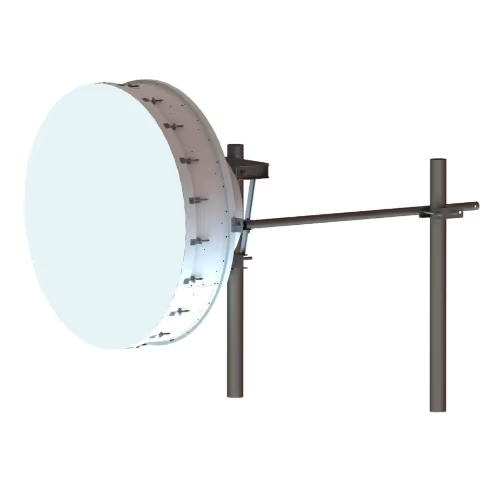
1.8 m Microwave Dish 6 GHz
6 GHz6-ft dish1.8 m dish
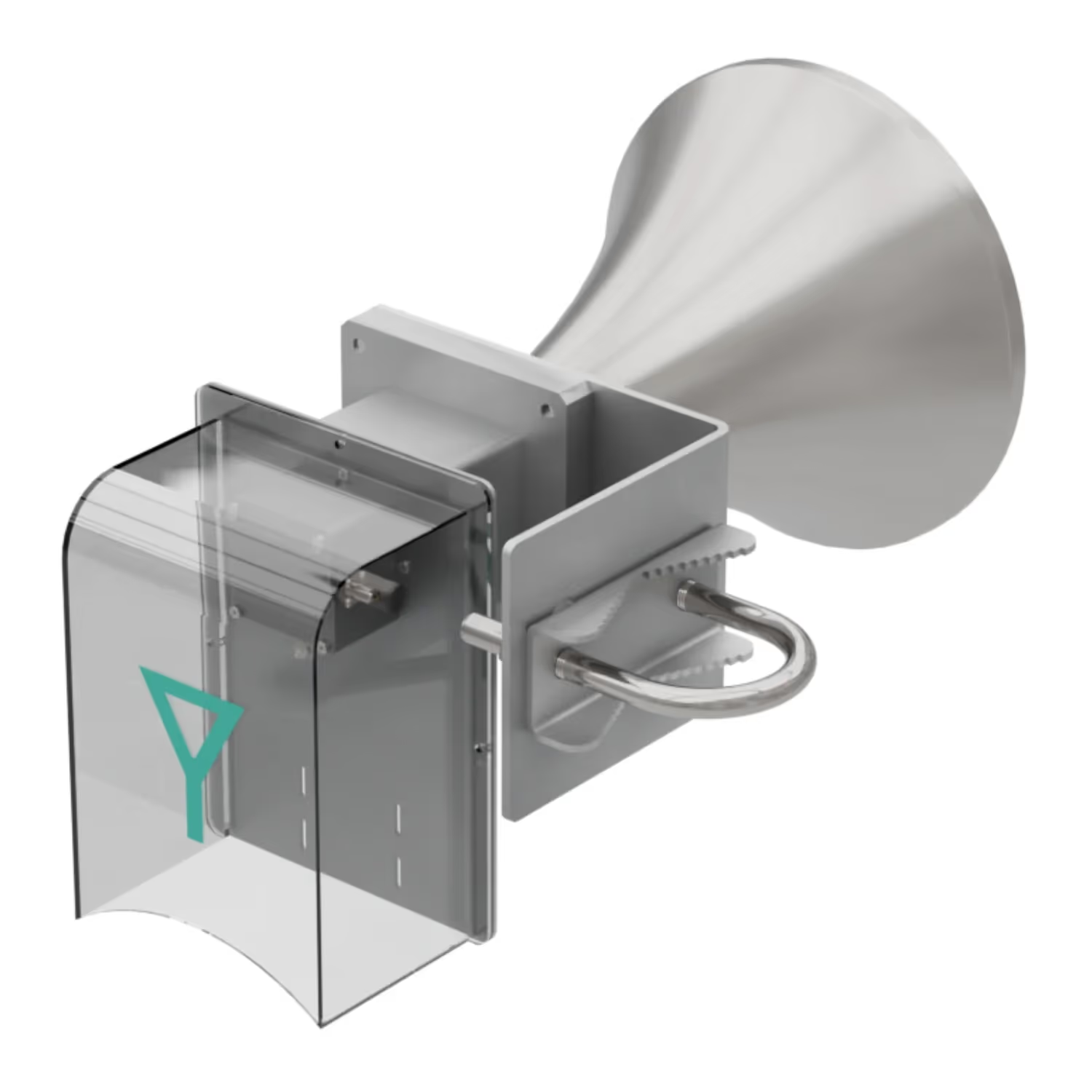
30° Symmetrical Horn
PTPbackhaulantenna
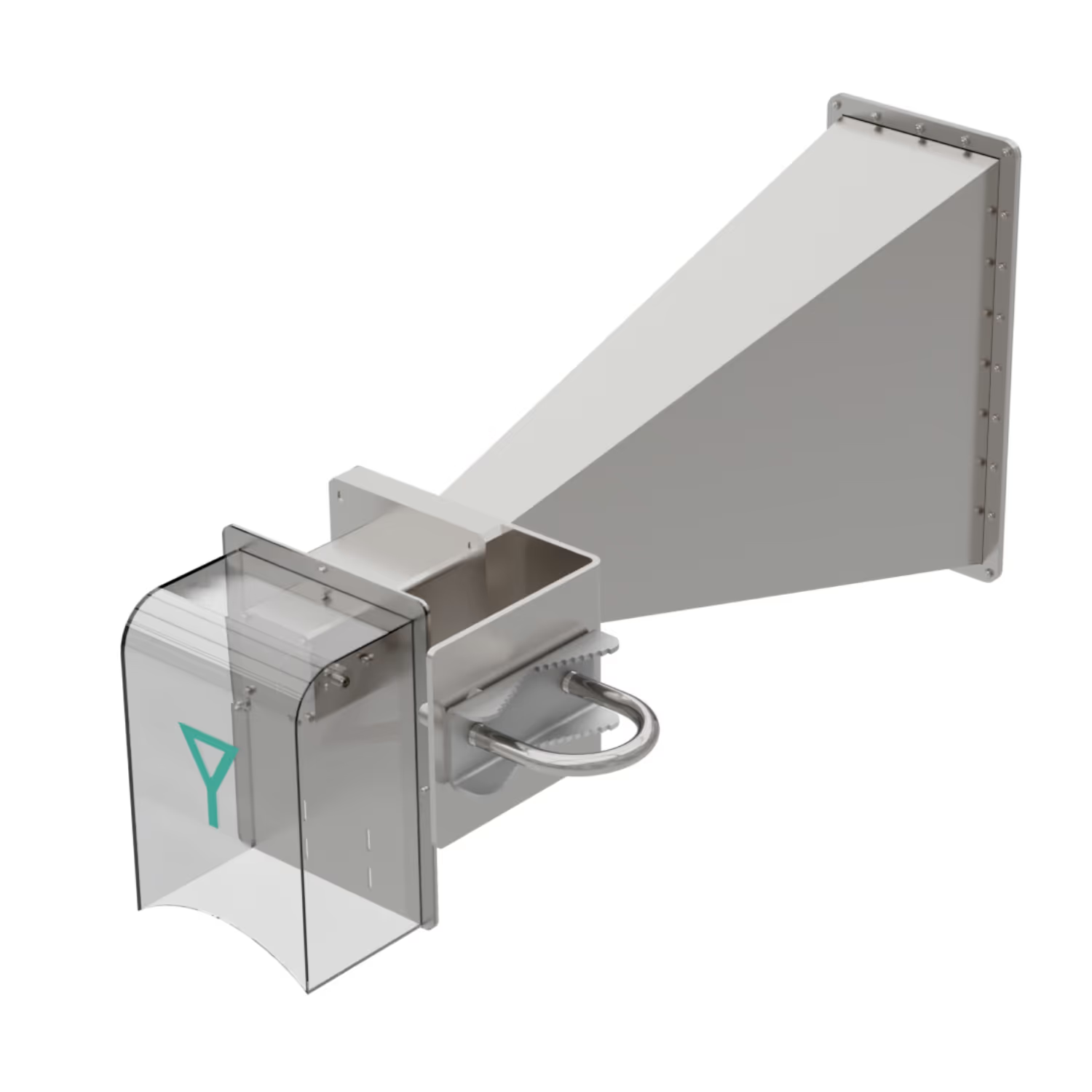
20° Asymmetrical Horn
antenna6 GHz5 GHz
60° Asymmetrical Horn
antenna6 GHz5 GHz
Double Asymmetrical 60° Horn 4x4
antenna6 GHz5 GHz
0.6m Dish High Performance
PTPbackhaulantenna
1.8m Dish High Performance
PTPbackhaulantenna
1.2m Dish High Performance
PTPbackhaulantenna
Reviews
Loading…
Double 20° Asymmetrical Horn 4x4
Model Number: DOUBLE-A20
High performance, lightweight, all-inclusive 5 & 6 GHz wideband double 20-30° asymmetrical horn 4x4 antenna for scaling up WISP networks in noisy environments.
Features
- 20-30° sector horn antenna
- Frequency range: 4.9-7.1 GHz
- Gain: 17-21 dBi
- VSWR max: 1.6
- Port isolation: >35 dB
- RP-SMA female bulkhead connectors (threads outside)
- Includes four 0.5m RP-SMA RF jumper cables
- 4 pieces RP-SMA jumper cables included
Shipping Specifications
- •Dimensions (L×W×H): 700×370×420
- •Weight: 13.00kg
Warehouse availability
Shenzhen
In stock
4 available
Winncom CDMX
In stock
4 available
Los Angeles
In stock
3 available