Overview
Details
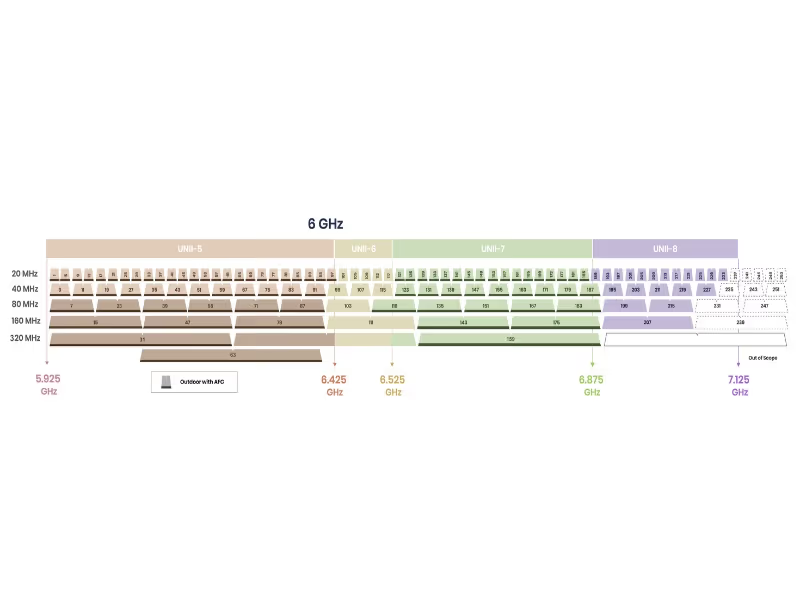
Wi-Fi 7, officially known as IEEE 802.11be or Extremely High Throughput (EHT), is the latest generation of Wi-Fi technology designed to deliver significantly faster speeds, lower latency, improved efficiency, and better performance in high-density wireless environments. It builds on the foundation of Wi-Fi 6 and Wi-Fi 6E while introducing major advancements that improve how wireless networks handle congestion, interference, and growing bandwidth demands. Wi-Fi 7 operates across the 2.4 GHz, 5 GHz, and 6 GHz frequency bands and supports advanced technologies such as 320 MHz channel widths, 4K-QAM modulation, Multi-Link Operation (MLO), Multiple Resource Units (MRU), and preamble puncturing.
One of the most important improvements in Wi-Fi 7 is Multi-Link Operation (MLO), which allows compatible devices to transmit and receive data simultaneously across multiple frequency bands. Instead of relying on only one band at a time, devices can combine 2.4 GHz, 5 GHz, and 6 GHz links for better throughput, lower latency, improved reliability, and more stable connections. This is especially beneficial in congested wireless environments where interference and network saturation can reduce performance. Wi-Fi 7 also introduces wider 320 MHz channels, primarily in the 6 GHz spectrum, allowing significantly more data to be transferred at once compared to previous Wi-Fi generations. Combined with 4096-QAM (4K-QAM), which increases the amount of data carried per transmission, Wi-Fi 7 can theoretically achieve speeds exceeding 40 Gbps under ideal conditions, though real-world performance is substantially lower.
For WISPs (Wireless Internet Service Providers), Wi-Fi 7 offers major advantages in both subscriber access networks and wireless infrastructure deployments. Its higher capacity and improved spectral efficiency allow WISPs to support more subscribers per access point or sector while maintaining better throughput and lower latency. Features such as Multiple Resource Units (MRU) and preamble puncturing help networks utilize spectrum more efficiently by allowing portions of channels affected by interference to be bypassed instead of losing the entire channel. This improves performance in crowded RF environments where interference from neighboring networks, devices, and overlapping channels is common.
Wi-Fi 7 is particularly useful for WISPs deploying networks in high-density environments such as apartment complexes, subdivisions, campuses, urban neighborhoods, and business districts. The technology is designed to handle a larger number of connected devices while reducing congestion and latency issues that commonly affect wireless deployments. This makes Wi-Fi 7 well suited for bandwidth-intensive and low-latency applications including 4K/8K streaming, cloud gaming, VoIP, video conferencing, remote work, AI-driven applications, and smart home ecosystems.
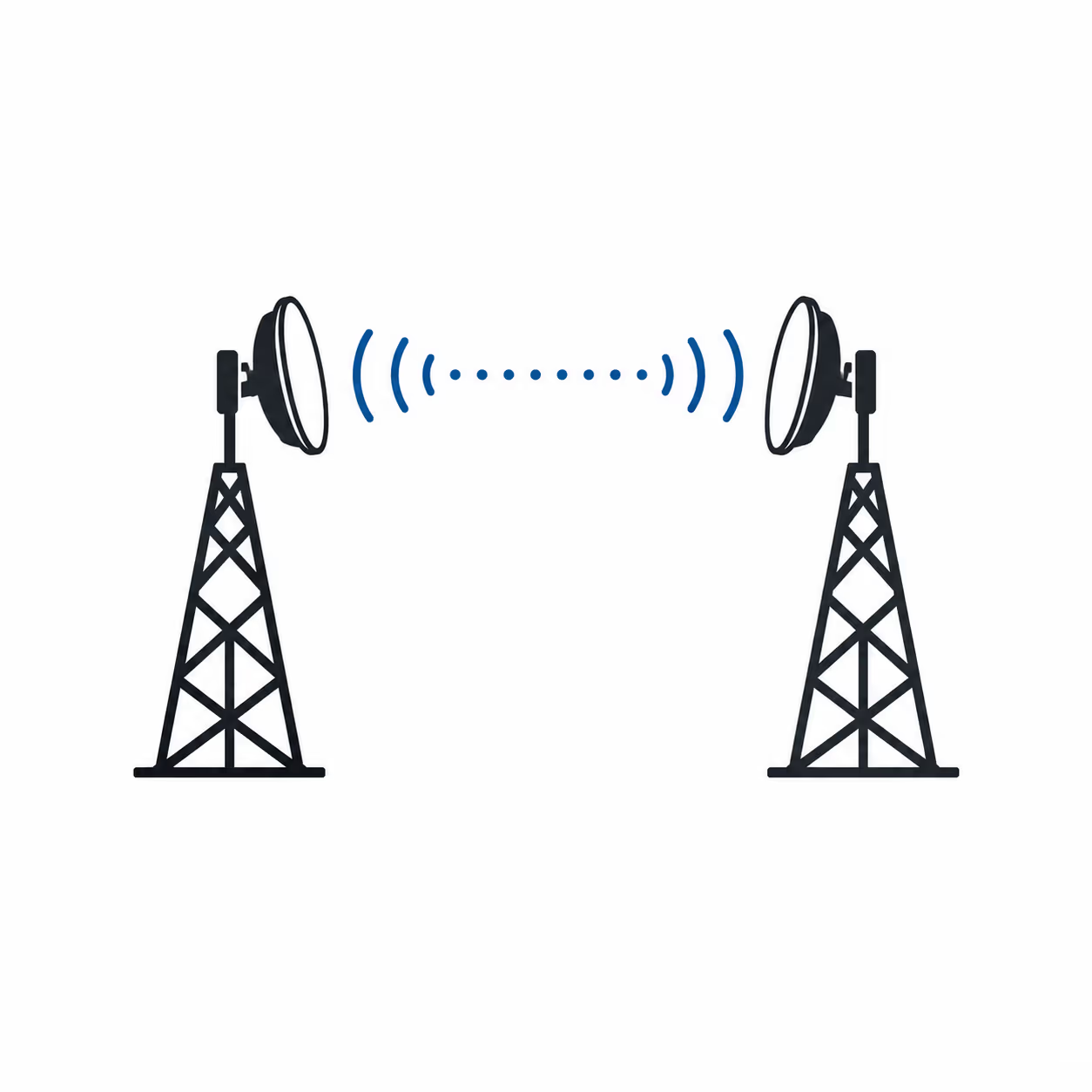
In infrastructure deployments, WISPs can also use Wi-Fi 7 technology for high-capacity point-to-multipoint access networks and short-to-medium-range wireless backhaul links. The improved throughput and efficiency of Wi-Fi 7 can help increase network scalability while reducing airtime congestion in heavily utilized sectors. Access to the cleaner 6 GHz spectrum further improves performance by providing additional non-overlapping channels and reducing interference compared to traditional 2.4 GHz and 5 GHz deployments. However, actual performance gains depend on spectrum availability, RF planning, client device compatibility, hardware quality, antenna design, and local regulatory conditions.
Another major advantage of Wi-Fi 7 for WISPs is future-proofing. As internet usage continues to grow and customers demand faster and more reliable connectivity, Wi-Fi 7 gives operators the ability to offer higher-speed service plans while remaining competitive against fiber and other broadband technologies. Its combination of lower latency, higher throughput, better spectrum utilization, and improved network efficiency makes it one of the most significant upgrades in wireless networking in recent years.
Productos relacionados
Filtrar por etiquetas
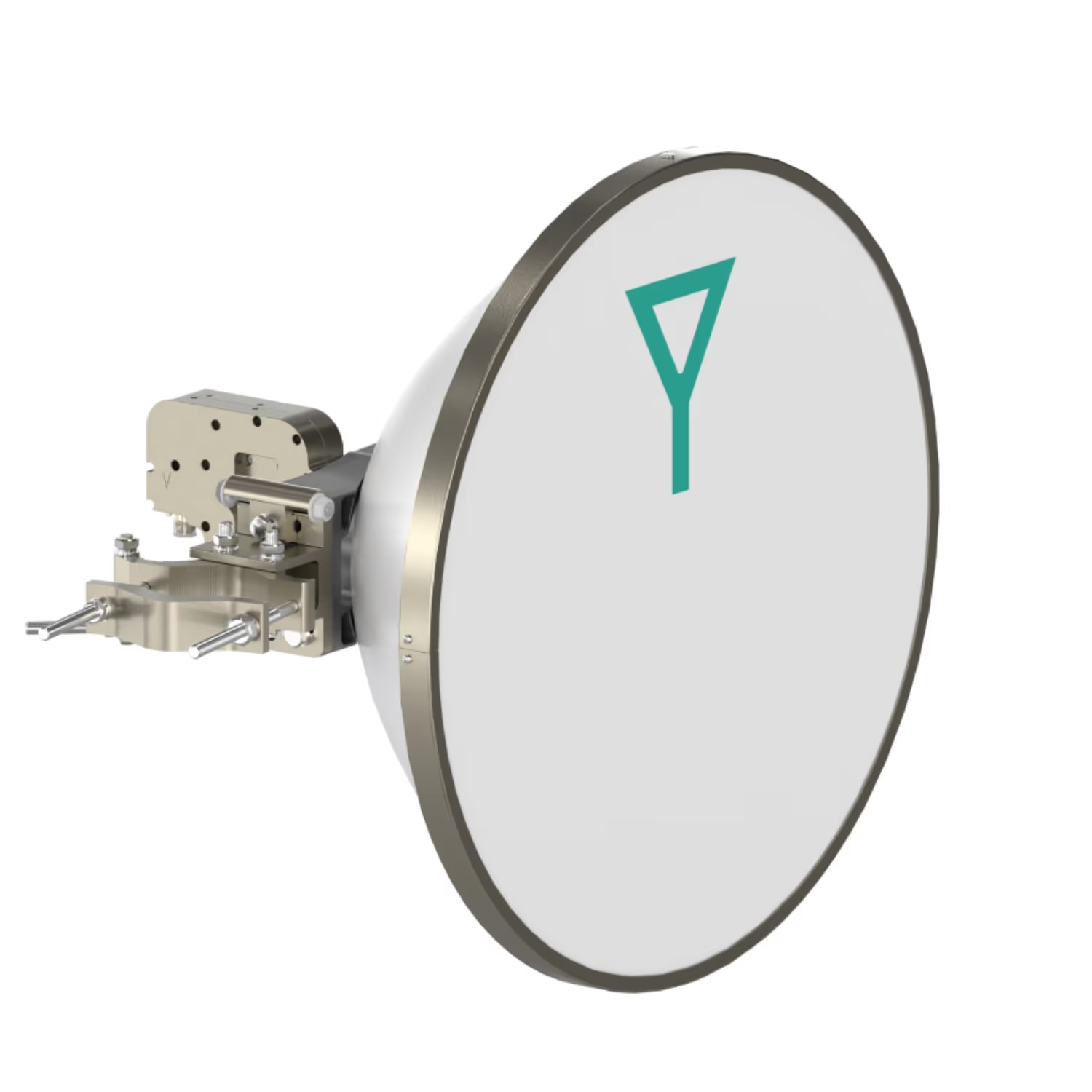
0.6m Dish High Performance
La antena Dish High Performance de 0,6 m es una antena de retorno por microondas de banda ancha (4,9-7,125 GHz) de alto rendimiento (HP).
$499.00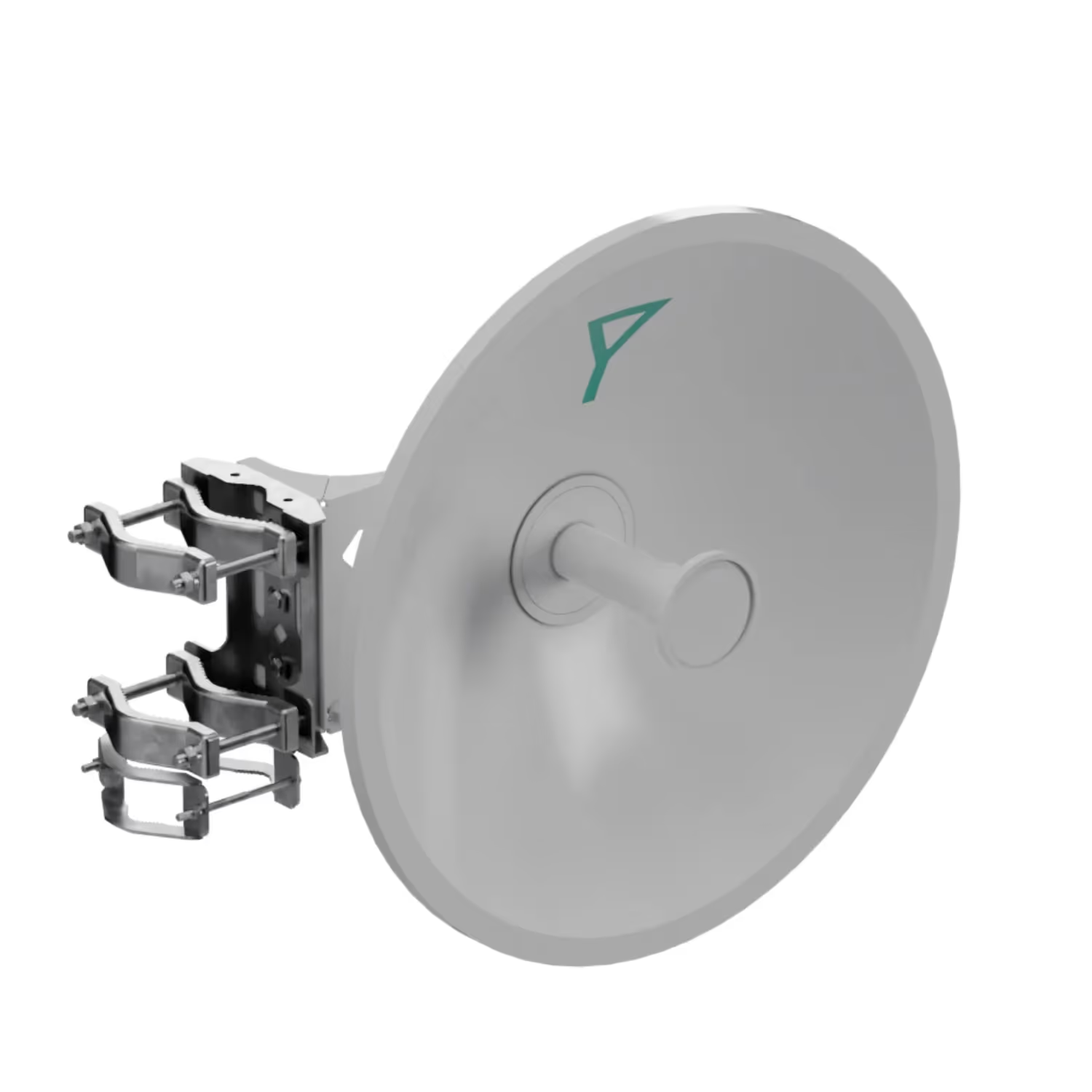
0.6m Dish Mimosa B6x Twist-on 2-pack
Diseñado para envíos económicos y conexión directa a radios Mimosa B6x, B5x, C6x y C5x, eliminando la pérdida de conversión en enlaces de 0 a 10 km. Ambas antenas están incluidas en el precio.
$398.00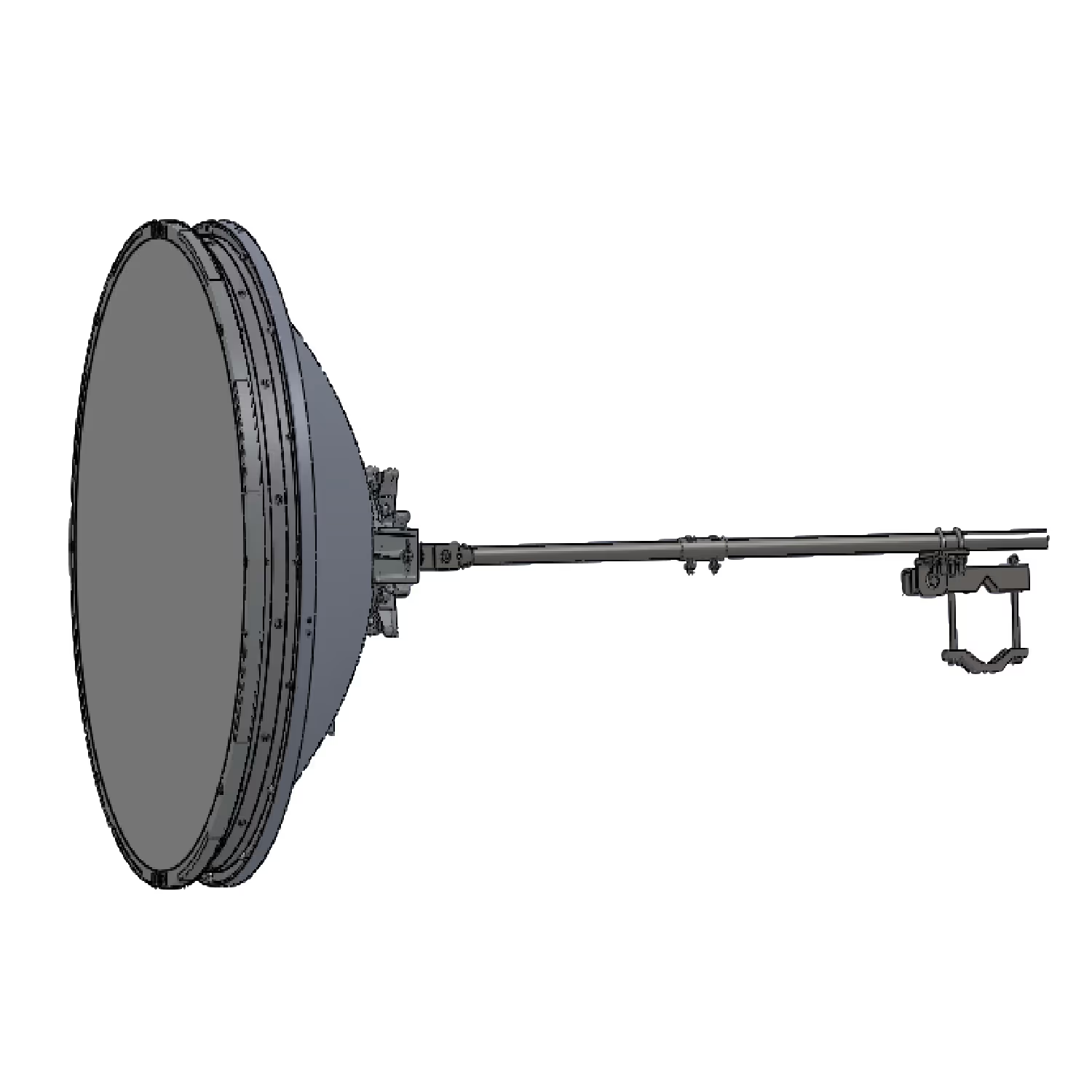
0.9m Dish High Performance
La antena parabólica de alto rendimiento de 0,9 m es una antena de enlace de retorno de microondas de banda ancha (4,9-7,125 GHz) de alto rendimiento (HP) para enlaces inalámbricos multigigabit de 10 a 20 km.
$899.00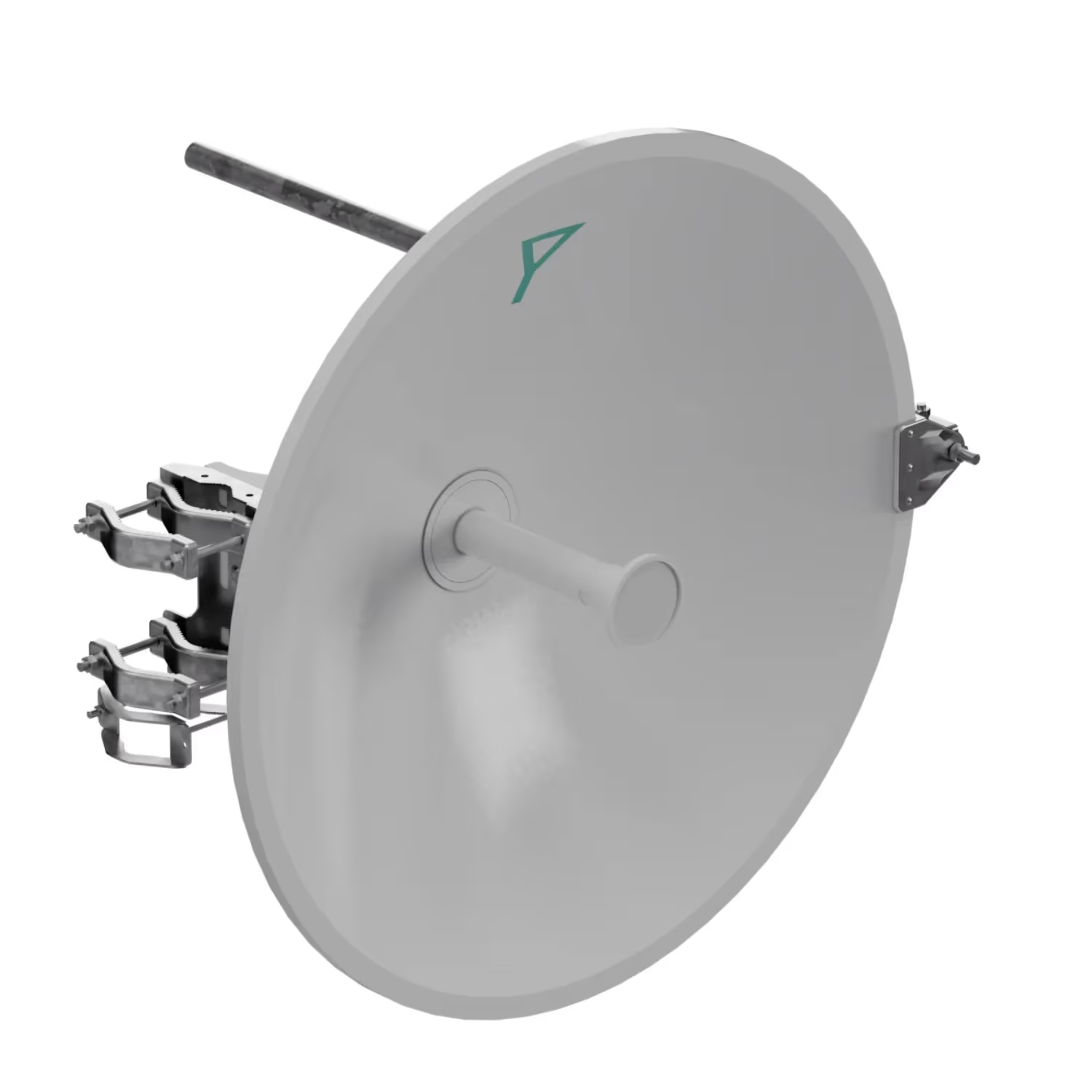
0.9m Dish Mimosa B6x Twist-on 2-pack
Diseñado para un envío rentable y conexión directa con radios Mimosa B6x, B5x, C6x y C5x, elimina las pérdidas de conversión en enlaces de 10 a 20 km. Ambas antenas están incluidas en el precio.
$798.000.9m Dish RP-SMA 2-pack
Paquete de 2 antenas parabólicas de 0,9 m (3 pies) para 5 y 6 GHz, diseñadas para un envío económico y conexión directa a radios Ubiquiti, Cambium y Mimosa sin pérdida de conversión para enlaces de hasta 20-40 km. El precio incluye ambas antenas.
$798.00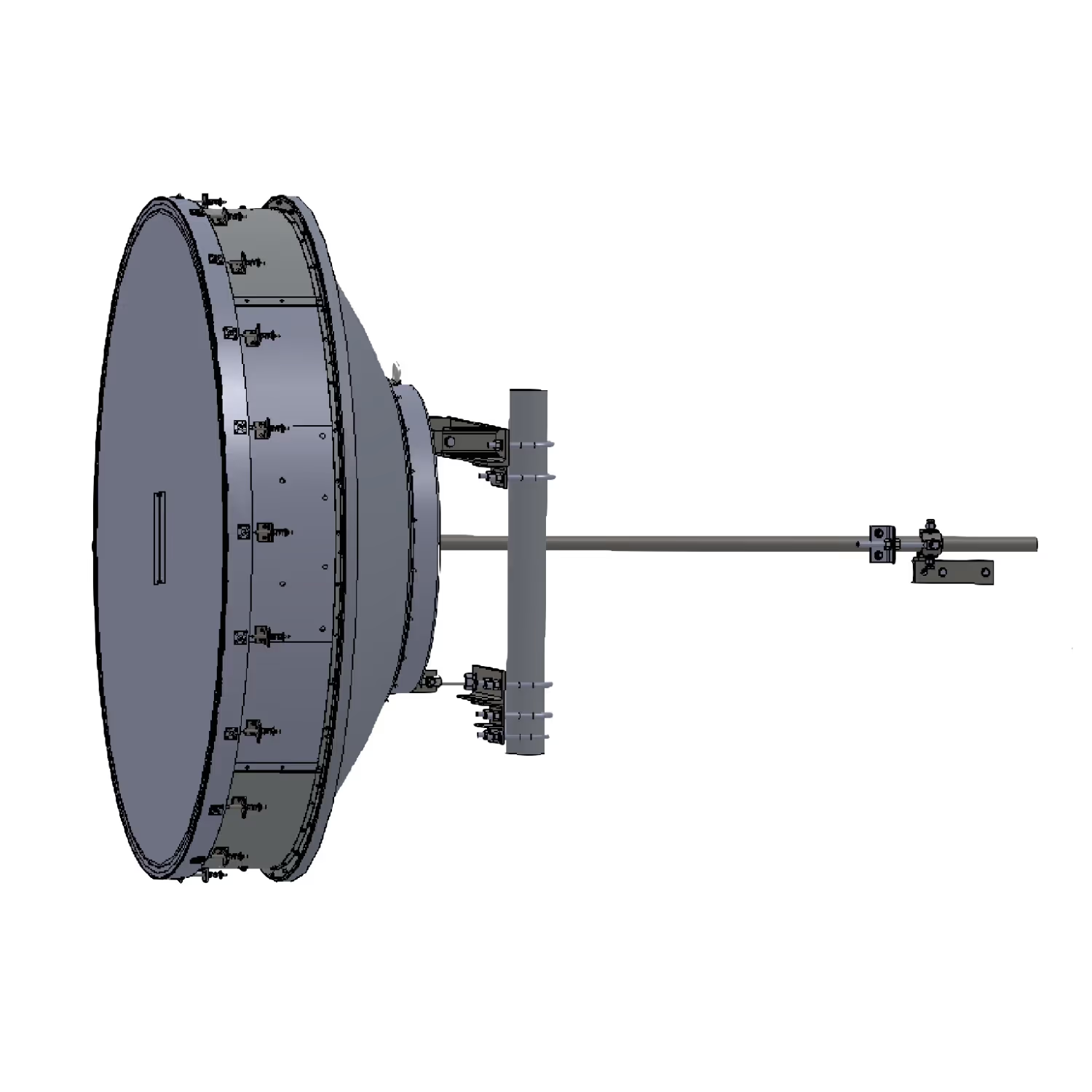
1.2m Dish High Performance
La antena parabólica de alto rendimiento de 1,2 m es una antena de enlace de retorno de microondas de banda ancha (4,9-7,125 GHz) de alto rendimiento (HP) para enlaces inalámbricos multigigabit de 20 a 40 km.
$1,299.00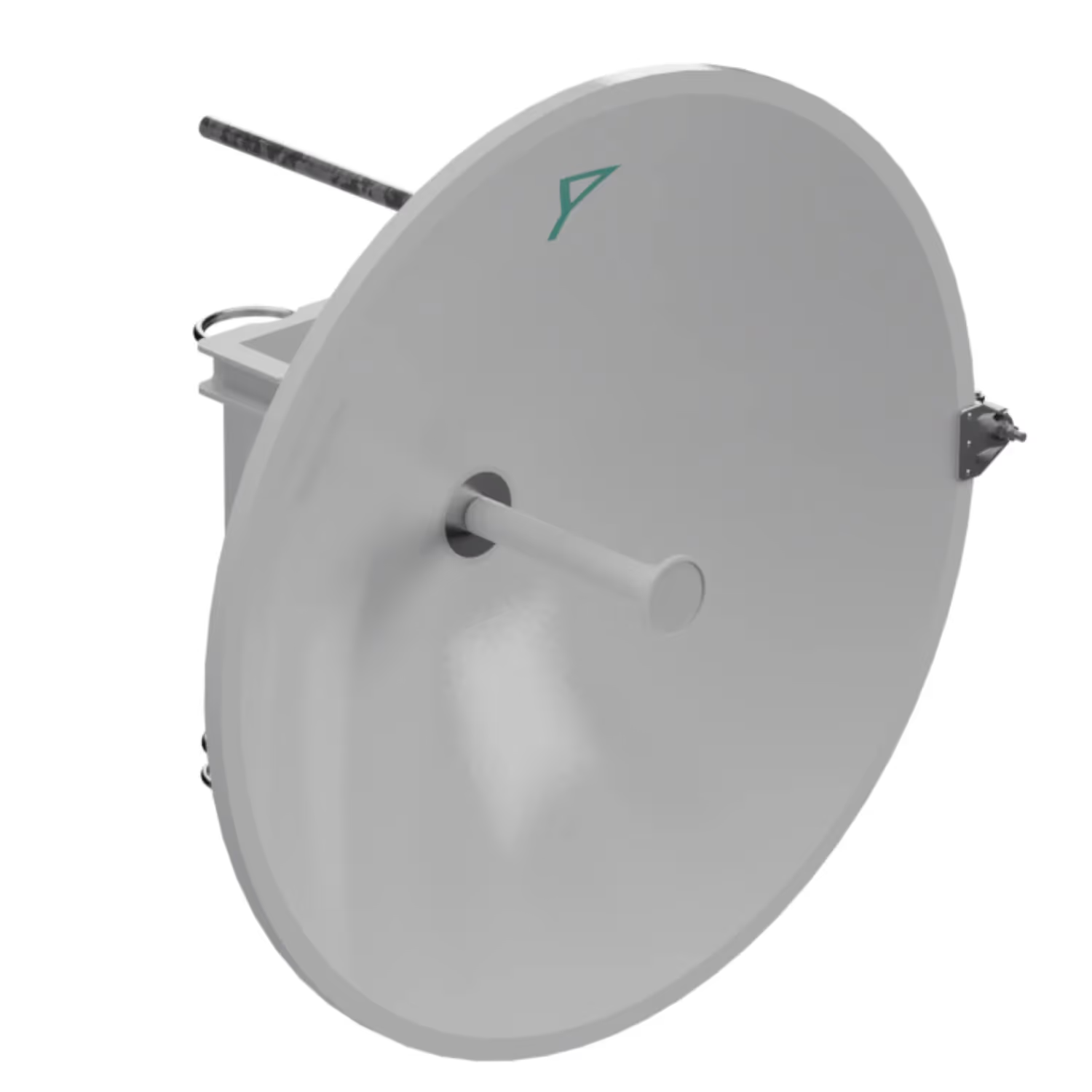
1.2m Dish Mimosa B6x Twist-on 2-pack
Diseñado para un envío económico y para conectar directamente a radios Mimosa B6x/B5x/C6x/C5x sin pérdida de conversión para enlaces de hasta 20-40 km. Ambas antenas están incluidas en el precio.
$998.001.2m Dish RP-SMA 2-pack
Paquete de 2 antenas parabólicas de 1,2 m (4 pies) para 5 y 6 GHz, diseñadas para un envío económico y conexión directa a radios Ubiquiti, Cambium y Mimosa sin pérdida de conversión para enlaces de hasta 20-40 km. El precio incluye ambas antenas.
$998.00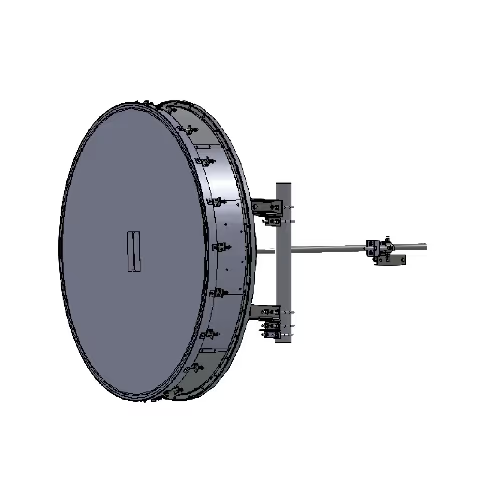
1.8m Dish High Performance
La antena parabólica de alto rendimiento de 1,8 m es una antena de enlace de retorno de microondas de banda ancha (4,9-7,125 GHz) de alto rendimiento (HP) para enlaces inalámbricos multigigabit de 40 a 80 km.
$2,999.00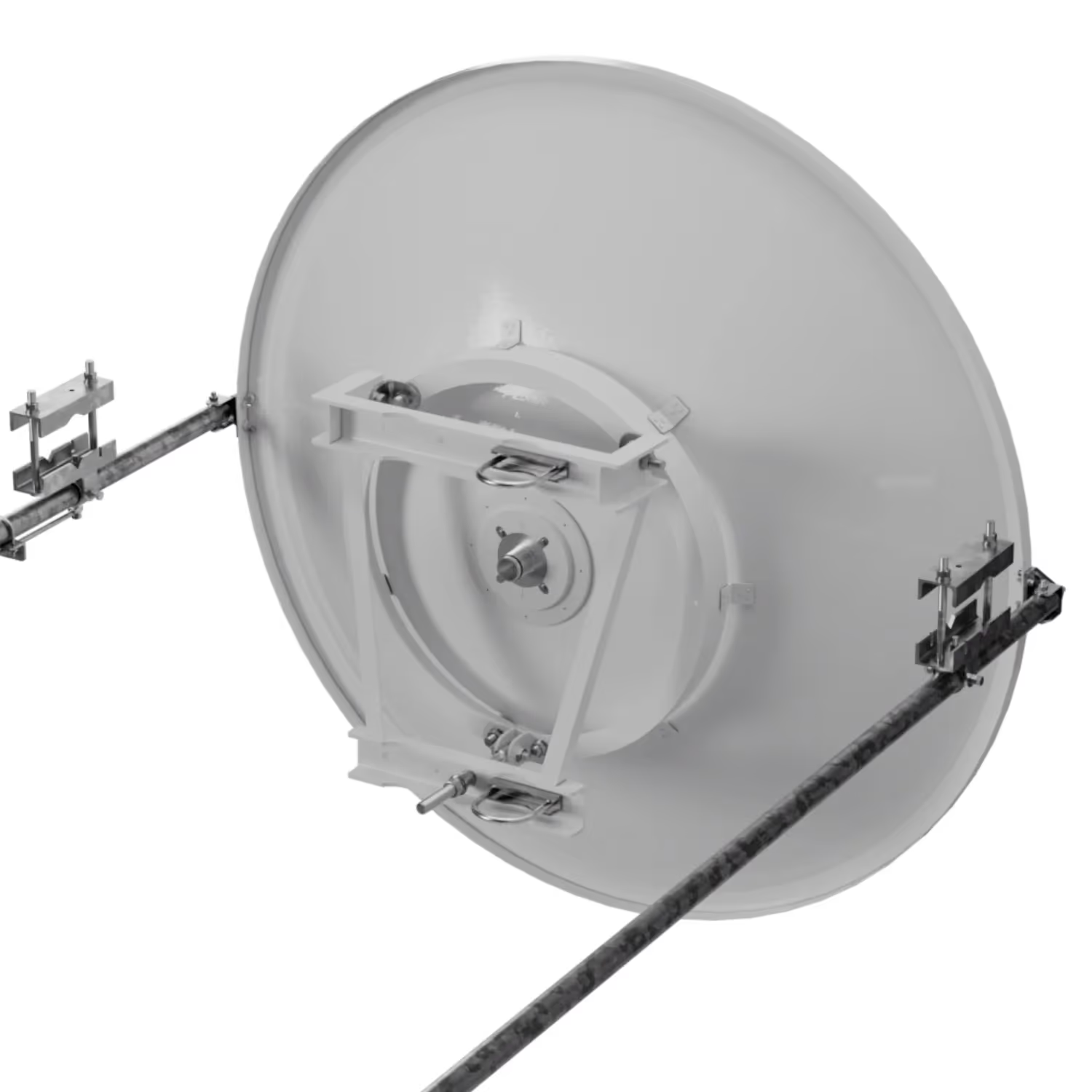
1.8m Dish Mimosa B6x Twist-on 2-pack
Diseñado para envíos económicos y conexión directa sin problemas a radios Mimosa B6x/B5x/C6x/C5x, sin pérdida de conversión para enlaces de hasta 40-80 km. Ambas antenas están incluidas en el precio.
$3,998.001.8m Dish RP-SMA 2-pack
Diseñado para envíos económicos y una conexión directa y sin problemas a radios RP-SMA 2x2 para enlaces de hasta 40-80 km. Ambas antenas están incluidas en el precio.
$3,998.00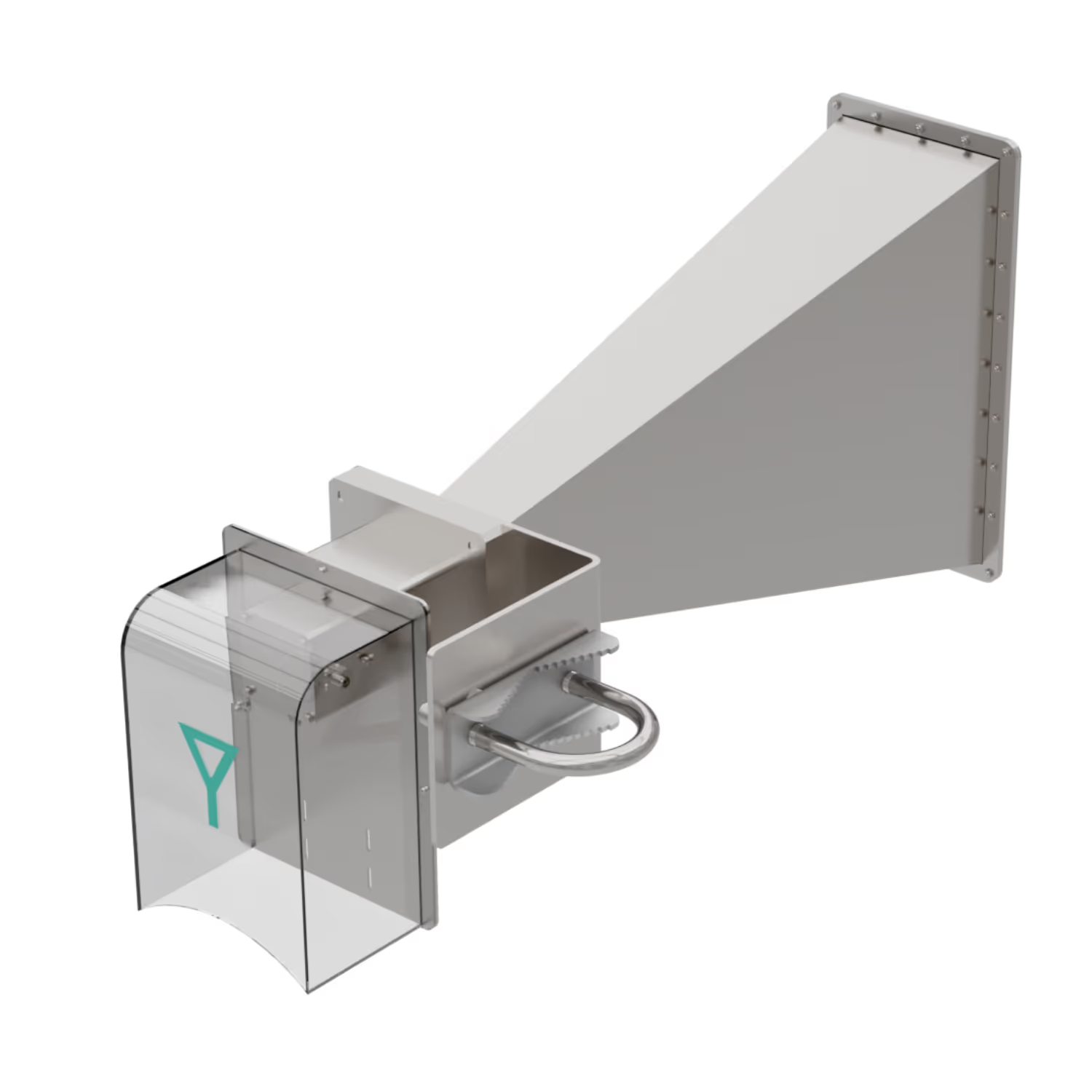
20° Asymmetrical Horn
Antena de bocina asimétrica de banda ancha de 20-30° de alto rendimiento, ligera y todo incluido, para 5 y 6 GHz, diseñada para ampliar las redes WISP en entornos ruidosos.
$299.00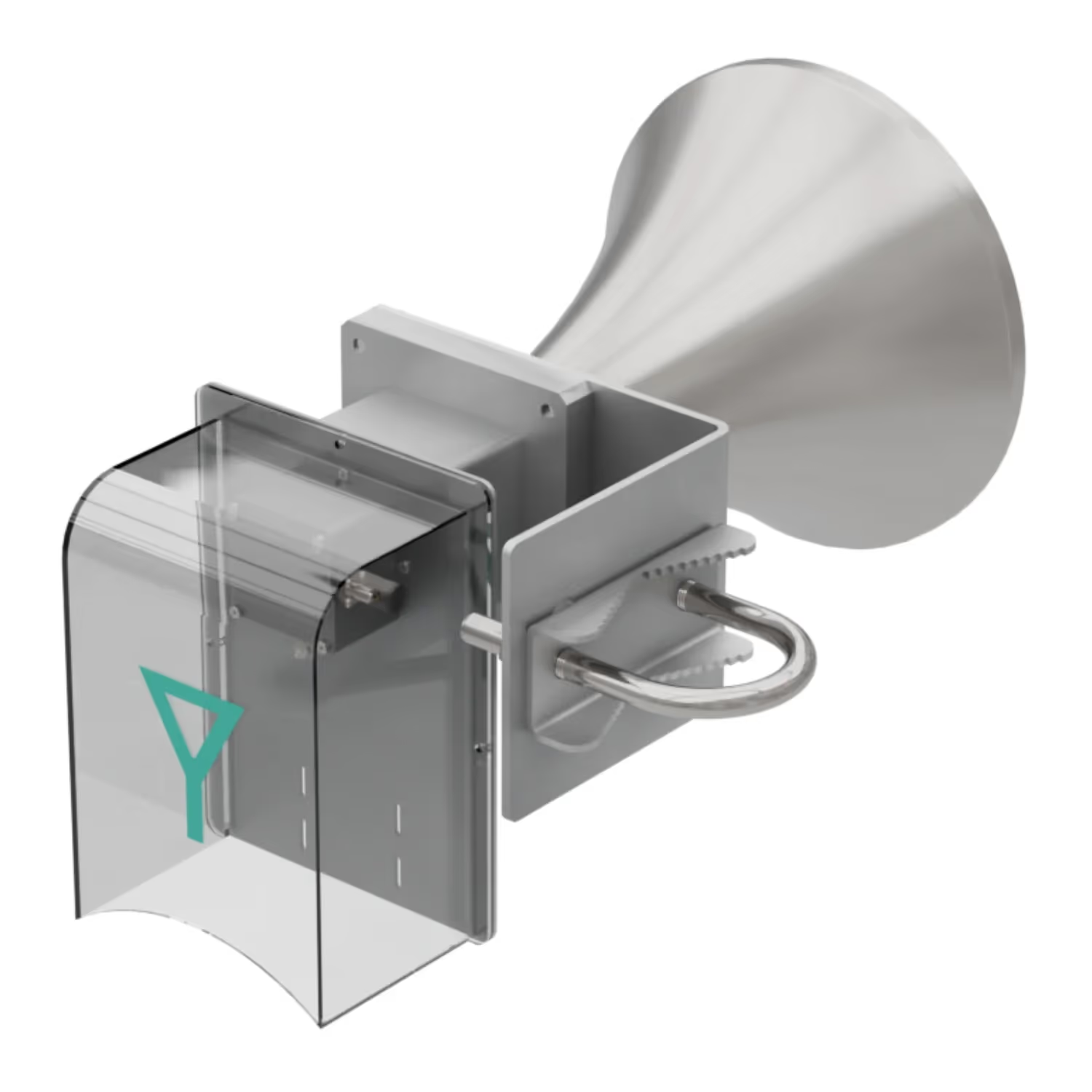
30° Symmetrical Horn
Antena de bocina simétrica de 30° de banda ancha de 5 y 6 GHz, todo incluido, ligera y de alto rendimiento
$279.00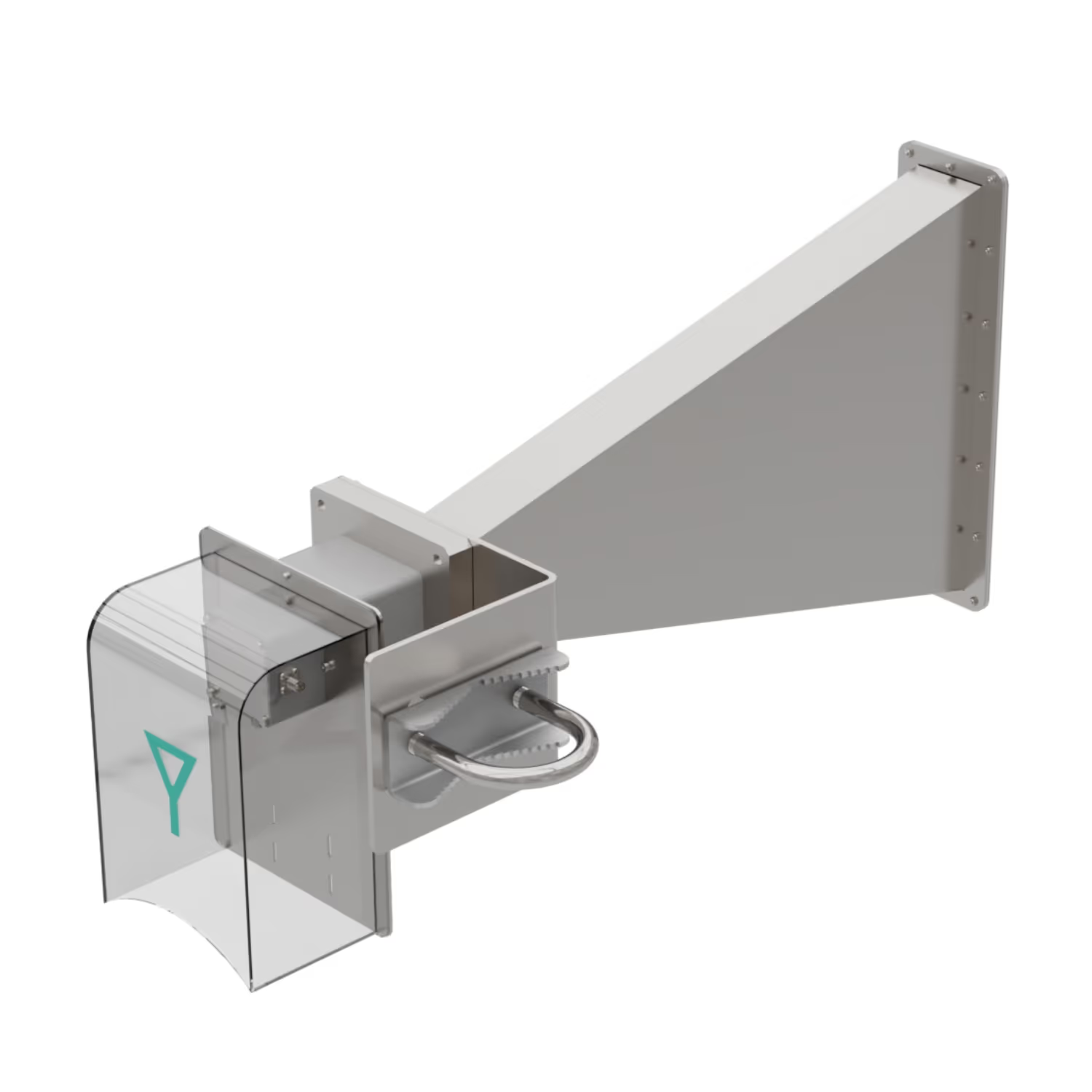
60° Asymmetrical Horn
Antena de bocina asimétrica de 60°, todo incluido, liviana y de alto rendimiento para brindar cobertura de banda ancha de 5 y 6 GHz con una plataforma de antena WISP escalable.
$299.00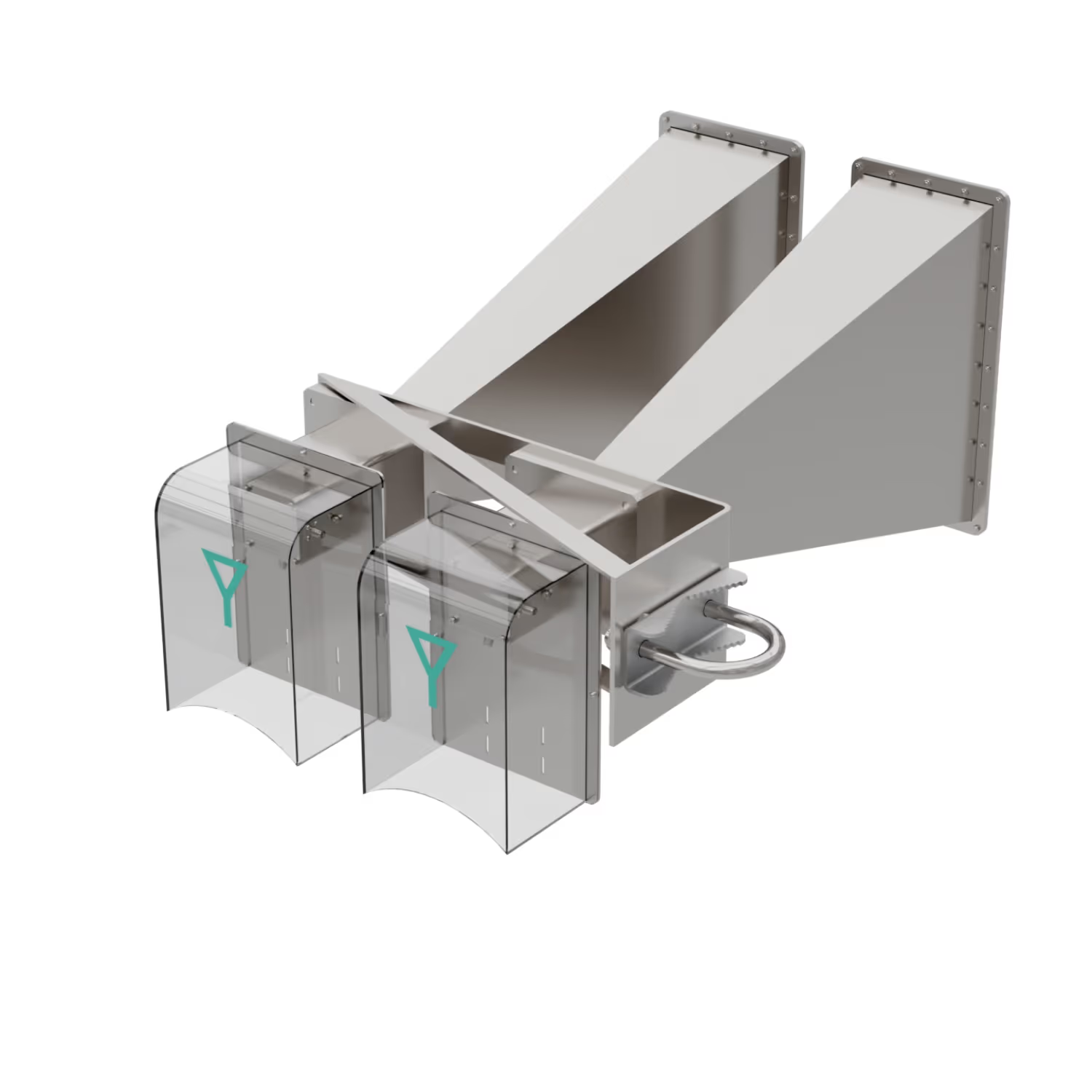
Double 20° Asymmetrical Horn 4x4
Antena de bocina doble asimétrica 4x4 de banda ancha de 5 y 6 GHz, de alto rendimiento, ligera y todo incluido, con rango de 20-30°, para ampliar las redes WISP en entornos ruidosos.
$498.00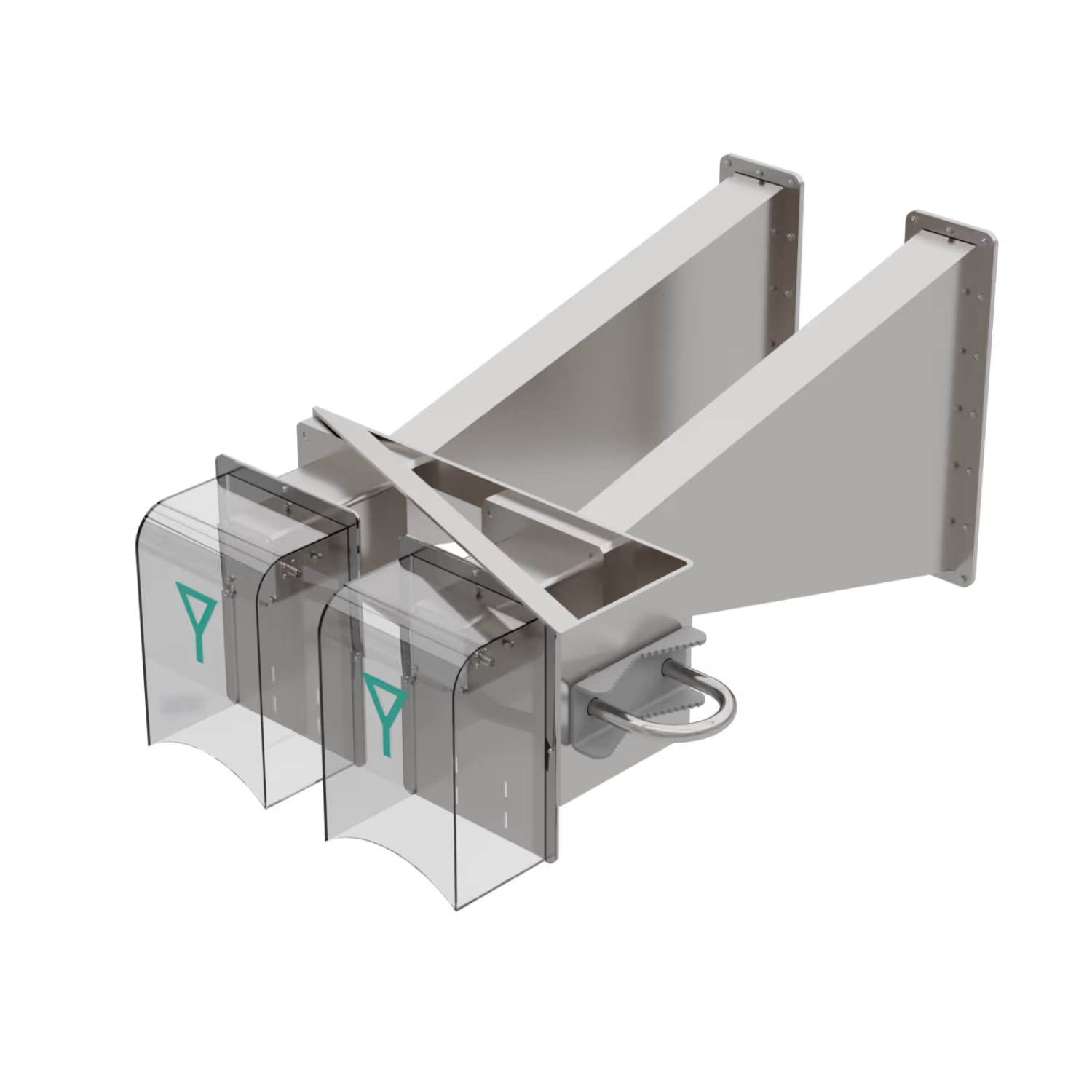
Double Asymmetrical 60° Horn 4x4
Antena 4x4 de bocina doble asimétrica de 60°, ligera, todo incluido y de alto rendimiento para brindar cobertura de banda ancha de 5 y 6 GHz
$498.00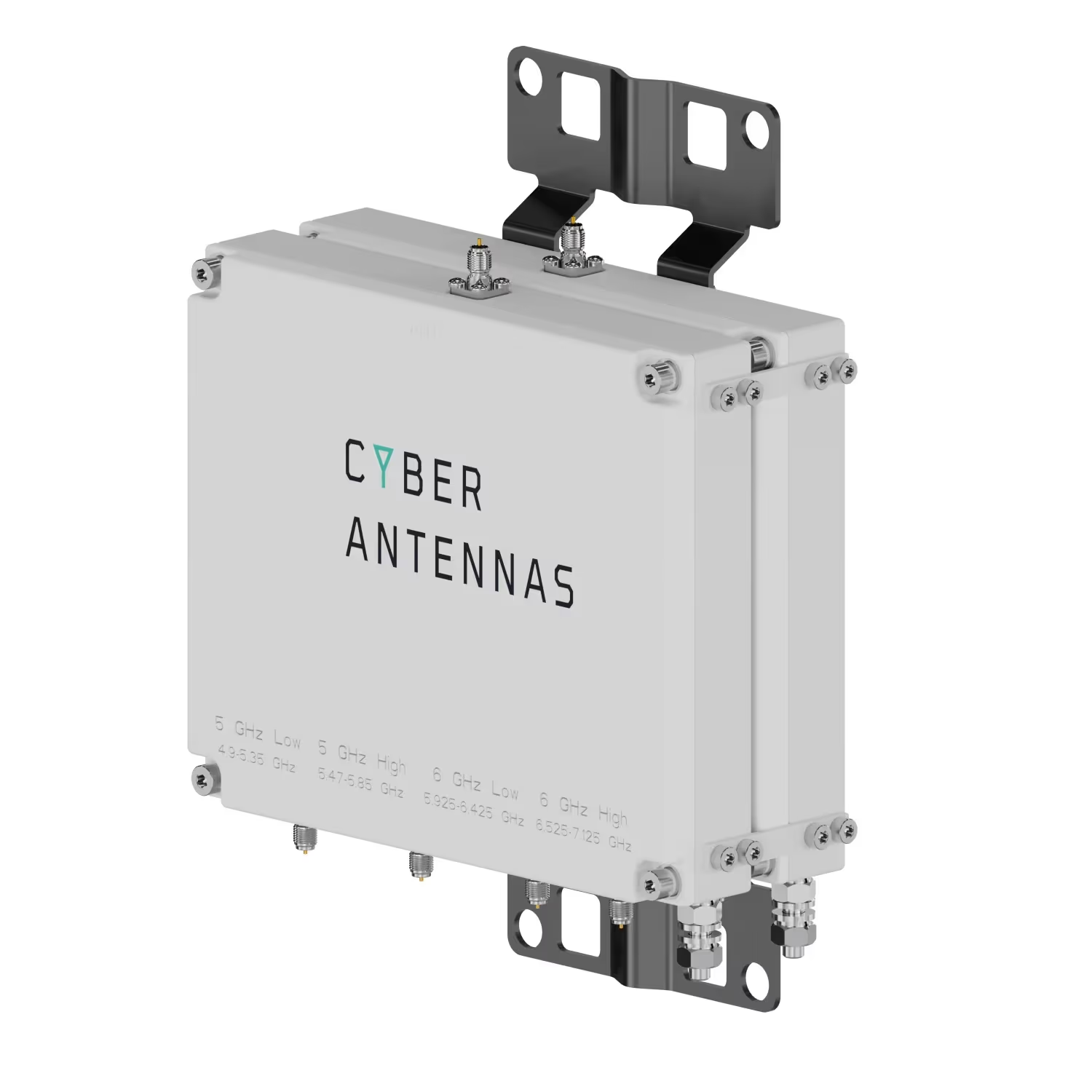
Quadplexer
Combina cuatro bandas de frecuencia (5 GHz baja/alta y 6 GHz baja/alta) en una antena de banda ancha polarizada dual.
$799.00