Overview
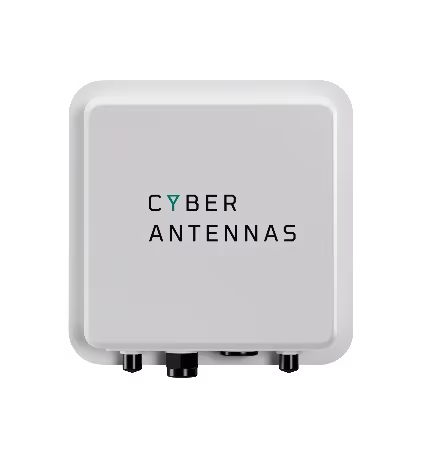
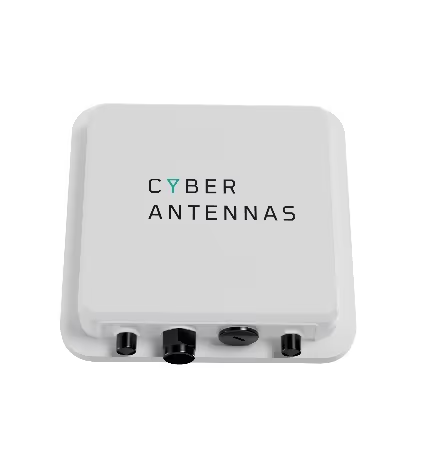
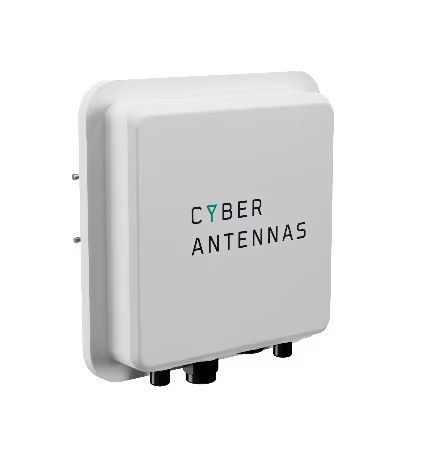
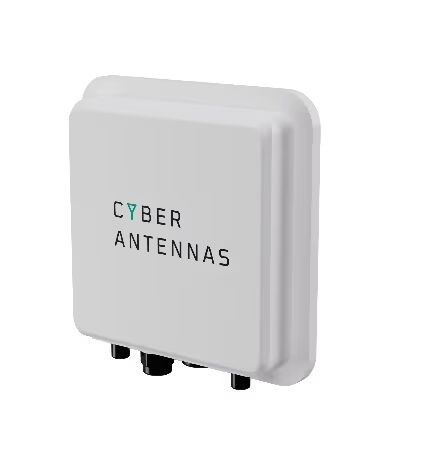
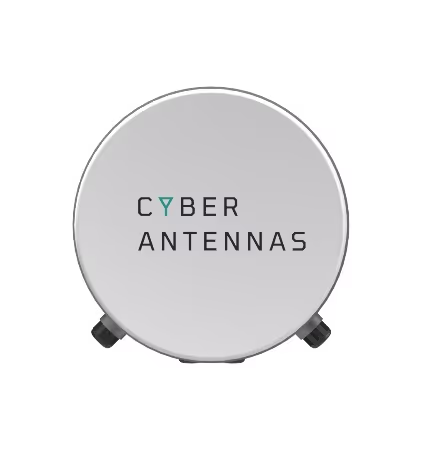
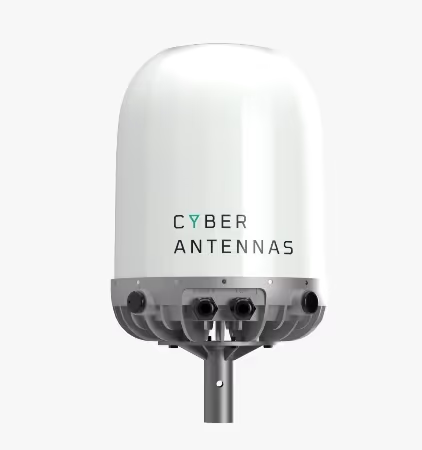
This long-range 5G fixed wireless access (FWA) customer premises equipment (CPE) outdoor unit (ODU) kit is built on 3GPP standards for plug-and-play high-speed long-range broadband connectivity. Vendor-supported open source kit with Quectel RM520N-GL 5G sub-6 GHz PCIe modem, refurbished enclosure, antenna, and router board—delivering multi-gigabit speeds via high-performance sub-6 GHz 4×4 directional antennas and a powerful CPU for signal processing. Pre-assembled and pre-configured with two SIM card slots; insert a SIM from your preferred 5G/LTE/CBRS mobile network operator for instant, reliable service. Compatible with T-Mobile, Verizon, and AT&T tablet/IoT SIM cards; for maximum speeds, choose operators with ample sub-6 GHz spectrum (e.g., T-Mobile). International support includes Bharti Airtel, LG U+, NTT DOCOMO, Deutsche Telekom, Telefónica, Telstra, KDDI, and KT.
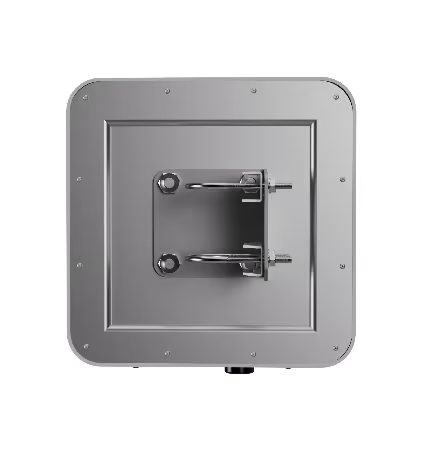
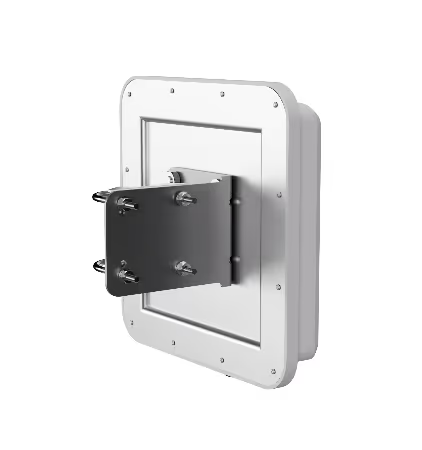
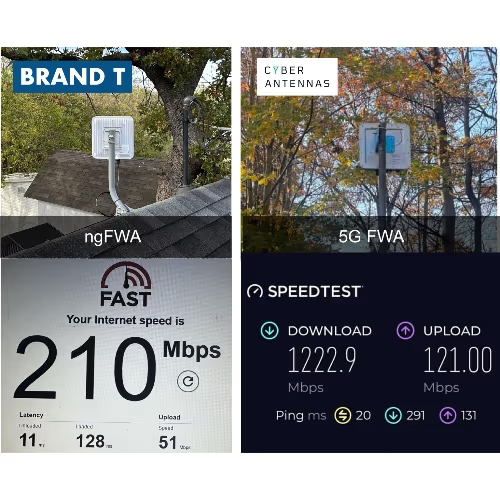
Long-range 4x4 antennaA stronger signal means more reliable connectivity and faster speeds. While indoor 5G routers typically have low power and weak antennas, the Cyber Antennas outdoor 5G CPE is high-powered and features long-range antennas. Install it on an exterior wall or rooftop and aim it at directly at the cell tower to lock onto the strongest available signal for faster and more reliable internet connectivity.
Cyber Antennas 5G FWA CPE is optimized for high-power, long-distance performance. Its highly efficient, high-performance, precision-manufactured 4x4 multiple-input multiple-output (MIMO) high-gain antenna transmits and receives signals through trees and other obstructions over long distances, enabling 5G connectivity in remote areas where typical mobile phones and other 5G CPE like Inseego Wavemaker can’t reach.
Faster Speeds with More Throughput4x4 MIMO antennas enable four simultaneous data streams—twice as many as 2x2 setups—allowing significantly higher data rates. This means faster internet for end users and a more competitive offering for service providers in performance-driven markets.
More Reliable ConnectionsThe additional antennas in a 4x4 configuration improve signal diversity, reducing interference and fading. This results in more stable connections, especially in complex environments like dense urban areas or indoor settings.
Better Spectrum Efficiency4x4 MIMO supports technologies like beamforming and spatial multiplexing, maximizing spectral efficiency. This allows providers to serve more customers with the same spectrum, improving network ROI.
Wider Coverage AreaAdvanced beamforming in 4x4 systems boosts signal strength and range, making it easier to serve customers located farther from the tower—without compromising quality.
Stronger Performance in Congestion4x4 antennas handle multiple users and streams more effectively, ensuring reliable performance even in high-demand areas. This is ideal for dense neighborhoods or shared network environments.
CPE Engineered for 5G FWA PerformanceCombining a high-gain reflector, low-loss RF cabling, passive cooling board design, and a high MIMO isolation clapboard creates a powerful combination of hardware optimizations for 5G FWA CPE. The high-gain reflector focuses signal transmission for greater reach and stronger connections. Low-loss cabling preserves signal quality between components, especially in high-frequency bands. Meanwhile, the MIMO isolation clapboard minimizes internal interference, enabling more efficient multi-stream data handling. Together, these features ensure service providers can deliver faster speeds, broader coverage, and more reliable connectivity—even in challenging deployment scenarios.
High MIMO Isolation ClapboardA high MIMO isolation clapboard is a specialized internal component used in 5G FWA Customer Premises Equipment (CPE) to reduce electromagnetic interference between closely spaced antennas. By improving isolation between MIMO antenna elements, it ensures cleaner signal paths, minimizes cross-talk, and enhances overall system performance—especially in compact CPE designs where antennas are tightly packed. The refurbished enclosure is a used 3 GHz CPE plastic and aluminum case.
Low-Loss RF CablingLow-loss RF cabling is designed to minimize signal attenuation as radio frequency (RF) signals travel between the antenna and the radio in the 5G FWA CPE. By preserving signal strength and reducing insertion loss, these cables help maintain higher data throughput, better signal quality, and overall system efficiency—especially important for high-frequency sub-6 GHz 5G bands.
Better Real-World User ExperienceBy preserving the integrity of each spatial stream, the isolation clapboard helps maintain high-speed, stable connections even in challenging environments. For service providers, this means fewer customer complaints, better retention, and a consistent quality of service across the user base—even at the edge of the coverage area.
Global SupportSupported Carriers:
• Vodafone
• Deutsche Telekom
• British Telecom
• Telefonica
• Swisscom
• Verizon
• AT&T
• T-Mobile
• Telus
• LGU+
• NTT
• DOCOMO
• KDDI
• Telstra
Frequently Asked Questions (FAQ)Frequently asked questions about the product
What modem and radio is included?Cyber Antennas 5G FWA CPE includes a pre-installed and pre-configured Quectel RM520N-GL modem built with Qualcomm Snapdragon X64 system on chip.
What mobile network operators are supported?The Quectel RM520N-GL conforms to 5G SA, 5G NSA, LTE, standards and has been verified to work on Vodafone, Deutsche Telekom, British Telecom, Telefonica, Swisscom, Verizon, AT&T T-Mobile/, Telus, LGU+. NTT DOCOMO, KDDI, and Telstra networks. SoftBank is in development.
What 5GNR SA & NSA bands does Cyber Antennas 5G FWA CPE support?The 5G FWA CPE radio and antenna support these 5G NR bands: N1, N2, N3, N4, N7, N25, N28, N30, N38, N40, N41, N48, N66, N71, N77, N78
The modem supports these bands:
Standalone: n1, n2, n3, n5, n7, n8, n12, n13, n14, n18, n20, n25, n26, n28, n29, n30, n38, n40, n41, n48, n66, n70, n71, n75, n76, n77, n78, n79
Non-standalone: n1, n2, n3, n5, n7, n8, n12, n13, n14, n18, n20, n25, n26, n28, n29, n30, n38, n40, n41, n48, n66, n70, n71, n75, n76, n77, n78, n79
What 4G/LTE bands does Cyber Antennas 5G FWA CPE support?Bands supported by the 5G FWA CPE radio and antenna:
LTE Bands Supported: B1, B2, B3, B4, B7, B25, B28, B30, B38, B39, B40, B41, B42, B43, B48, B66, B71
The modem support these bands:
LTE-FDD B1, B2, B3, B4, B5, B7, B8, B12, B13, B14, B17, B18, B19, B20, B25, B26, B28, B29, B30, B32/
66, B71
LTE-TDD: B34, B38, B39, B40, B41, B42, B43, B48
LTE-Licensed Assisted Access (LAA): B46
What is 5G FWA CPE?5G FWA CPE is a device designed to connect end-users to the 5G network. It is installed at locations such as homes or offices to receive and transmit 5G signals, effectively bridging the gap between the 5G network and the local area network (LAN). This device enables high-speed internet access for various devices, including laptops, smartphones, and IoT devices, providing a versatile and powerful internet solution.
Can 5G FWA CPE be deployed in both indoor and outdoor scenarios?Yes, this 5G FWA CPE is IP67 weather rated, which means even if it is submerged in water, it will remain functional.
Indoor CPE: Installed inside the premises, it receives 5G signals directly and provides internet access to internal devices.
Outdoor CPE: Mounted on rooftops or exterior walls, it captures 5G signals from the base station and transmits them via a wired connection (such as Ethernet) to an indoor unit, which then distributes the internet connection to devices within the premises.
Does this 5G FWA CPE include Wi-Fi?There are 5G FWA CPE with and without Wi-Fi. This 5G FWA CPE does not include Wi-Fi, but it can be connected to a Wi-Fi router and provide the Wi-Fi router with internet. connectivity.
With Wi-Fi: These devices come with integrated Wi-Fi functionality, allowing them to directly provide wireless internet access to devices within the premises. They convert the 5G signal into a Wi-Fi signal, enabling seamless connectivity for various devices without the need for additional hardware.
Without Wi-Fi: These devices lack built-in Wi-Fi and instead provide internet access through wired connections. They convert the 5G signal into an Ethernet signal, which can then be distributed via a router or switch to multiple devices within the premises.
How does the 5G FWA CPE work?Signal Reception: The 5G FWA CPE device receives the 5G signal from a nearby 5G base station. This product uses sub-6 GHz frequencies so it does not require direct line of sight and can operate many miles away from the tower base station.
Signal Conversion: Upon receiving the 5G signal, the CPE device converts it into a Ethernet signal. This conversion enables various devices within the premises to connect to the internet. The 5G FWA CPE can be plugged into the WAN interface on a Wi-Fi router and provide Wi-Fi internet connectivity.
Data Transmission: The CPE device also ensures two-way communication by transmitting data back to the 5G base station. This continuous exchange of data between the CPE device and the base station ensures a reliable and high-speed internet connection for end-users.
What are the components of the 5G FWA CPE?5G FWA CPE is an open source kit that has been converted into a vendor-supported product:
Antenna: High-gain (11 dBi) directional 4x4 sub 6-GHz antenna transmits and receives 5G signals from the nearby base station. Modern CPEs utilize multiple-input multiple-output (MIMO) technology, which employs multiple antennas to enhance signal reception and transmission. MIMO improves data throughput and reliability by allowing multiple data streams to be transmitted and received simultaneously.
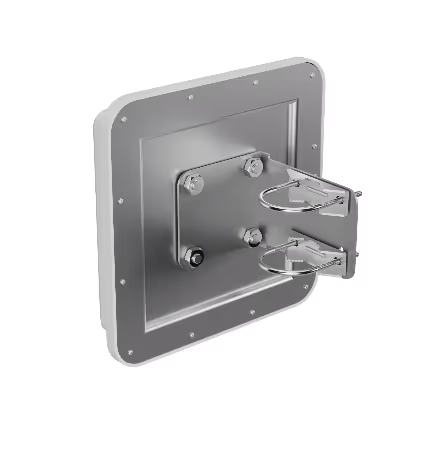
Outdoor Enclosure: Typically mounted on rooftops or exterior walls for optimal signal reception, especially in areas with weak indoor penetration.
Modem: The Quectel RM520N-GL modem converts the 5G analog signals into digital connectivity. The modem handles the demodulation and modulation of 5G signals, converting radio frequency (RF) signals into digital data and vice versa. It supports various 5G frequency bands in sub-6 GHz, ensuring compatibility with different network deployments.
Router board: Distributes the internet connection to multiple devices within the premises. The router board provides wired (Ethernet) connectivity with a 2.5 Gbps Ethernet port with 48-56v POE-in.
Power over Ethernet (PoE): Some CPE devices support PoE, which allows both power and data to be delivered over a single Ethernet cable. This simplifies installation and reduces the need for additional power outlets.
Firmware and Software: Provides the necessary instructions and user interface for the CPE device.
Network Management: Tools for monitoring and managing network performance, including diagnostics and troubleshooting.
Security: Implements robust security protocols VPN support to safeguard the network against unauthorized access and cyber threats.
Updates: Community and vendor supported package and firmware updates ensure the device remains secure and up-to-date with the latest features and improvements.
What are the benefits of 5G FWA CPE by Cyber Antennas?High-Speed Internet: 5G CPE can provide gigabit-speed internet, much faster than traditional broadband connections.
Low Latency: Essential for real-time applications like online AR/VR applications, gaming, video conferencing, and remote surgery.
Easy Installation: Plug-and-play devices that do not require complex setup or wiring.
Enhanced Connectivity: Supports multi-gig connectivity to support multiple devices simultaneously, making it ideal for smart homes and offices.
What are the technical specifications of the 5G FWA CPE?Frequency Bands: Operates in sub-6 GHz frequency bands and does not support mmWave operation.
MIMO Technology: Utilizes advanced MIMO technology for better signal strength and coverage.
Wi-Fi Standards: Does not include Wi-Fi but can be plugged into a Wi-Fi router to supply the Wi-Fi router with internet connectivity.
Security: Future Wireguard VPN connectivity under development.
Protocols: Supports TR-069 CWMP / TR-369 USP & TR-181 data model for remote management and configuration, TR-143 for network performance measurement, and TR-369 (USP) for enhanced device and service management.
Ethernet Ports: Includes a single 2.5 Gigabit per second Ethernet port for high-speed wired connections.
Processor: Powered by a multi-core processor to handle complex tasks and ensure smooth performance.
Typical 5G FWA CPE use-cases and applicationsHome Broadband: Replacing traditional DSL, cable, ngFWA, WISP, and fiber connections with faster and more reliable 5G internet.
Enterprise Solutions: Providing high-speed internet for businesses, enabling cloud computing, video conferencing, and IoT applications.
Redundant or backup connectivity: The 5G FWA CPE can provide backup connectivity in case of problems with local connectivity like fiber cuts.
Remote Areas: Offering broadband solutions in rural or underserved areas where laying fiber-optic cables is impractical.
Mobile and Temporary Sites: Ideal for events, festivals, construction sites, and other temporary locations that require quick internet setup.
What are the advantages of an indoor 5G FWA CPE?Lower premises cost: indoor 5G FWA CPE is cheaper hardware than outdoor units (simpler antennas) and avoids installation fees/truck rolls.
Fast time-to-market: true self-install (plug-and-play) enables instant activation at scale, accelerating subscriber uptake.
Operational simplicity: no roof/wall mounting, no permits or site surveys; fewer support visits; easy RMA/swap.
Deployment flexibility: nomadic use is possible (move the device to a new address or room), and placement can be optimized near windows for better signal.
CAPEX efficiency: ideal for low-ARPU segments and early market entry; lets operators seed demand before investing in outdoor installs.
Tariff alignment: works well with volume-based plans and “good/better” tiers where ultra-high guaranteed speeds aren’t required.
Inventory & logistics: compact, preconfigured units reduce warehousing complexity and speed fulfillment.
Customer experience: quick setup, immediate Wi-Fi coverage, and easy upgrades—operators can later upsell to outdoor CPE for higher, more predictable speeds if needed.
What are the advantages of outdoor 5G FWA CPE?Higher throughput & reach: better SINR with roof/wall mounting and directional 4×4 MIMO antennas delivers higher, more consistent speeds (often 100–500 Mbps tiers) and longer range.
Superior spectral efficiency: stronger link budgets enable 2–3× more FWA connections per site vs. indoor units, lowering per-subscriber RAN/capacity cost.
Predictable performance/SLA: fixed install at a verified address reduces fading and self-interference, supporting speed-based tariff plans aligned with fixed broadband.
Better cell-edge experience: improved uplink/downlink and beamforming/CA performance at weak-signal locations; supports higher QAM and carrier aggregation more reliably.
Network offload & capacity gains: cleaner RF environment reduces retries and congestion, improving overall sector efficiency and user experience.
Lower churn & higher ARPU: more stable speeds enable premium tiers and upsell to business-grade or SME bundles (security, SD-WAN, WWAN).
Resilience & reliability: weatherproof ODU with PoE/one-cable runs, surge protection options, and managed placement minimizes indoor RF obstructions and power/USB limitations.
Simplified ops at scale: remote provisioning/monitoring (e.g., TR-069/USP), geolocation locking, and address-based policies help enforce QoS and manage service assurance.
Related Products
No related products found.

Related Products (Tags)
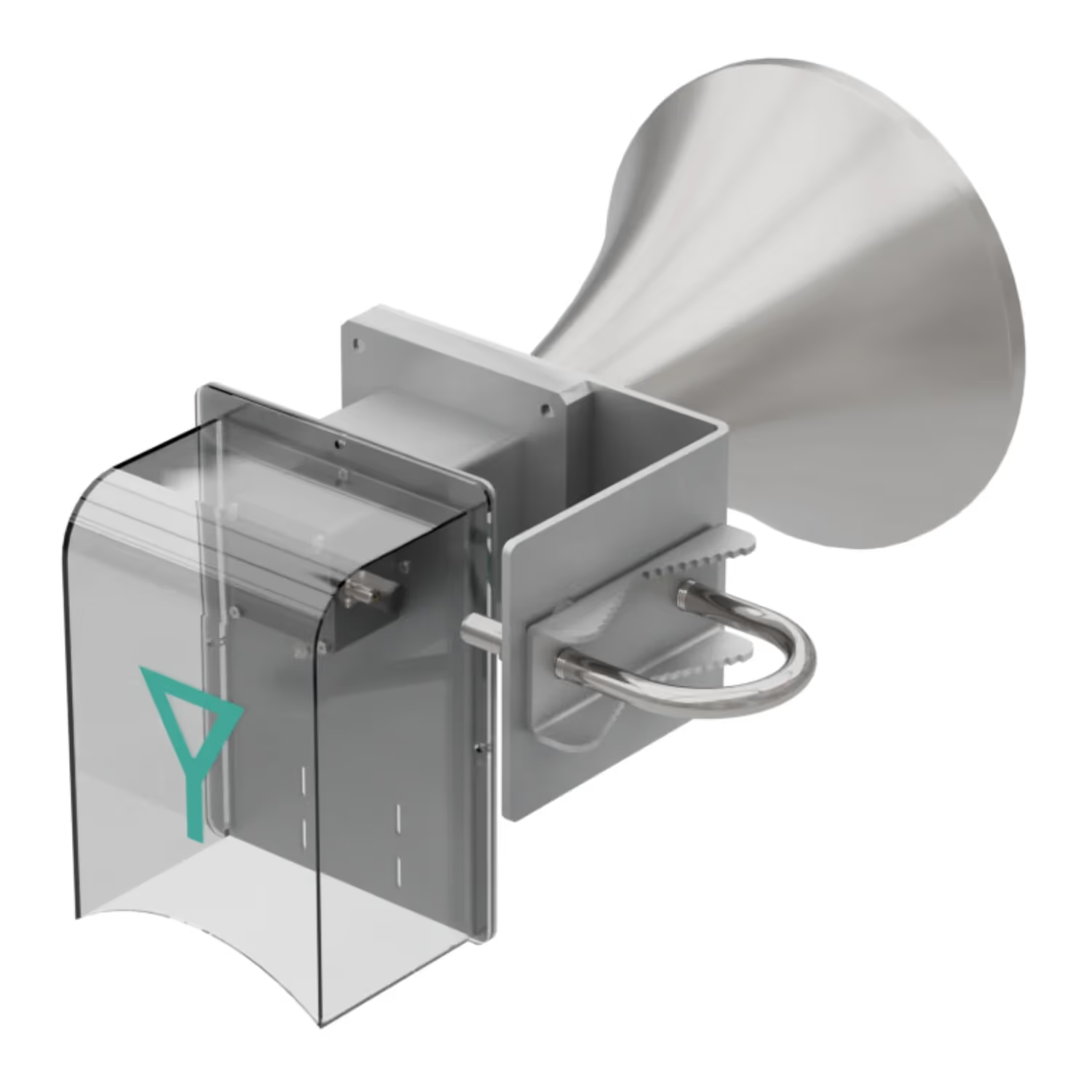
30° Symmetrical Horn
PTPbackhaulantenna
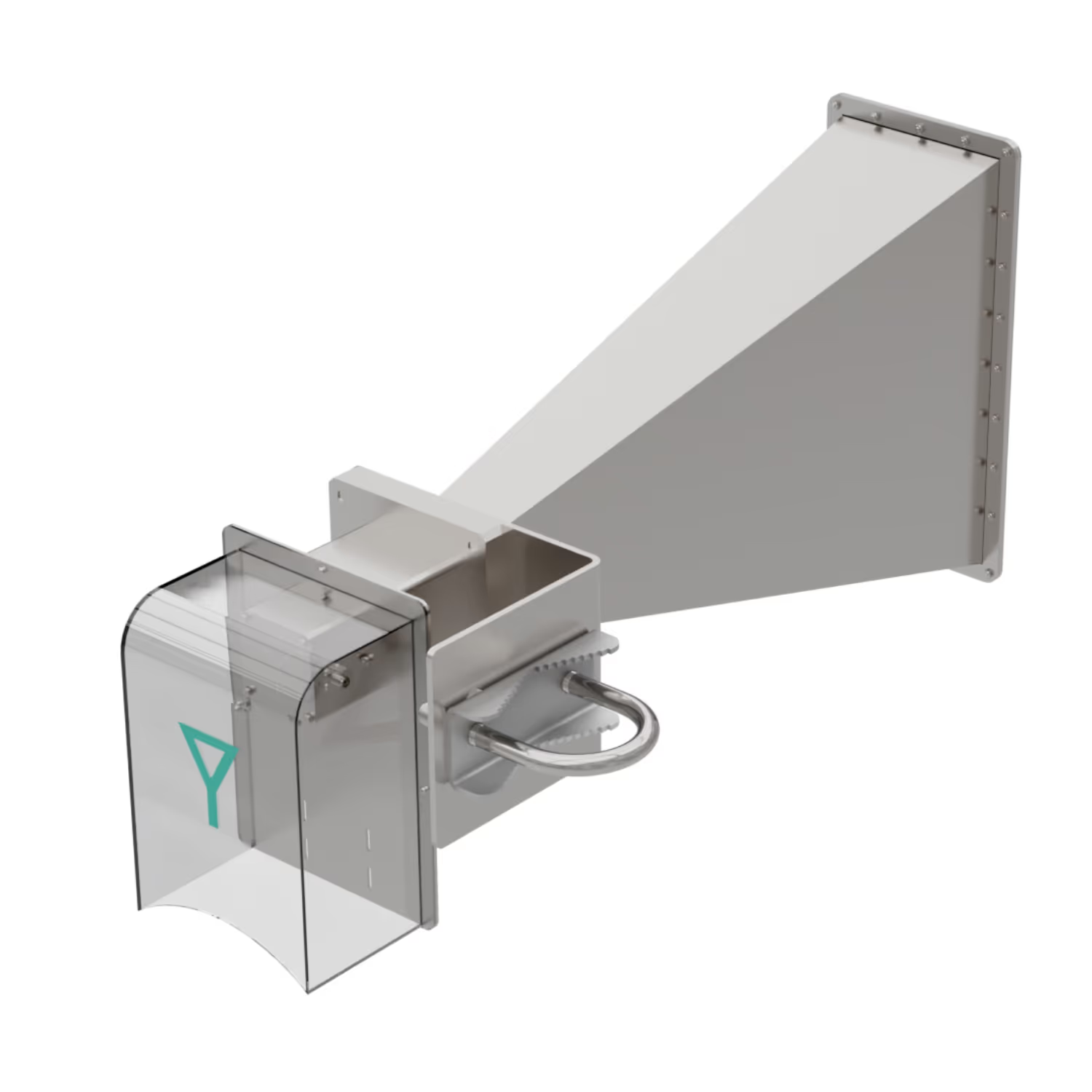
20° Asymmetrical Horn
antenna6 GHz5 GHz
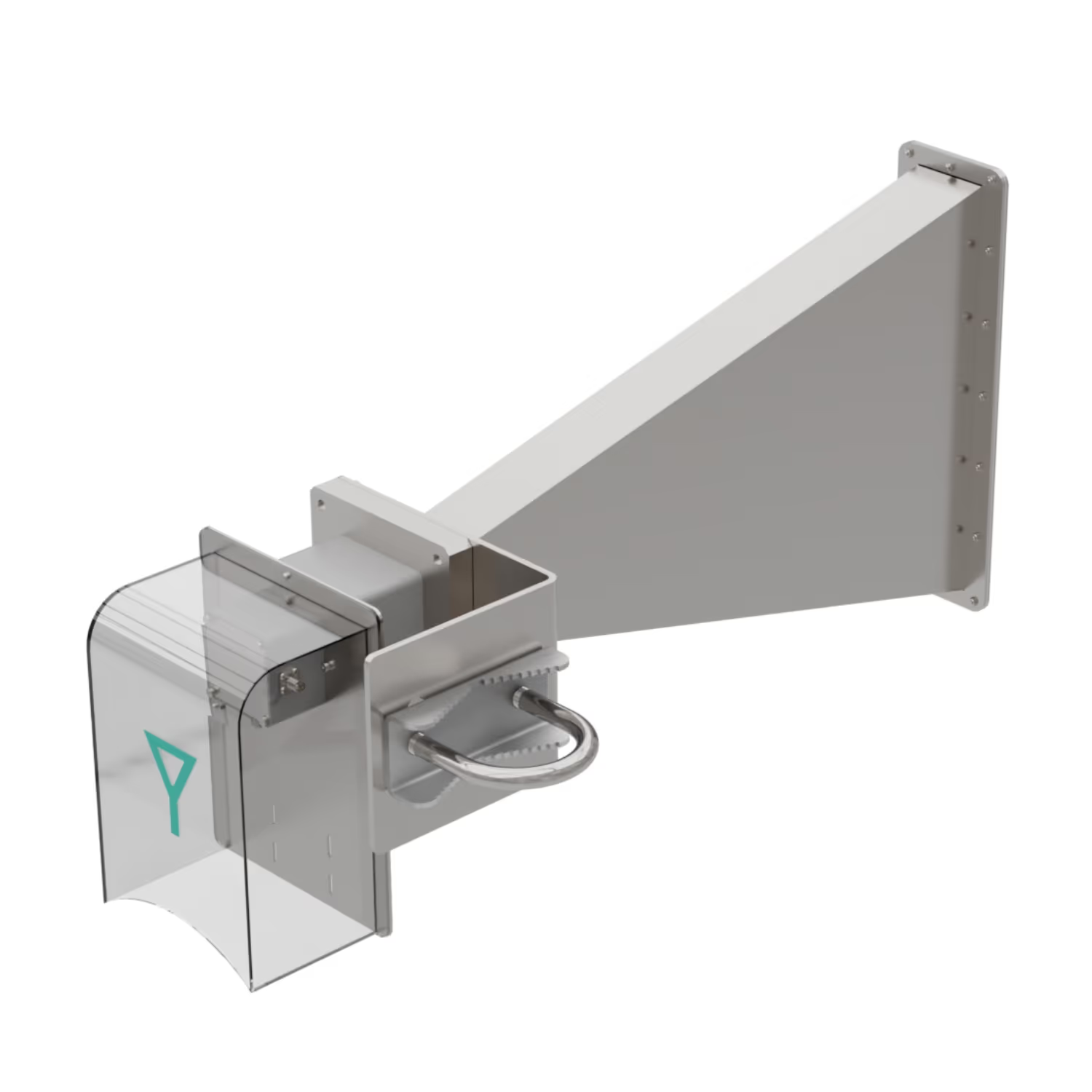
60° Asymmetrical Horn
antenna6 GHz5 GHz
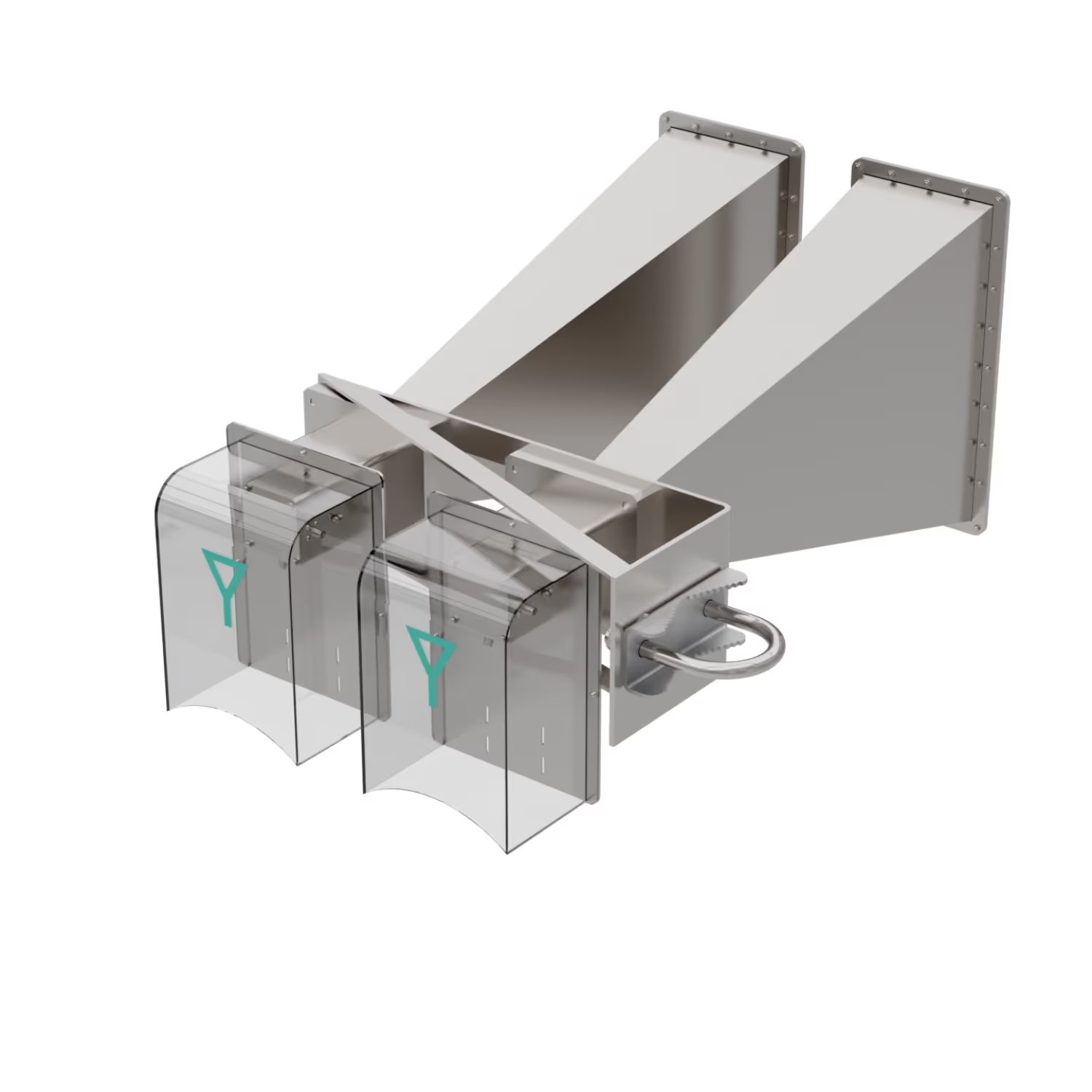
Double 20° Asymmetrical Horn 4x4
antenna6 GHz5 GHz
Double Asymmetrical 60° Horn 4x4
antenna6 GHz5 GHz
0.6m Dish High Performance
PTPbackhaulantenna
1.8m Dish High Performance
PTPbackhaulantenna
1.2m Dish High Performance
PTPbackhaulantenna
Reviews
Loading…
5G FWA CPE
Model Number: 5G-FWA-CPE
The long-range 5G FWA CPE is an outdoor unit (ODU) radio with Quectel RM520N-GL modem, enclosure, directional antenna, and router board that delivers unrivaled multi-gigabit speeds with high performance 4x4 antennas, powerful CPU for signal processing. Includes a PCIe 5G modem and two SIM card slots. Ready for a SIM card with a tablet or IoT data plan from your preferred 5G mobile network operator.
Features
- Quectel RM520N-GL modem
- High-gain directional 4x4 antenna
- Qualcomm Snapdragon X64
- PCIe-to-PHY optimized board
- Dual SIM Dual Standby (DSDS)
- Carrier Aggregation (CA)
- Root access to OS
- 2.5 Gbps POE
- Refurbished outdoor enclosure
Shipping Specifications
- •Dimensions (L×W×H): 12×12×5
- •Weight: 2.08kg
Warehouse availability
McAllen Storage
In stock
26 available
Shenzhen
In stock
2 available
Los Angeles
In stock
2 available
Winncom CDMX
In stock
1 available