لقد وصل عصر الإنترنت!
تُحدث Cyber Antennas ثورةً في عالم الاتصالات اللاسلكية. تُقدم أول منصة Wi-Fi 7 مُصممة لمُزودي خدمات الإنترنت اللاسلكية (WISP)، وهي حاصلة على اعتماد كامل من لجنة الاتصالات الفيدرالية (FCC) للعمل في الهواء الطلق بتردد 6 جيجاهرتز مع تقنية AFC. Cyber Antenna هي منصة مُطورة بالكامل لمُزودي خدمات الإنترنت اللاسلكية (WISP) منذ اليوم الأول.
- Massive Scalability
- Simple to install and manage
- Multi-gigabit speeds
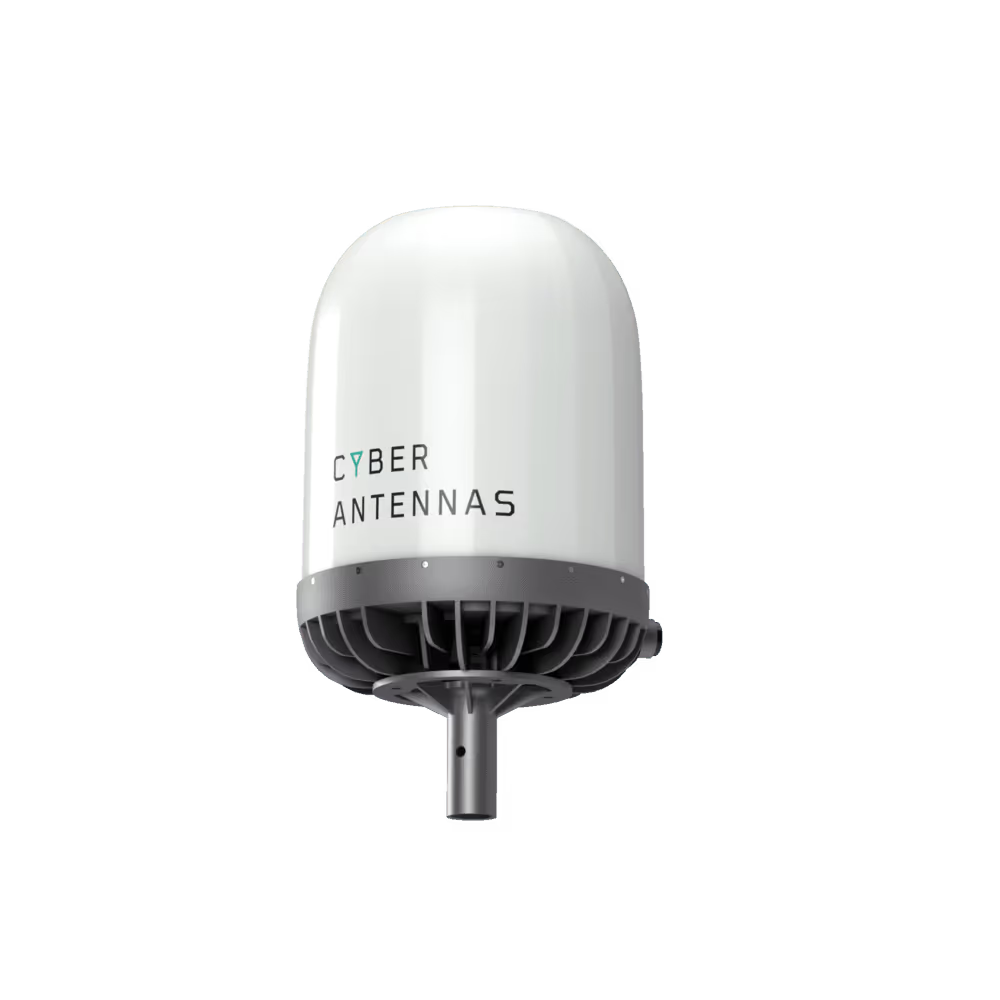
المنتجات المميزة
عرض جميع المنتجات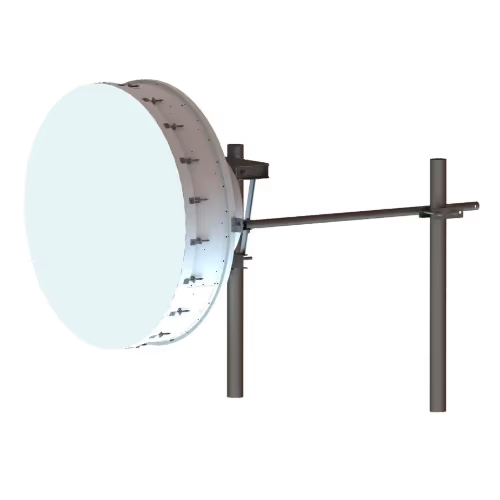
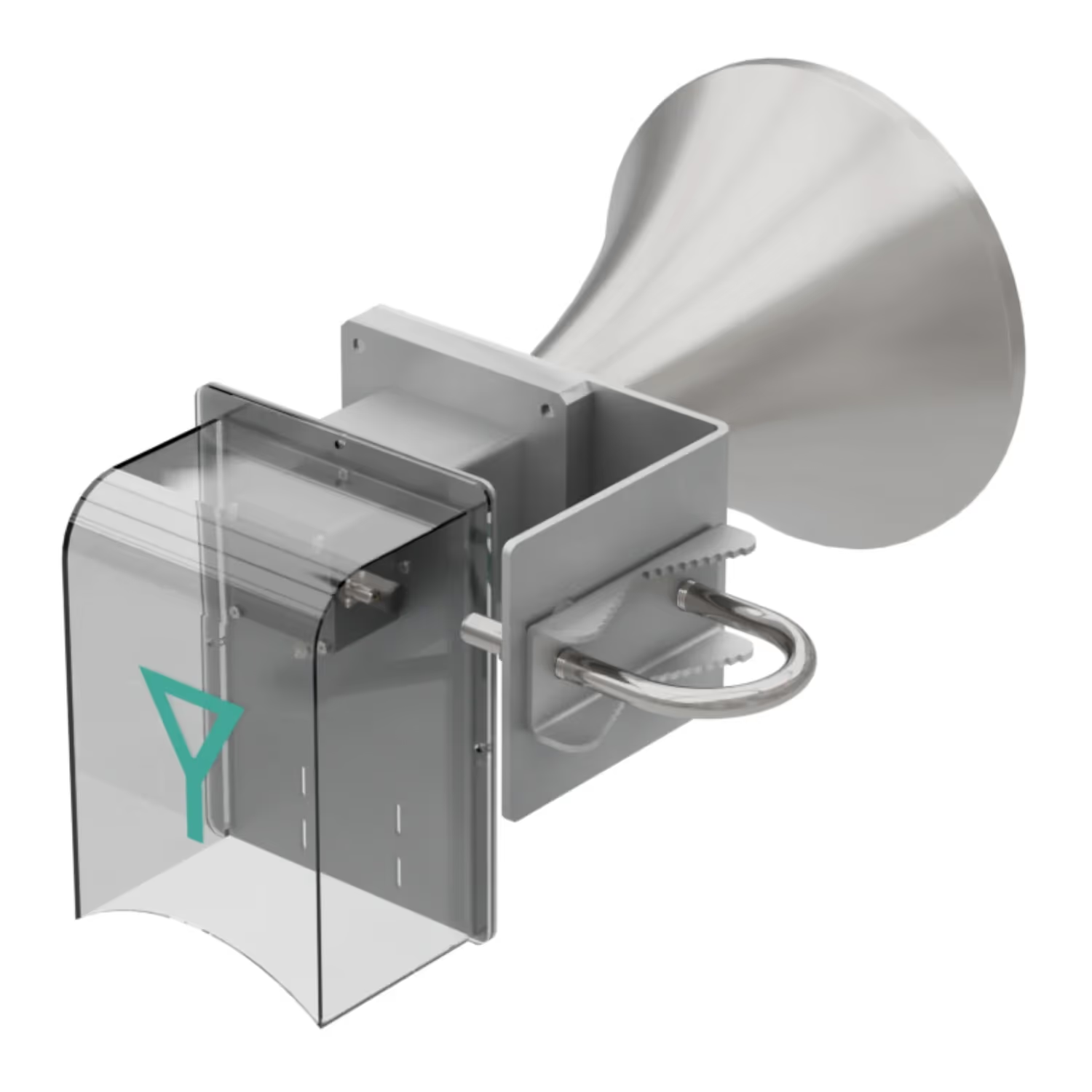
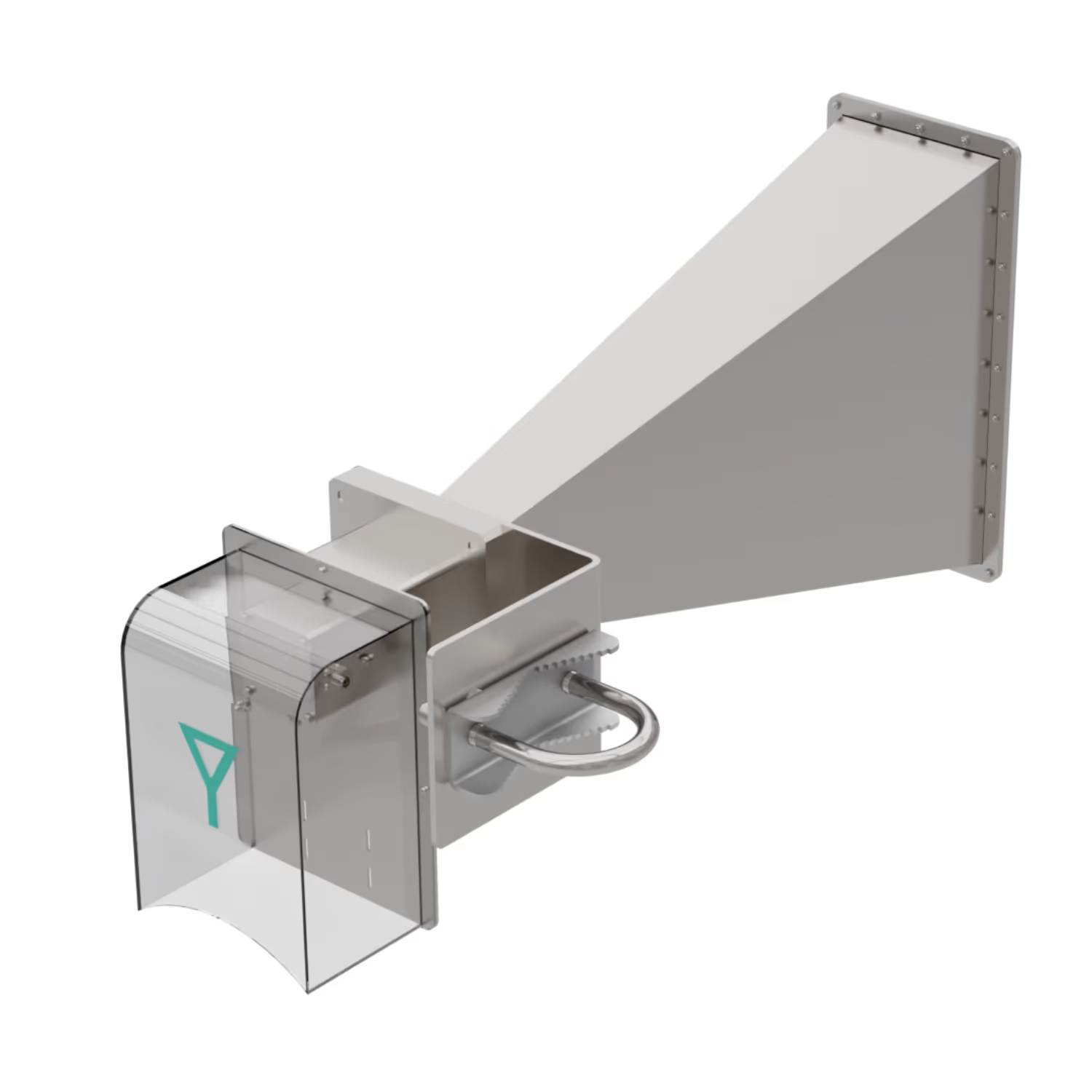
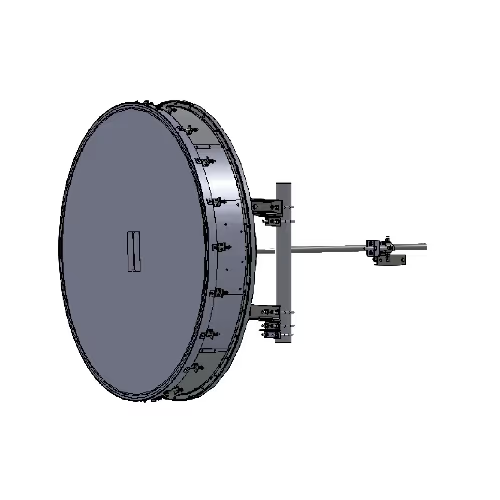
A Wi-Fi 7 platform built for WISPs
Massive Scalability
The Cyber antenna is more scalable than Ubiquiti AirMAX, LTU, Wave, and Cambium ePMP thanks to Wi-Fi 7 technology. Multi-Link Operation combines multiple frequency bands to reduce congestion and ensure smooth connectivity. 320 MHz channel support provides performance and capacity for high-density deployments, while proactive scheduling, OFDMA, and bidirectional MU-MIMO improve transmission-time management.
Higher Speeds
The Cyber antenna offers higher speeds than Ubiquiti AirMAX, LTU, and Cambium ePMP through modern Wi-Fi 7 technologies. 320 MHz channels provide significantly greater bandwidth, 4K QAM increases throughput per symbol, and Multi-Link Operation transmits across multiple frequency bands to reduce bottlenecks.
Easy Installation and Management
Advanced alignment, MU-MIMO, and DBF technologies optimize signal quality and environmental adaptation. Automatic access-point detection and QR-code adoption enable plug-and-play deployment, while simplified configuration tools reduce installation time in challenging conditions.
Wi-Fi 7 Features
Multi-Link Operation (MLO)
MLO lets devices use multiple frequency bands simultaneously or dynamically. For WISPs, it aggregates bandwidth, improves throughput, reduces latency, and increases resilience by shifting traffic toward the least congested or most reliable band.
320 MHz channel width
Wi-Fi 7 doubles the maximum channel size from 160 MHz to 320 MHz. In the 6 GHz band, this enables multi-gigabit point-to-point and point-to-multipoint deployments, high-capacity backhaul, premium service tiers, and fiber-like speeds with fixed-wireless flexibility.
4K QAM (4096 Quadrature Amplitude Modulation)
4K QAM packs more information into each transmission symbol than 1024-QAM. On strong, stable links it improves spectral efficiency and helps WISPs deliver higher subscriber speeds or greater backhaul capacity from existing spectrum.
Preemptive Scheduling
Preemptive scheduling lets high-urgency packets interrupt lower-priority transmissions. It reduces latency and jitter for gaming, video conferencing, and VoIP while preserving efficient traffic flow in congested sectors.
Cyber Antennas Technology Ready on Day One
Time Division Multiple Access (TDMA)
TDMA assigns discrete time slots to clients so only one device transmits in its slot. It eliminates collisions, reduces latency, supports fair allocation, and helps dense outdoor point-to-multipoint networks scale reliably.
Time Division Duplexing (TDD)
TDD shares one frequency channel between uplink and downlink at different times. Operators can dynamically allocate capacity around demand and synchronize cycles across sectors to reduce interference.
GPS Synchronization
GPS synchronization coordinates access-point transmit and receive slots. Aligning TDD cycles across sectors minimizes self-interference, supports closer frequency reuse, and improves dense-network reliability.
Bidirectional MU-MIMO
MU-MIMO lets an access point communicate with multiple devices in both uplink and downlink directions. It reduces airtime contention, increases throughput, and supports higher subscriber density.
Orthogonal Frequency Division Multiple Access (OFDMA)
OFDMA divides a channel into smaller resource units so multiple users can transmit simultaneously. It improves airtime efficiency, latency, and mixed-traffic performance.
Preamble Puncturing
Preamble puncturing avoids interfered subchannels while continuing to use clean portions of the channel. It preserves throughput and spectrum efficiency in noisy deployments.
BSS Coloring
BSS Coloring assigns an identifier to each network so devices distinguish neighboring transmissions from their own. This reduces unnecessary backoff and improves co-channel performance in overlapping coverage areas.