90 cm dish
About #90 cm dish
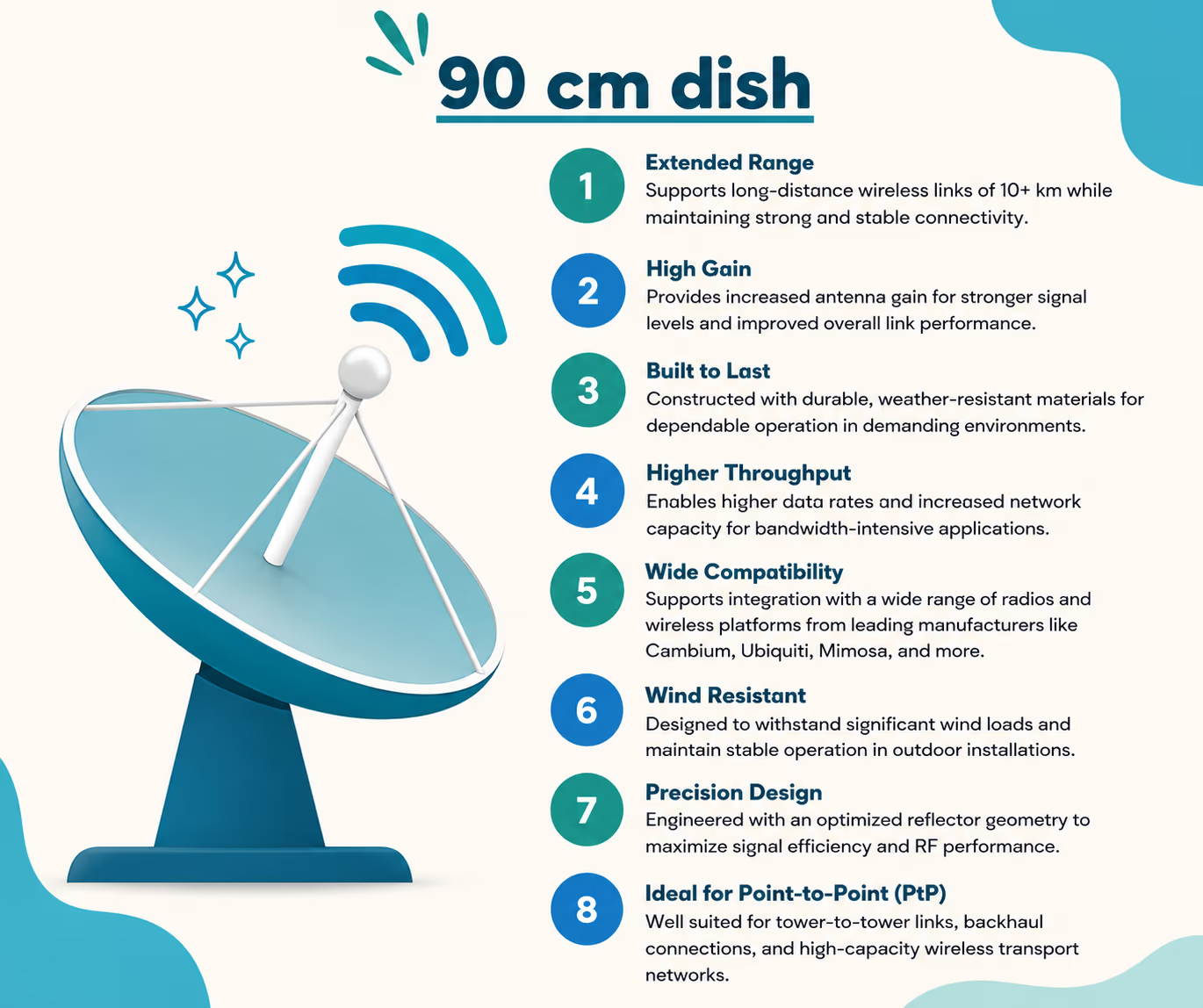
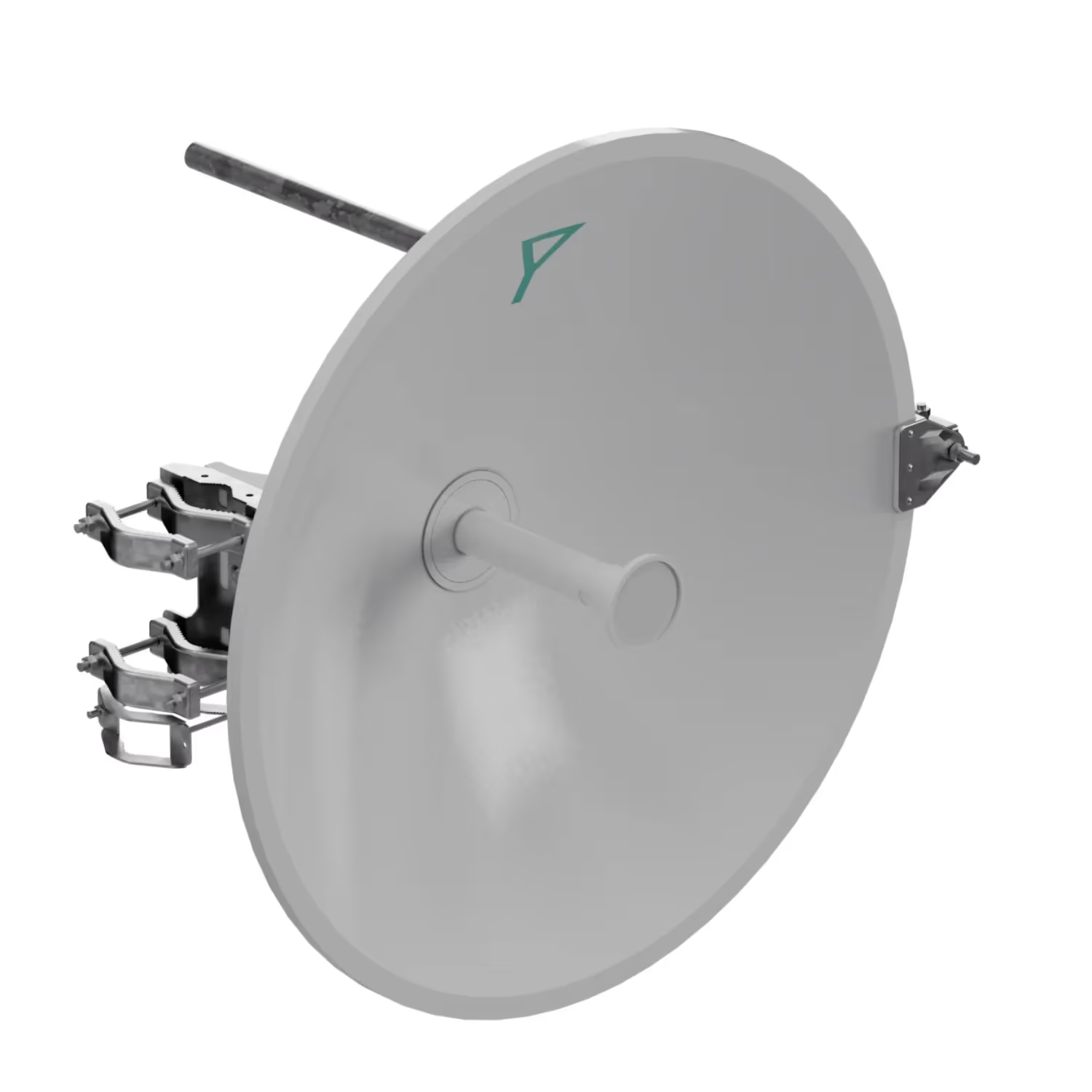
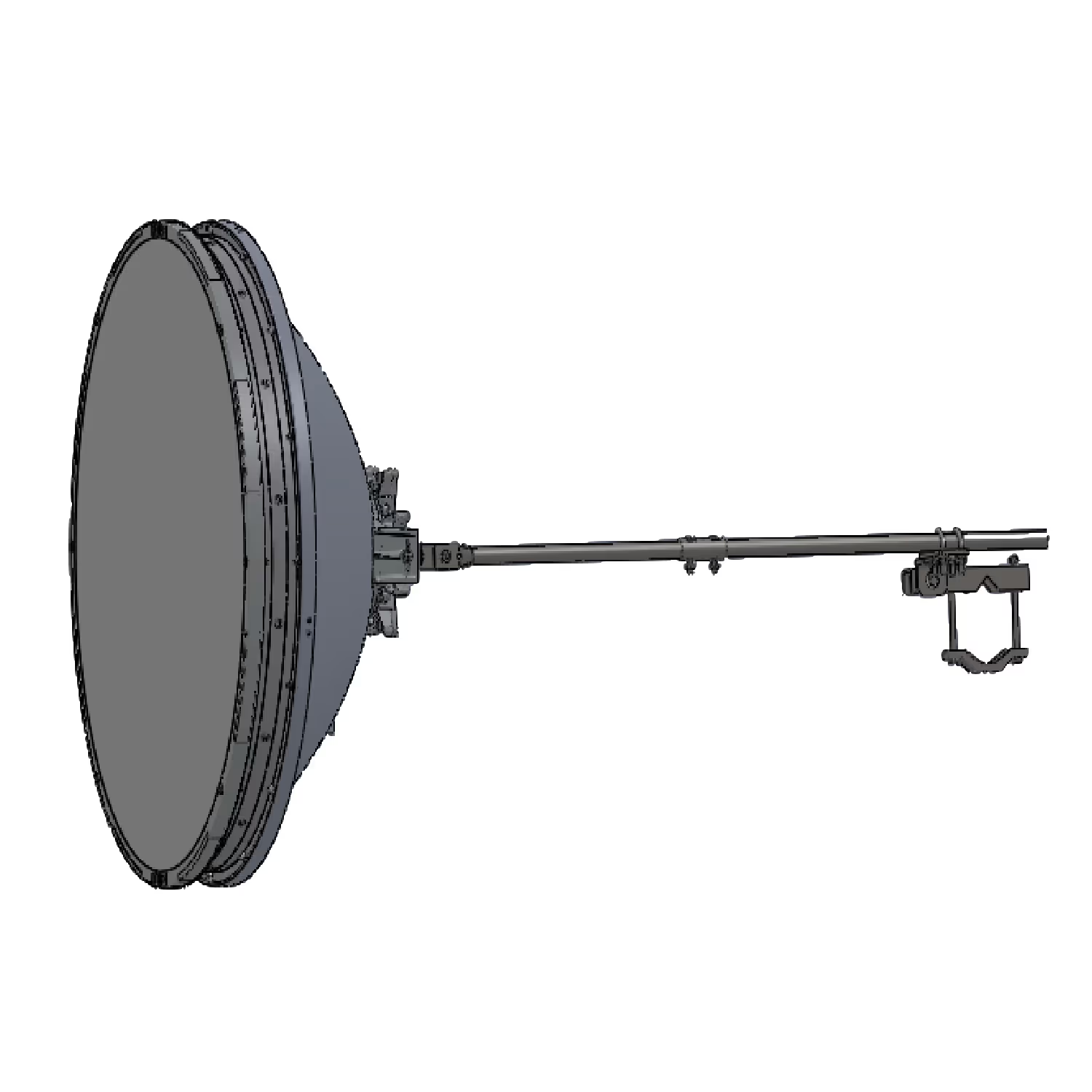
In WISP networks, a 90 cm dish antenna is a larger directional antenna designed to provide higher gain and improved performance for demanding wireless applications. With a diameter of approximately 90 centimeters (36 inches), it offers a significant increase in signal concentration compared to smaller dishes, enabling wireless links to operate over longer distances while maintaining strong signal quality. This makes the 90 cm dish a preferred choice for network backhaul, tower interconnections, enterprise connectivity, and other critical infrastructure links where reliability and capacity are essential.
The primary advantage of a 90 cm dish is its higher antenna gain, which allows more radio energy to be directed toward the intended receiver and more efficiently captured from incoming transmissions. This increased gain improves the signal-to-noise ratio, enhances link stability, and supports higher modulation rates that can translate into greater network throughput. The narrower beamwidth of a 90 cm dish also helps reduce interference from surrounding wireless systems, making it particularly effective in crowded spectrum environments where signal isolation is important.
WISPs commonly use 90 cm dishes for point-to-point backhaul links that transport traffic between towers, data centers, network aggregation sites, and remote distribution points. These links often serve as the backbone of a wireless network, carrying large amounts of customer traffic across considerable distances. The additional gain provided by a 90 cm dish can help maintain reliable connections even when facing challenging terrain, long link paths, or environmental factors that may introduce signal loss.
In rural and underserved regions, where fiber deployment may be economically impractical, 90 cm dishes enable WISPs to extend broadband services to distant communities while maintaining high-performance network connectivity. They are also frequently used in licensed and unlicensed frequency bands, including 5 GHz, 6 GHz, and microwave frequencies, depending on regulatory requirements and network design objectives.
However, the larger size of a 90 cm dish introduces additional installation considerations. The antenna requires a stronger mounting structure, experiences greater wind loading, and demands more precise alignment due to its narrower beam. Proper site engineering, grounding, and maintenance are therefore important to ensure long-term performance and reliability. Despite these requirements, the performance benefits often outweigh the added complexity, particularly for mission-critical links.
Overall, the 90 cm dish antenna is a key component in many WISP infrastructures, providing the high gain and directional performance needed for long-range, high-capacity wireless communications. Its ability to support stable, efficient, and interference-resistant links makes it one of the most effective antenna options for backbone and backhaul applications in fixed wireless broadband networks.
Products tagged #90 cm dish
#90 cm dish
3 products
Overview
A 90 cm dish antenna is a high-gain parabolic antenna commonly used in Wireless Internet Service Provider (WISP) networks for long-distance point-to-point links and high-capacity backhaul connections. Its larger size allows it to focus radio signals more effectively than smaller dishes, resulting in stronger signal levels, improved link reliability, greater interference rejection, and increased throughput. Due to its superior performance, a 90 cm dish is often deployed in situations where longer distances, higher bandwidth demands, or more challenging wireless environments require additional antenna gain.