120 cm dish
About #120 cm dish
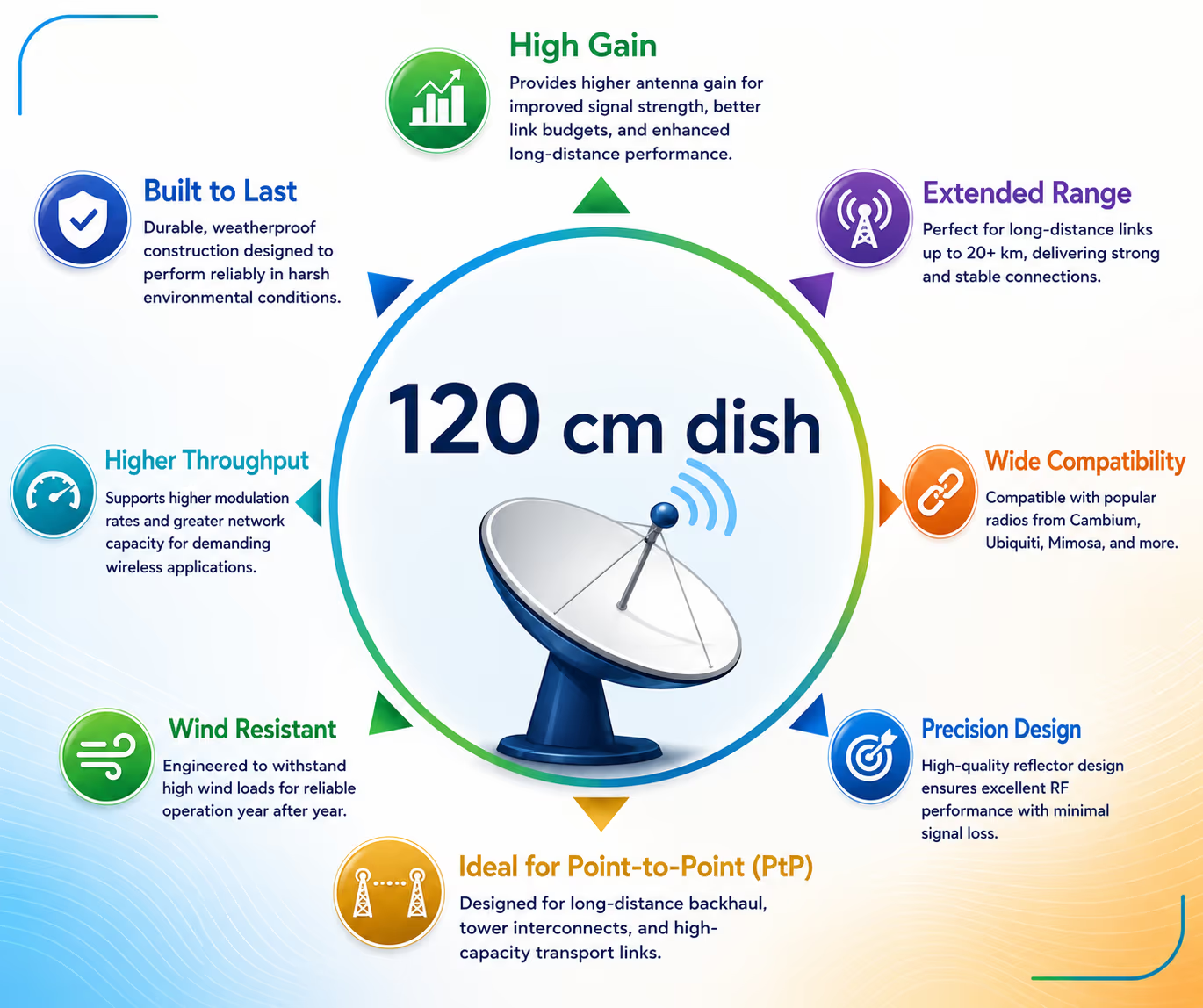
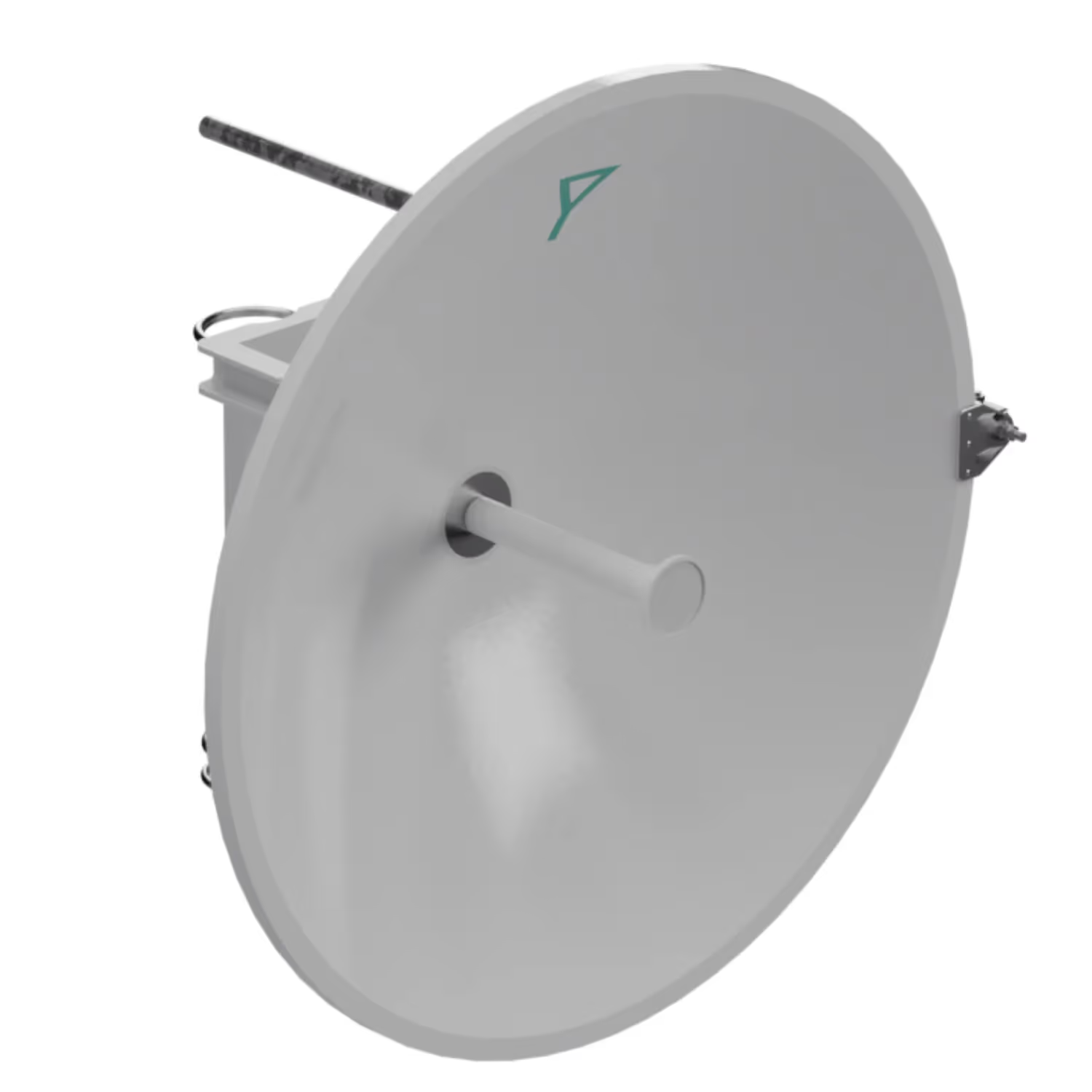
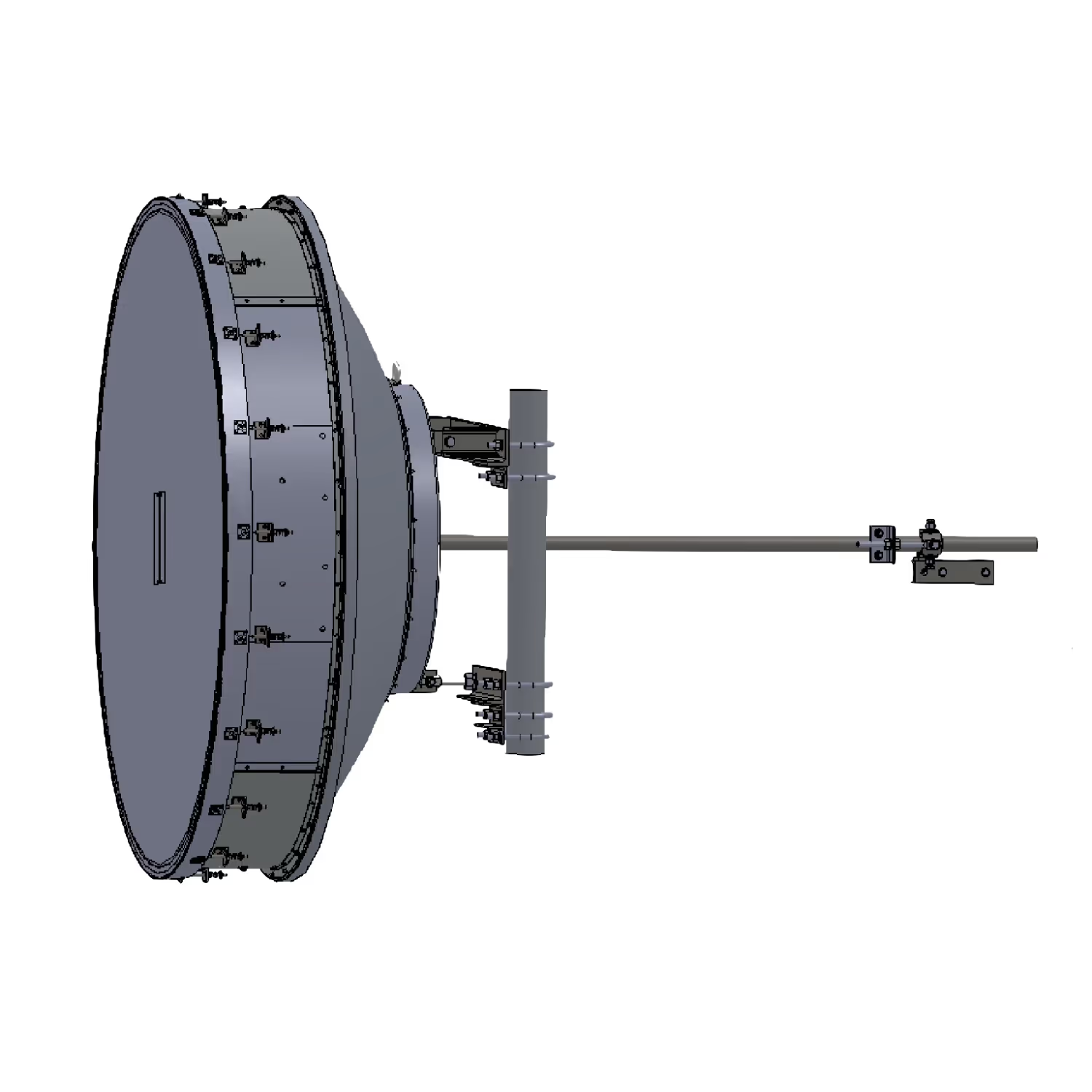
In WISP deployments, a 120 cm dish antenna represents one of the largest commonly used parabolic antenna sizes for fixed wireless communications. With a diameter of approximately 120 centimeters (48 inches), it delivers substantially higher antenna gain than smaller dishes, making it ideal for long-range point-to-point links and network backbone infrastructure. By concentrating radio frequency energy into an extremely narrow beam, the antenna maximizes signal strength and minimizes unwanted interference, enabling highly reliable wireless communications over extended distances.
The primary benefit of a 120 cm dish is its ability to provide exceptional gain and signal efficiency. The larger reflector captures and directs more radio energy, resulting in stronger received signals and improved signal-to-noise ratios. This enhanced performance allows wireless links to maintain higher modulation rates, support greater bandwidth, and operate more effectively under challenging conditions. As a result, WISPs frequently use 120 cm dishes for mission-critical backhaul links connecting towers, network aggregation sites, data centers, and regional distribution points.
A 120 cm dish is particularly valuable in rural and geographically challenging environments where long-distance wireless connectivity is required. By increasing the available link budget, the antenna enables connections that may span tens of kilometers while maintaining stable performance. It can also help overcome signal degradation caused by atmospheric conditions, spectrum congestion, and other environmental factors that may affect smaller antennas. In many cases, WISPs deploy 120 cm dishes when maximum reliability and capacity are required for transporting large volumes of customer traffic across the network.
The narrow beamwidth produced by a 120 cm dish provides excellent interference rejection, allowing operators to isolate links from nearby wireless systems and improve spectrum efficiency. This characteristic is especially beneficial in dense wireless environments where multiple networks operate on similar frequencies. The antenna is commonly paired with radios operating in 5 GHz, 6 GHz, licensed microwave, and other high-capacity frequency bands to deliver carrier-grade performance.
Despite its advantages, a 120 cm dish requires careful engineering and installation. Its larger size increases wind loading, structural requirements, and alignment sensitivity. Strong mounting hardware, properly designed towers or poles, and precise antenna alignment are essential to achieving optimal performance. Regular maintenance and inspection are also important to ensure long-term reliability, particularly in areas exposed to severe weather conditions.
Overall, the 120 cm dish antenna is a premium solution for WISP operators seeking maximum range, capacity, and link stability. While it involves higher installation costs and infrastructure requirements than smaller dishes, its superior gain and performance make it an essential tool for building robust, high-capacity wireless backbone and backhaul networks capable of supporting large-scale broadband service delivery.
Products tagged #120 cm dish
#120 cm dish
3 products
Overview
A 120 cm dish antenna is a large, high-gain parabolic antenna used in Wireless Internet Service Provider (WISP) networks for ultra-long-distance and high-capacity wireless links. Its large reflector surface provides exceptional signal focusing, allowing WISPs to achieve maximum range, improved link reliability, superior interference rejection, and higher data throughput. Due to its performance advantages, a 120 cm dish is commonly deployed for critical backbone, backhaul, and carrier-grade connections where maintaining stable connectivity over long distances is a top priority.