2-ft dish
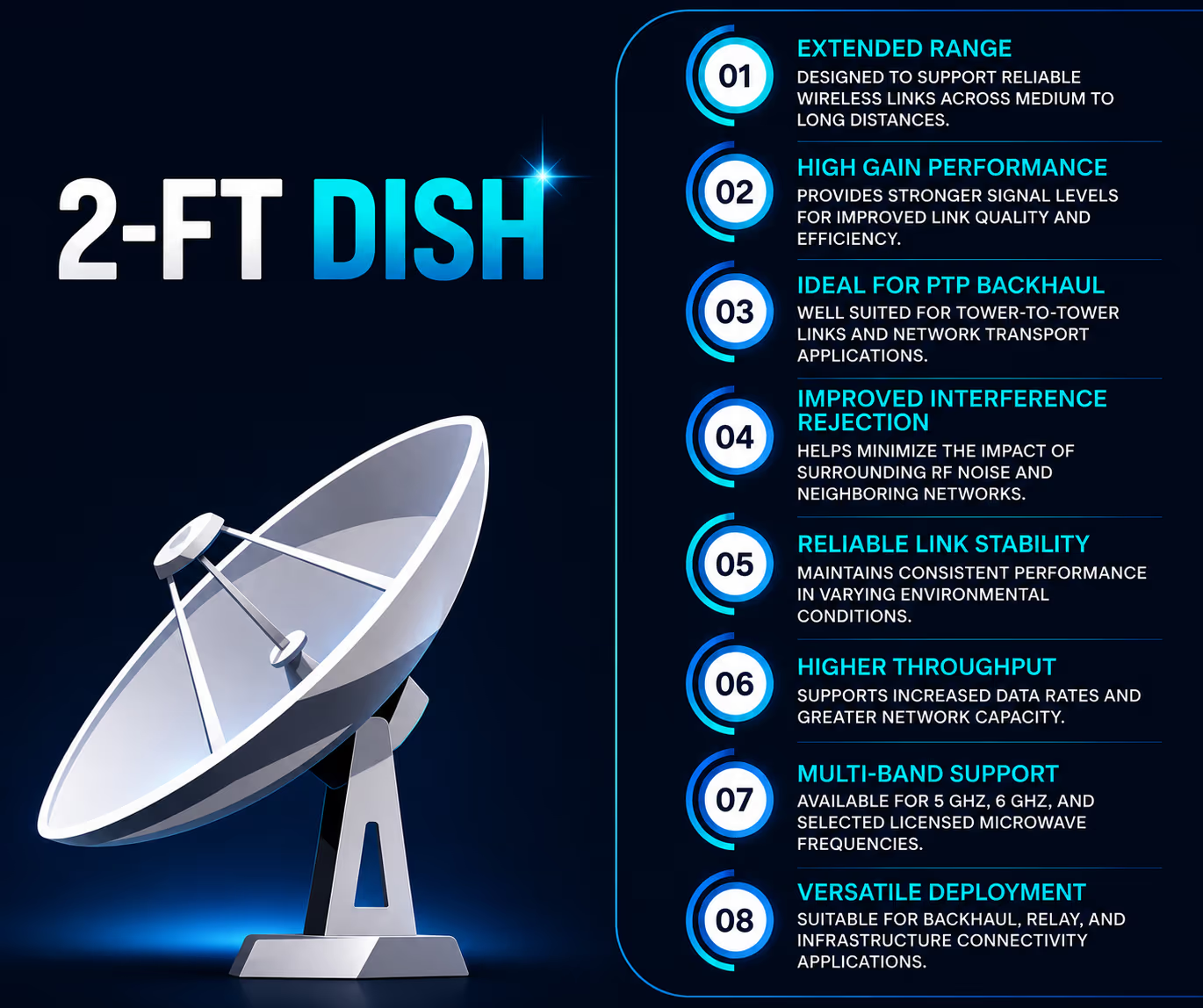
About #2-ft dish
A 2-foot (60 cm) dish antenna is a directional parabolic antenna frequently used by WISPs to establish reliable wireless links between customers, towers, and network infrastructure. By focusing radio frequency energy into a narrow beam, the antenna delivers higher gain and better signal quality than omnidirectional or panel antennas, allowing wireless connections to operate over greater distances with improved stability and reduced interference.
In WISP deployments, 2-foot dishes are commonly used as customer-premises equipment (CPE) for subscribers located several kilometers from an access point, as well as for point-to-point links connecting remote buildings, farms, schools, businesses, and small network distribution sites. Their relatively compact size makes them easy to transport, mount, and align while still providing enough gain to support dependable broadband connectivity.
One of the key benefits of a 2-foot dish is its versatility. It offers sufficient gain for many wireless applications without the increased wind loading, structural requirements, and installation complexity associated with larger dishes. This makes it a practical choice for operators seeking to balance performance and deployment costs. The focused beam also improves signal-to-noise ratios and helps reject unwanted interference from surrounding wireless networks, leading to more stable and efficient communications.
A 2-foot dish is often paired with radios operating in the 5 GHz and 6 GHz bands, where it can support medium- to long-distance links and provide the throughput required for modern broadband services. In rural and underserved areas, these antennas help WISPs extend internet access to locations where fiber or cable infrastructure may not be available, enabling cost-effective network expansion.
Although highly effective, successful deployment requires a clear line of sight between endpoints and accurate antenna alignment. Obstacles such as trees, buildings, and terrain can negatively impact performance, and proper mounting is necessary to maintain signal quality during adverse weather conditions.
Overall, the 2-foot dish antenna remains one of the most popular and versatile antenna options in WISP networks. Its combination of solid gain, manageable size, affordability, and reliable performance makes it well suited for subscriber access, wireless bridging, and light backhaul applications, providing a strong foundation for fixed wireless broadband connectivity.
Products tagged #2-ft dish
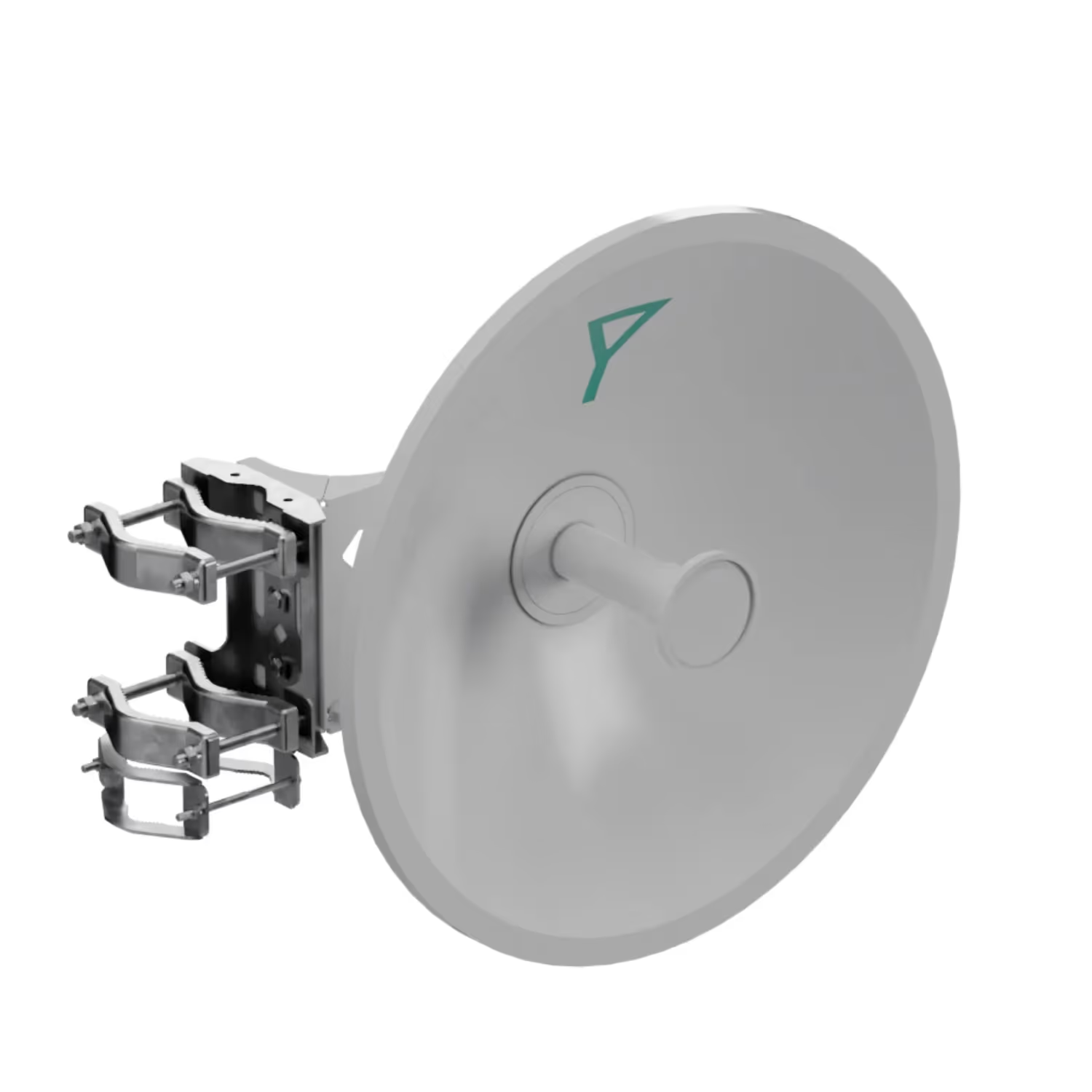
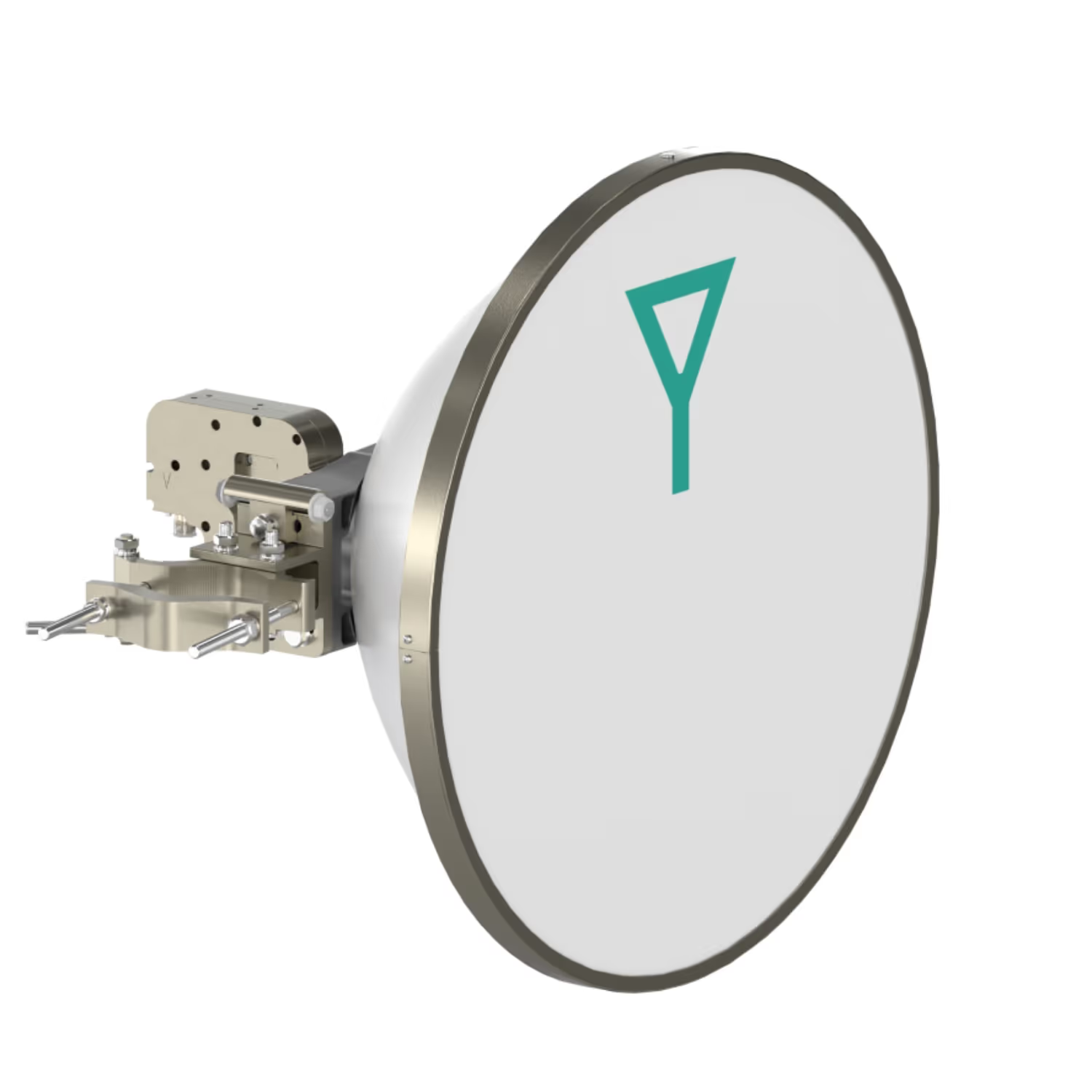
#2-ft dish
2 products
Overview
A 2-foot dish antenna (approximately 60 cm in diameter) is a compact, high-gain parabolic antenna commonly used in Wireless Internet Service Provider (WISP) networks for subscriber connections, short- to medium-range backhaul links, and point-to-point wireless communications. Its size provides an effective balance between performance, affordability, and ease of installation, making it one of the most widely deployed dish sizes in fixed wireless broadband networks.