60 cm dish
About #60 cm dish
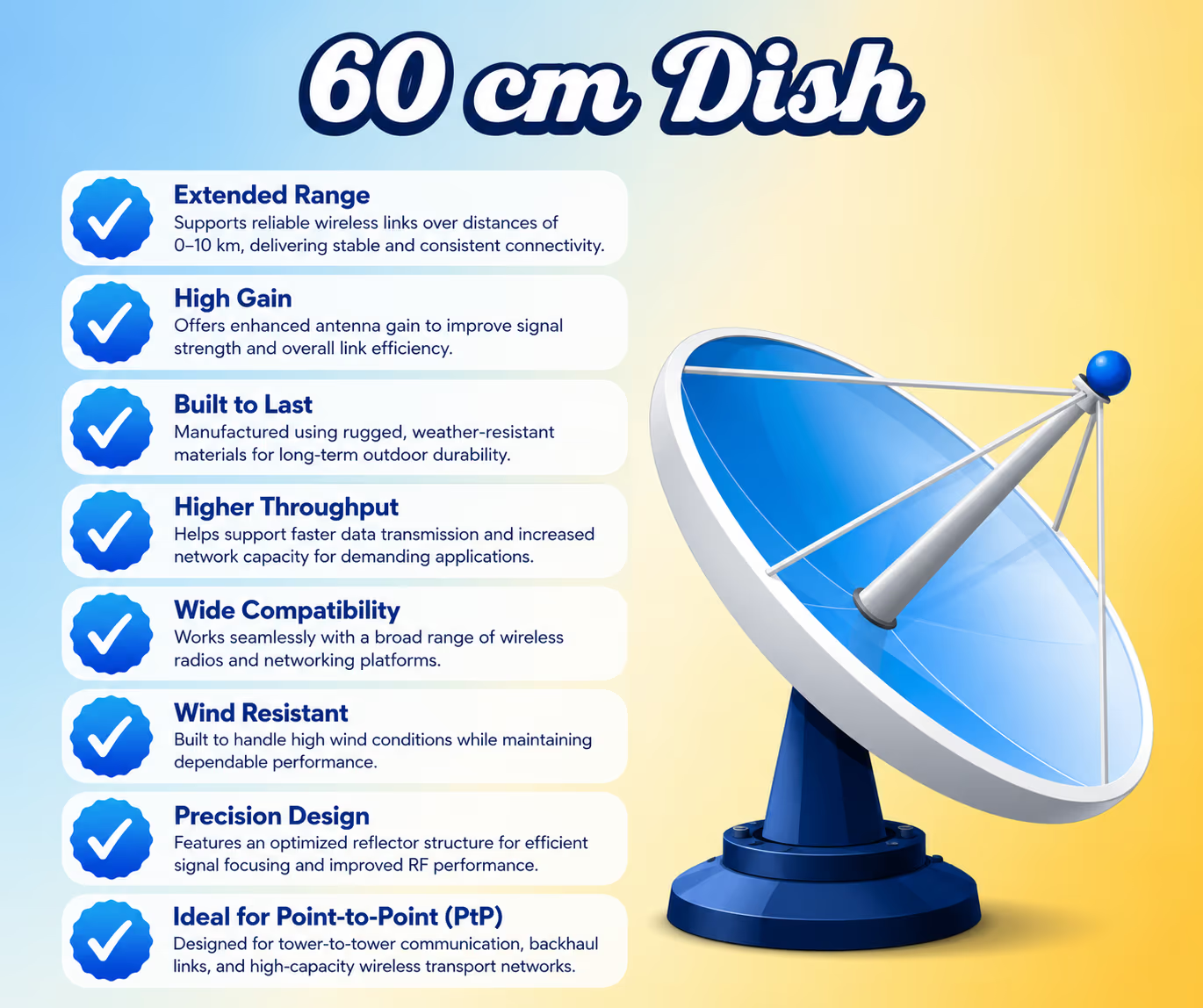
In the context of Wireless Internet Service Providers (WISPs), a 60 cm dish antenna is one of the most commonly deployed directional antennas for establishing reliable long-distance wireless communications. Measuring approximately 60 centimeters (24 inches) in diameter, this type of parabolic antenna focuses radio signals into a highly concentrated beam, significantly increasing antenna gain and improving the efficiency of wireless transmission. The focused signal allows WISPs to extend network coverage over greater distances while maintaining strong signal levels and minimizing interference from surrounding wireless devices and networks.
The 60 cm dish occupies a practical middle ground between smaller subscriber antennas and larger carrier-grade dishes. It delivers sufficient gain for many medium- and long-range applications without introducing the installation challenges, weight, and wind loading associated with larger antennas. Because of this balance, WISPs frequently deploy 60 cm dishes for customer-premises equipment (CPE), tower-to-tower backhaul links, network distribution links, and connectivity to remote locations such as rural communities, farms, industrial facilities, schools, and business sites.
One of the primary advantages of a 60 cm dish is its ability to improve link performance through increased signal strength and better signal-to-noise ratios. The antenna's narrow beamwidth allows it to focus energy directly toward the intended receiver while rejecting unwanted signals from other directions. This characteristic helps reduce interference, increases link stability, and enables higher throughput rates, particularly in congested wireless environments. When combined with modern wireless radios operating in bands such as 5 GHz, 6 GHz, or licensed microwave frequencies, a 60 cm dish can support high-capacity connections suitable for broadband internet delivery and network backhaul.
For WISPs serving geographically dispersed customers, the 60 cm dish is especially valuable because it enables connections over distances that may be difficult to achieve with smaller panel or integrated antennas. The increased gain can compensate for signal loss over long paths, making it possible to provide service to subscribers located many kilometers from the nearest tower. In backhaul applications, pairs of 60 cm dishes can form highly directional point-to-point links that transport traffic between network sites, reducing the need for costly fiber deployments.
Despite its advantages, successful deployment of a 60 cm dish requires careful planning and installation. Because the antenna produces a narrow radio beam, precise alignment is essential to achieve optimal performance. Clear line-of-sight between endpoints is also critical, as obstacles such as buildings, trees, and terrain can significantly degrade signal quality. Additionally, proper mounting and grounding are necessary to ensure long-term reliability, particularly in regions subject to strong winds or severe weather conditions.
Overall, the 60 cm dish remains a cornerstone technology in many WISP networks due to its combination of high gain, manageable size, affordability, and versatility. It enables providers to deliver reliable broadband connectivity across diverse environments while supporting both access and backhaul functions. For many WISPs, the 60 cm dish represents an ideal balance between performance and practicality, making it one of the most widely adopted antenna sizes in fixed wireless broadband deployments.
Products tagged #60 cm dish
#60 cm dish
2 products
Overview
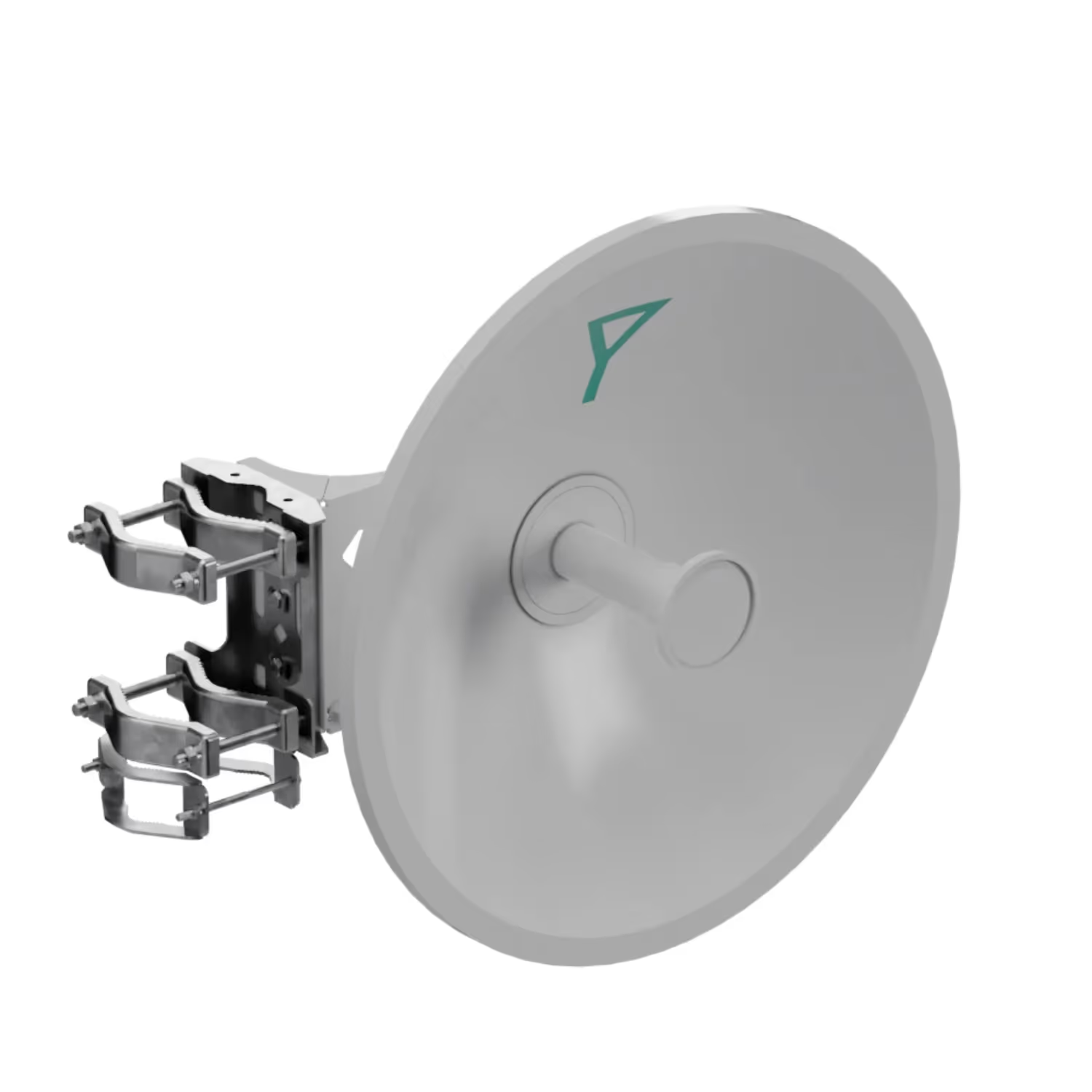
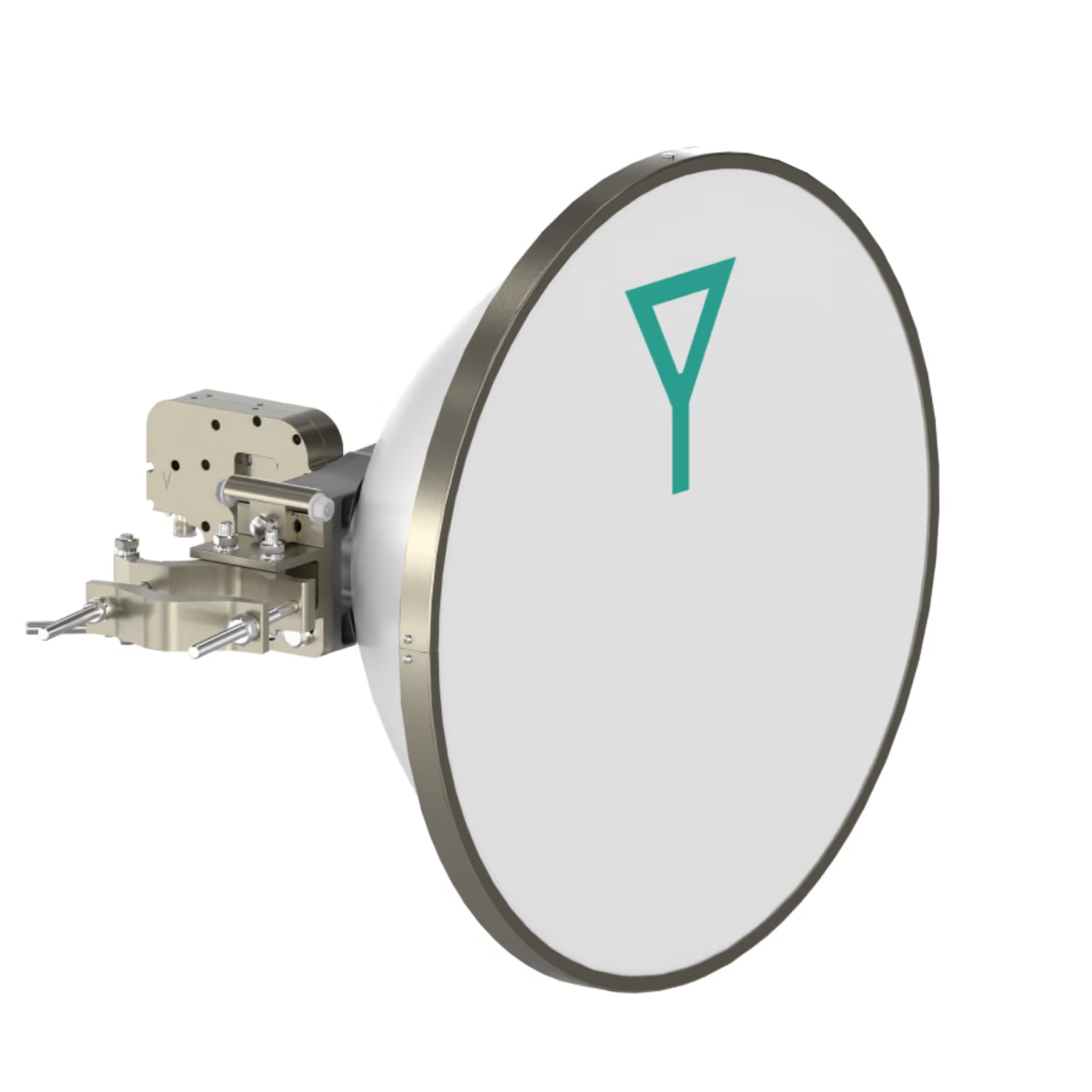
A 60 cm dish antenna is a medium-sized parabolic antenna widely used in Wireless Internet Service Provider (WISP) networks for both customer access and point-to-point connectivity. Its size provides a strong balance between antenna gain, installation practicality, and cost-effectiveness. By concentrating radio frequency energy into a narrow beam, a 60 cm dish enables longer wireless links, improved signal quality, and greater resistance to interference compared to smaller antennas. As a result, it is a popular choice for delivering reliable broadband services in rural, suburban, and hard-to-reach areas where fiber infrastructure may be unavailable or prohibitively expensive.